








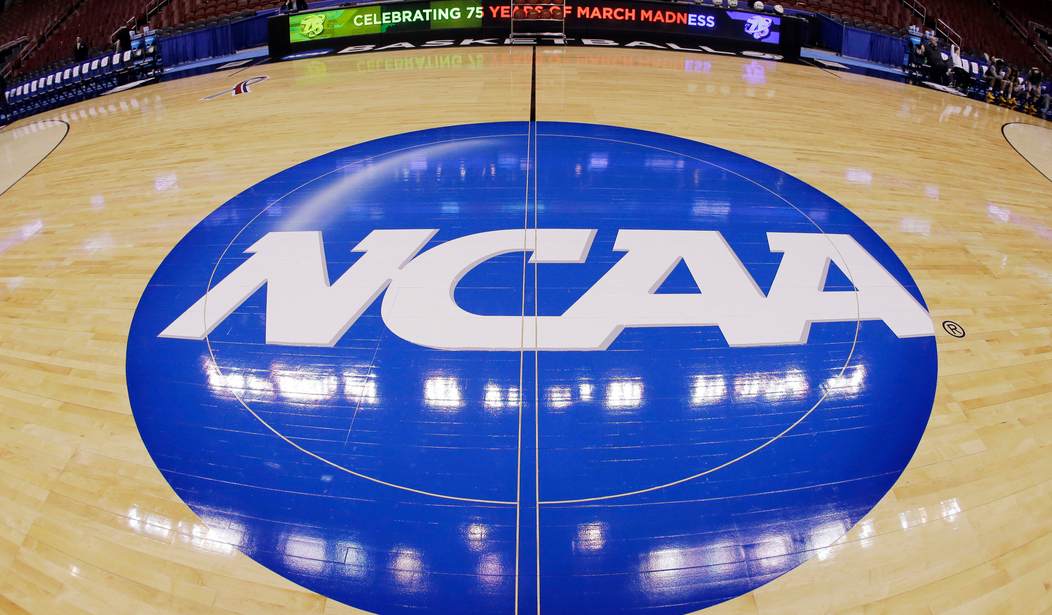
President Donald Trump convened a White House roundtable on Friday on the future of college athletics, bringing together commissioners from the Power Four conferences, former coaches like Nick Saban and Urban Meyer, NBA Commissioner Adam Silver, Tiger Woods, and media executives from ESPN and Fox Sports.
This gathering, chaired by Trump with Florida Gov. Ron DeSantis and New York Yankees President Randy Levine as vice chairs, signals federal resolve to address a crisis threatening an American tradition. Name, image, and likeness deals, the transfer portal, and unchecked litigation have destabilized the system, enriching a few elite programs while smaller ones face extinction. Trump, who signed an executive order last year to protect men's and women's sports programs, pledged swift action, including a new order within a week to resolve core issues, signaling much-needed help for women's and Olympic sports.
Here are a few instances in which major and mid-major universities have targeted specific women's programs for elimination to balance budgets or adjust to new NCAA roster limits:
- Cleveland State University: Announced the discontinuation of Women's Golf and Softball (along with men's wrestling) effective after the 2024–25 season.
- Stephen F. Austin State University: Attempted to cut Women's Beach Volleyball, Bowling, and Golf in May 2025; however, a federal judge recently ordered their reinstatement following a Title IX challenge.
- Purdue Fort Wayne: Eliminated its Softball program in June 2025.
- UTEP: Discontinued Women's Tennis effective for the 2025–26 season.
- University of Louisiana-Monroe (ULM): Cut its Women's Tennis program in June 2025.
- Cal Poly: Dropped Women's Swimming & Diving in March 2025.
- Prairie View A&M: Cut its Women's Tennis program late in 2025.
- San Francisco State University: Eliminated Women's Indoor Track & Field in July 2025.
- Utah: Dropped Women's Beach Volleyball in 2025.
The NCAA's governance failures demand this intervention. Once a steward of amateur ideals, it now presides over a free-for-all where boosters funnel millions through NIL collectives, effectively paying players to switch schools. Powerhouses like Alabama and Ohio State thrive; mid-majors struggle to compete. Women's and Olympic sports, already underfunded, risk further marginalization without guardrails.
As this roundtable nears the two-hour mark, President Donald Trump offers his plan to fix college sports … pic.twitter.com/7I8hhWuRMz
— Nicki Jhabvala (@NickiJhabvala) March 6, 2026
Critics call it meddling, but history favors decisive leadership. College sports generate billions in economic activity and unite communities across red and blue states alike. Left unchecked, the chaos invites antitrust suits that could bankrupt conferences and end scholarships. Trump's dealmaker instincts — honed in business and diplomacy — position him to broker consensus where the NCAA could not.
After the NCAA meeting at the White House, Condoleezza Rice is pulled aside by Donald Trump and Chief of Staff Susie Wiles and walks back with them. https://t.co/RekE7EDzWK pic.twitter.com/QMsd59EONh
— Yashar Ali 🐘 (@yashar) March 7, 2026
An appropriate fix prioritizes merit, fairness and tradition over radical overhaul. Cap NIL incentives tied to performance and school loyalty, not raw talent bids. Reform the transfer portal to discourage mercenary moves, preserving the character-building journey of college athletics. Mandate transparency in collectives to curb hidden pay-for-play schemes. Congress should back this with targeted legislation, shielding sports from activist judges who mistake equity for equality of outcome.
During the “saving college sports “ round table at the White House, President Trump largely focused on collegiate, athletic reforms and ignored reporter inquiries regarding the ongoing conflict in Iran. all the invent was intended to address issues like name, image and likeness… pic.twitter.com/yFoMiHByRs
— MaggieWise ⭐️⭐️⭐️ (@maggiewise111) March 7, 2026
This is not nostalgia; it's pragmatism. Without stability, we lose the pageantry of rivalry weeks, the underdog stories that define March Madness, and the pathway from campus to pros that has launched icons from Jordan to Clark. Trump's summit elevates the debate, forcing stakeholders to confront reality over inertia.
NCAA President Charlie Baker attended the summit, as did leaders from the ACC, Big Ten, Big 12, and SEC — proof that the invitation spanned the landscape. Absent were rank-and-file athletes, a reminder that any solutions reached in those rooms must still find their way to the players on the field.
Donald Trump is hosting a College Sports roundtable at the White House to discuss improvements he would like to see made.
— Polymarket Football (@PolymarketBlitz) March 6, 2026
Trump had influence on the NCAA’s modern NIL structure.
Among those in attendance will be:
Big 10, ACC and SEC Comissioners
Dave Blitzer, Commanders… pic.twitter.com/WnECPQF5gR
Trump's engagement reflects a president attuned to working Americans who pack stadiums and tune in weekly. College sports embody aspiration and competition, values under siege from progressive overreach in courts and collectives. By stepping in, he reasserts that government serves institutions that strengthen the nation, not just the powerful.
Expect proposals soon: clearer rules, balanced compensation, and protections for non-revenue sports. If executed, this could save college athletics from itself, ensuring future generations inherit the spectacle intact. In an era of elite excess, such straightforward governance is overdue.
Editor’s Note: Do you enjoy RedState’s conservative reporting that takes on the radical left and woke media? Support our work so that we can continue to bring you the truth.
Join RedState VIP and use the promo code FIGHT to get 60% off your VIP membership!
Join the Conversation
VIP members get the ability to comment on articles.