
We're already at the end of May and heading into the home stretch for Supreme Court decisions for the 2025 Term. With north of 25 decisions still to come, June's going to be fast and furious — which means I need to pick up the pace on these Skinny on SCOTUS installments.
We'll close out April here with three more decisions — two of them unanimous, one of them as contentious (and impactful) as it gets.
Here we go:
April 2026 Decisions — Part Two
Date: April 22, 2026
Author: Sonia Sotomayor
Split: 9-0
Dissent: N/A
Appeal From: 6th Circuit
Basic Facts:
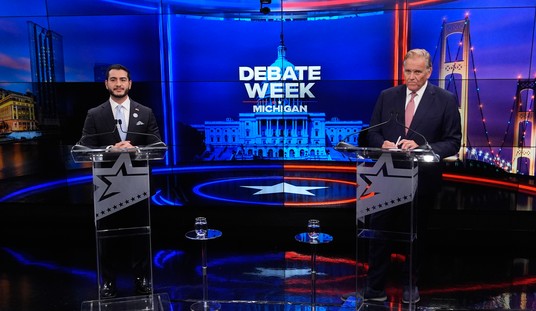
Petitioners (collectively Enbridge) own and operate Line 5, a 645-mile petroleum pipeline, 4 miles of which traverse the Straits of Mackinac pursuant to a 1953 easement granted to Enbridge’s predecessor by the State of Michigan. On June 27, 2019, the Michigan Attorney General filed suit in Michigan state court seeking to halt Enbridge’s operation of Line 5 by having the 1953 easement declared void and Enbridge’s continuing operations declared unlawful. Enbridge was served with the complaint on July 12, 2019. Rather than removing the case to federal court within the 30-day deadline required by 28 U. S. C. §1446(b)(1), Enbridge litigated in state court for months. In November 2020, more than a year after Enbridge’s removal deadline had lapsed, the Michigan Governor issued a notice revoking the 1953 easement and filed a separate lawsuit in state court against Enbridge. In that suit, unlike in the Attorney General’s suit, Enbridge timely removed to federal court, and the parties agreed to hold the Attorney General’s case in abeyance while federal proceedings progressed. After the District Court denied the Governor’s motion to remand, finding federal-question jurisdiction satisfied, the Governor voluntarily dismissed her lawsuit. On December 15, 2021—887 days after receiving the Attorney General’s complaint—Enbridge removed this action to federal court. The Attorney General moved to remand, arguing that removal was untimely under §1446(b)’s 30-day deadline. The District Court denied the motion, holding that equitable principles justified excusing Enbridge’s untimely removal, and certified its order for interlocutory appeal. The Sixth Circuit reversed, holding that although §1446(b)(1)’s deadline is nonjurisdictional, several features of §1446(b)(1) and the overall removal scheme rebutted any presumption of equitable tolling. Thus, the lawsuit had to be remanded to the Michigan state court. This Court granted certiorari to resolve a divide among the Courts of Appeals on whether §1446(b)(1) is subject to equitable tolling.
Issue:
Whether the 30-day deadline for removing a case from state court to federal court under 28 U.S.C. § 1446(b)(1) is subject to equitable tolling.
Holding: Affirmed.
Because §1446(b)(1)’s text, structure, and context are inconsistent with equitable tolling, Enbridge’s removal was untimely.
Skinny:
Tale as old as time: You snooze, you lose.
Date: April 29, 2026
Author: Samuel Alito
Split: 6-3
Dissent: Kagan, Sotomayor, Jackson
Appeal From: Western District of Louisiana
Basic Facts:
These cases concern whether Louisiana’s new congressional map is an unconstitutional racial gerrymander. In 2022, after the State redrew its congressional districts, a federal judge in Robinson v. Ardoin, 605 F. Supp. 3d 759 (MD La.), held that the 2022 map likely violated §2 of the Voting Rights Act of 1965, 52 U. S. C. §10301 et seq., because it did not include an additional majority-black district. But when the State drew a new map, SB8, that contained such a district, the new map was challenged as a racial gerrymander. A three-judge court in Callais v. Landry, 732 F. Supp. 3d 574 (WD La.), held that SB8 violated the Equal Protection Clause of the Fourteenth Amendment, and the State appealed to this Court.
The parties originally briefed and argued this suit last Term, and their arguments at that time highlighted problems in the existing body of §2 case law. One problem resulted from the rule that in racial gerrymandering cases, unlike other cases involving claims of racial discrimination, strict scrutiny is triggered only if race “predominated” in the State’s decisionmaking process. Another problem stemmed from the long-unresolved question whether compliance with the Voting Rights Act provides a compelling reason that may justify the intentional use of race in drawing legislative districts. For over 30 years, the Court has simply assumed for the sake of argument that the answer is yes. These and other problems convinced the Court that the time had come to resolve whether compliance with the Voting Rights Act can indeed provide a compelling reason for race-based districting.
Issue:
Whether Louisiana’s congressional map, enacted after the State added a second majority-Black district in response to Voting Rights Act litigation, constituted an unconstitutional racial gerrymander in violation of the Equal Protection Clause — and more broadly, whether compliance with Section 2 of the Voting Rights Act can supply a compelling interest justifying race-based districting.
Holding: Affirmed and remanded.
Because the Voting Rights Act did not require Louisiana to create an additional majority-minority district, no compelling interest justified the State’s use of race in creating SB8, and that map is an unconstitutional racial gerrymander.
Skinny:
You can't fix racism with more racism.
ALSO SEE: Supreme Court Strikes Down Louisiana's Congressional Map in Major Voting Rights Ruling
First Choice Women’s Resource Centers, Inc. v. Davenport
Date: April 29, 2026
Author: Neil Gorsuch
Split: 9-0
Dissent: N/A
Appeal From: 3rd Circuit
Basic Facts:
First Choice Women’s Resource Centers, Inc., is a religious nonprofit organization that has provided counseling and resources to pregnant women in New Jersey since 1985. Believing that life begins at conception, the group does not provide abortions or refer clients to others for abortions. In 2022, New Jersey’s Attorney General established a “Reproductive Rights Strike Force” that issued a consumer alert accusing groups like First Choice of seeking to prevent people from accessing reproductive health care by providing false or misleading abortion information. The Attorney General served a subpoena on First Choice, commanding the group to produce 28 categories of documents, including documents reflecting the names, phone numbers, addresses, and places of employment of all individuals who had made donations to First Choice by any means other than through one specific webpage. Effectively, that demand required First Choice to provide personal information about donors who gave through two other websites, through the group’s various social media pages, by mail, in person, or by any other means. The subpoena warned twice that failure to comply may render the group liable for contempt of court and other penalties.
First Choice filed suit in federal district court under 42 U. S. C. §1983, seeking to prevent the Attorney General from enforcing the document demands and arguing that the demand for donor information violated its First Amendment rights. First Choice alleged that its inability to guarantee its donors’ anonymity in the face of the Attorney General’s demands injured the group by discouraging donors from associating with it.
The district court denied First Choice’s motion for a preliminary injunction and dismissed its complaint, holding that the group failed to state a justiciable claim as a matter of law because, absent any state court order compelling production, First Choice had yet to suffer an injury from the subpoena and thus lacked Article III standing. A divided panel of the Third Circuit affirmed.
Issue:
Whether a nonprofit organization suffers a sufficient First Amendment injury to establish Article III standing when a state attorney general subpoenas confidential donor information — even before any court has compelled disclosure or the information has actually been produced.
Holding: Reversed and remanded.
First Choice has established a present injury to its First Amendment associational rights sufficient to confer Article III standing.
Skinny: The First Amendment chill itself is the injury.
You can check out prior installments of The Skinny on SCOTUS series here.