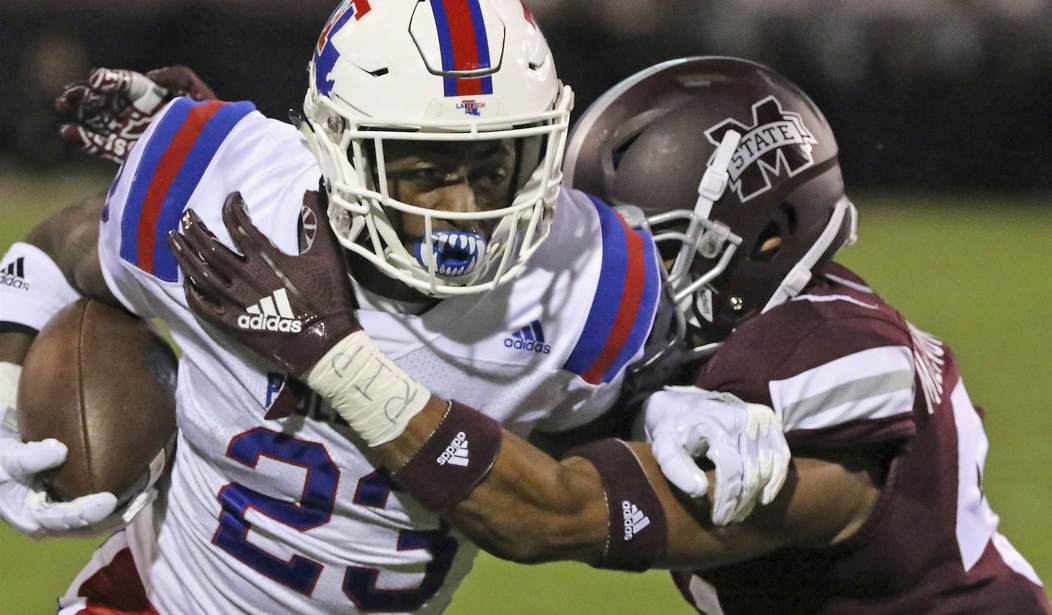

When I first watched football on television with my father a very long time ago, it was a grainy black-and-white image on a screen about the size of a dinner plate. If you missed a play or a fake or deke, too bad for you. Perhaps there would be a photo in the next day's newspaper.
My father was an immigrant. He'd played rugby in Scotland. But he had studied the American game and pointed with a pencil, showing me what to watch for at each position. What was good and not so good, how to predict where the play was going, how it could have been stopped. He taught me, too, when we went in person to watch Jim Brown play a couple of Cleveland owners and stadiums ago.
Also, to be perfectly honest, if my Dad was investing his sole focus on me, on sharing something he had learned, then I knew very well it was important. So, it very much interested me. It still does. I paid close attention. That was the power of old-fashioned Dads.
We turned the TV sound off because who needs to be told what they are seeing with their own eyes? I still mute that chatter.
My interest in sports continued. I played high-school football. I learned countless life lessons from those years of muddy moments with comrades and coaches. So much so that we required each of our boys to play school sports, any sport, usually with teammates, with more practice than competition. The investment in preparations. The discipline of time management. The camaraderie with mates. The joys of victory. The lessons from losing.
After each contest, I had them tell me one lesson they had learned that day, good or bad. When my middle-schooler lost a PeeWee playoff football game, his lesson was:
"Don't get up for the game at 4, when the kickoff isn't 'til 7."
When he took a high-school semester off from sports, his grades went down. Another lesson learned.
Today, who can afford to actually attend sporting events? But I do still watch select hockey, some football, mainly college. The admiration for the skills of some feels good to savor, the awareness of the unseen work involved. The TV screen is many times larger now. I can make my own replays. No pencil necessary. Skip the beer ads.
I haven't thought much over the seismic changes in college football recently because I have no stake and no control. Until last weekend...
When a series of player outrages got me thinking.
I have recorded those thoughts. Yours are welcome below. Access this week's brief audio commentary by clicking on the flag here:
We've written often here at RedState about the deeply troubled state of the nation's oldest political party. A stark lack of leadership that doesn't belong in a retirement home seems stricken with senility and a lack of any truly creative ideas, unable to think beyond "Trump Bad."
Never mind the midterm elections next month. This week's Sunday column played Democrats' disturbing political predicament forward to assess what this could mean for the nation's far more important presidential election in 2028. It's currently a murky situation caught up in conflicting currents, including anger at fellow Democrats, a surge of dangerous admiration for socialism (aka communism), and responding revulsion at that idea.
Numerous commenters on that post offered their interesting thoughts on which politicians might capture the party's next presidential nomination. I tend to think it will be a lesser-known DC outsider free of the Swamp taint, as occurred in 1992 when Democrats fell for the fresh face of William Jefferson Clinton of Arkansas.
The party has narrowed down the location for the Aug. 7-10 convention that year to three blue cities, Chicago, Boston, and Philadelphia, none of which is a fully-functioning shining city on a hill.
The most recent audio commentary examined the furiously bubbling concern over Artificial Intelligence and its possible existential threat to the survival of the human race. Is it just a rerun of that end-of-civilization millennium apocalypse that proved false in 1999? Or is it all just lobbying by the AI bigs to use government regulation to box out new competitors?