Years ago – actually, many years ago – a childhood best friend showed up very excited one day. All his siblings were excited too. Their grandfather had promised to give each of them $5 during his upcoming visit.
That was a child’s fortune back then; it still is, more than $60 in today’s money.
When the grandfather arrived, however, he actually gave each of them a crisp $1 bill. They thanked him, of course; that was still a goodly sum when candy bars cost a nickel.
But there was deep disappointment because his delivery did not meet the immense expectations he himself had set.
President Donald Trump just did the same thing. Of all the many positive things this unexpected and extraordinary president has done, especially in this second term, stopping Iran from building its own nuclear weapons in the near future is likely the most important accomplishment. That was truly historic and came from decisive military action with Israel.
Iran got close. It isn't now.
For nearly five decades, U.S. presidents have vainly confronted the repressive lunatics in charge of Iran. That country and its proxies sponsored and encouraged terrorism throughout the region, killing countless thousands in the process, including many Americans in Iraq and Lebanon.
The mullahs also annihilated some 40,000 of their own people protesting the regime early this year.
In 2015, Barack Obama even sought to buy off the mullahs from their nuclear ambitions with paper promises. The many billions he handed over on pallets of cash merely financed more of the same.
The money also went toward strengthening their standard defense shield to make Iran’s delivery systems and underground nuclear advances impregnable. Nuclear projects for peace need not be hidden underground.
Preventing Iran from ever having weapons of mass destruction was always a promise too far. Nothing is forever in politics and diplomacy.
Remember, the First World War that killed upwards of 22 million was so awful it was dubbed the “War to End All Wars.” That put the next one off — what? — 21 years. And Number 2 took around 80 million lives.
The fact is, the Trump administration over-promised with early threats and vows about its plans for Iran. Sink Iran’s navy? Check. Cripple the air force? Check. Eliminate all ballistic missiles? Well, many of them. Trump now says a few are OK. Regime change? We sorta did. Seize the enriched uranium? We’ll talk later.
RELATED: JD Vance Heads to Switzerland, As Peace Talks Over the MOU and Israel-Lebanon Ceasefire Continue
The Proposed US-Iran Framework Warrants a Closer Look
Understandably without fanfare, the president has now changed his professed goals:
Trump told reporters this week it's 'OK' for Iran to keep some of its ballistic missiles. He said he isn't in a hurry to recover Iran's stockpile of highly enriched uranium, and isn't vying for 'regime change' in Iran.
Hyperbole bites back sometimes. In 2024, Trump said he could settle the war in Ukraine in 24 hours. The deadline is now 17 months past, and sitting on the back burner.
The original Iran promises came from an understandable optimism and an eagerness to assemble domestic support for a foreign military action, which the very same people once boasted about avoiding during Donald Trump’s first term.
That set the public bar of expectations pretty high for a war. Wars are, by their very nature, unpredictable, messy affairs that involve at least two sides.
Vladimir Putin was assured that his 2022 invasion of Ukraine would need only a couple of weeks to conquer the entire nearly-Texas-sized country. The target nation saw things differently. And Ukraine’s drone ingenuity, spirit, and endurance have changed modern warfare.
Now, 225 weeks later, Russian forces have a shaky hold on only 20 percent of Ukraine at an estimated cost of 1.3 million casualties, plus Ukraine's deaths and suffering. That’s an awful high price in lives and limbs to pay for farmland now heavily mined and littered with burned hulks and bones.
The United States and Israel launched major military attacks on Iran on Feb. 28. After the first week, Trump posted on Truth Social:
There will be no deal with Iran except UNCONDITIONAL SURRENDER!
In an April 2 Oval Office Address, Trump said:
We are going to hit them extremely hard over the next two to three weeks. We are going to bring them back to the Stone Ages, where they belong.
But now, after a 38-day war and a 67-day blockade, his administration is seeking support for a 14-point initial Memorandum of Understanding that seemingly is nothing close to unconditional surrender. It accomplishes very little of that, while claiming victory and setting even more negotiations for coming months.
Vice President JD Vance left this weekend to lead those in Switzerland.
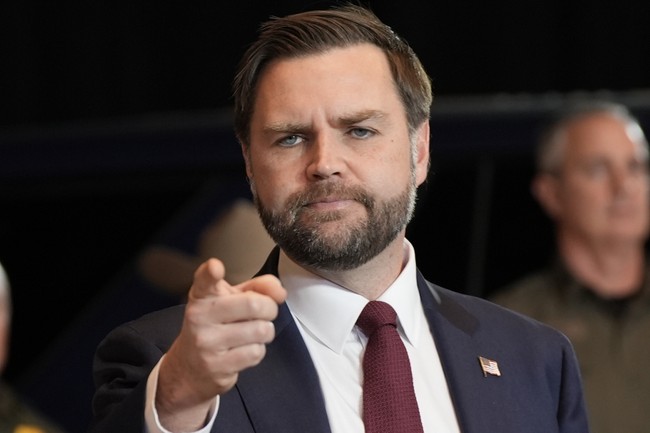
After all the tough talk, settling for much less is a tough sell, especially when it involves unfreezing billions of Iran's seized assets. You just know that media will make that sound like "paying" Iran.
After 47 years of deadly attacks by Iran and its ruthless proxies, most reasonable people should believe that if the messianic mullahs and their armed forces ever acquired a nuclear weapon, they would most certainly use it on the “Great Satan” and other infidels, such as Israel, just 960 miles away.
The Cold War never turned into a hot war of nukes because of the threat of MAD, Mutually Assured Destruction. If one attacks, we all die. But that doesn't work on religious fanatics, who believe martyrdom is a free pass to eternity in the good place.
Some Republicans do not like this deal. Texas Sen. Ted Cruz (R), a war supporter, stated:
History demonstrates giving billions of dollars to the theocratic lunatics who want to kill you is an exceptionally bad idea. And so, I hope we don’t do that.
The interim memo promises Iran access to $300 billion in reconstruction funds, even more than Obama’s 2015 payment. Trump, however, declared that the U.S. would not contribute.
Unwritten in the memo is the resulting welcome drop in oil/gas prices, already down double-digits back to March levels, as a key ingredient in stemming inflation that threatened the GOP outlook in November’s elections.
I was going to predict here that Iran’s reputation for living up to agreements is nonexistent. But they beat me to it, announcing within hours that the Strait of Hormuz was closed again. CENTCOM disagrees.
Trump has long held that the most important element in deal-making is the willingness to walk away. Despite all of Iran’s stalling and prevarications, he has not walked, yet.
The public’s concern about an apocalyptic attack by religious extremists 6,350 miles from Washington at some possible time in the future does not currently match the administration’s 2026 urgency. That's going to take a lot of drum-beating over an extended time.
No pressing concern is actually understandable. Would Americans have put up with tighter nationwide security on everything, including TSA body and carry-on searches of every single airline passenger, before the soul-searing 9/11 experience?
But we can’t wait for an Iranian nuclear attack to convince everyone we should have prevented it. That's where presidential foresight and leadership come in.
Gallup found that only 34 percent of adult Americans support the recent attacks on Iran, even below the 39 percent that supported Barack Obama’s 2011 unnecessary involvement in overthrowing Muammar Gaddafi. That turned Libya into today's lawless state with terrorist training camps and roaming rogue militias that led to the Benghazi murders.
The RealClearPolitics average of Trump’s job approval is 41 percent Approve, 57 percent Disapprove, historically an ominous precursor for a president’s party in Congress five months before midterm elections.
Trump was courageous to take on the Iran challenge even in an election year. Now, he shouldn't be too eager for any kind of a deal just to have one and claim peace in our time.
The short new Memorandum of Understanding (MOU) with Iran is basically an agreement to negotiate another agreement. It’s a simple interim outline of what’s to happen in the next 60 days with an optional extension.
It extends the ceasefire, ends the naval blockade, allows Iran to resume oil sales immediately, opens the Strait of Hormuz, and requires the U.S. to lift all sanctions on Iran going back to the 1979 revolution and hostage-taking of Americans.
The U.S. agrees to release $24 billion in frozen Iranian assets. Media in Iran put that figure at a minimum of $124 billion, though the total of frozen assets has not been released publicly.
Iran agrees not to develop or acquire nuclear weapons, which it argues it already did in the abandoned 2015 agreement with Obama. And which it did not adhere to anyway.
The MOU does not address the future of Iran’s enriched uranium stockpile. It does not address the Strait’s access after 60 days.
One less-noticed provision says:
The United States of America and the Islamic Republic of Iran undertake to respect each other’s sovereignty and territorial integrity and to refrain from interfering in each other’s internal affairs.
At the war’s start, Trump had called on Iranians to rise up, which they did not do:
The hour of your freedom is at hand. When we are finished, take over your government. It will be yours to take. This will be, probably, your only chance for generations.
The presumed goal of the war was to overthrow the regime of mullahs and military. Trump argues the top layers of both groups are deceased now, so the officials his team negotiated the 14 points are a new regime. There's no evidence that the wily new guys' proclivity for deadly repression is any different than their departed predecessors.
In one of those coincidences that makes the study of history so fascinating, a previous U.S. president, a Democrat that time, had his own 14-point plan to promote peace.
In a 1918 speech to Congress, Woodrow Wilson outlined the ideas he saw as the basis for post-World War I peace talks. The other allies, however, were more interested in imposing severe reparations on Germany.
The reparations — $33 billion, equivalent to more than a half-trillion in today’s money – helped fuel the later rise of radical German nationalism and Adolph Hitler’s Nazis in the 1930’s.
One Wilson idea to promote peace was the creation of the League of Nations. But it proved ineffectual for a variety of reasons, including required unanimity to take any action. Also, Wilson’s own nation refused to join.