
In her landmark book Atlas Shrugged, writer and philosopher Ayn Rand wrote her characters giving considerable speeches in several different parts of the book, including one of the primary characters, John Galt, and his famous 50+ page ramble. But for my money (hah) one of the best of these comes from another major character, Francisco d’Aconia, who, at the wedding of the weak-kneed James Taggart, delivered a speech about money and its function.
“So you think that money is the root of all evil?” said Francisco d’Aconia. “Have you ever asked what is the root of money? Money is a tool of exchange, which can’t exist unless there are goods produced and men able to produce them. Money is the material shape of the principle that men who wish to deal with one another must deal by trade and give value for value. Money is not the tool of the moochers, who claim your product by tears, or of the looters, who take it from you by force. Money is made possible only by the men who produce. Is this what you consider evil?"
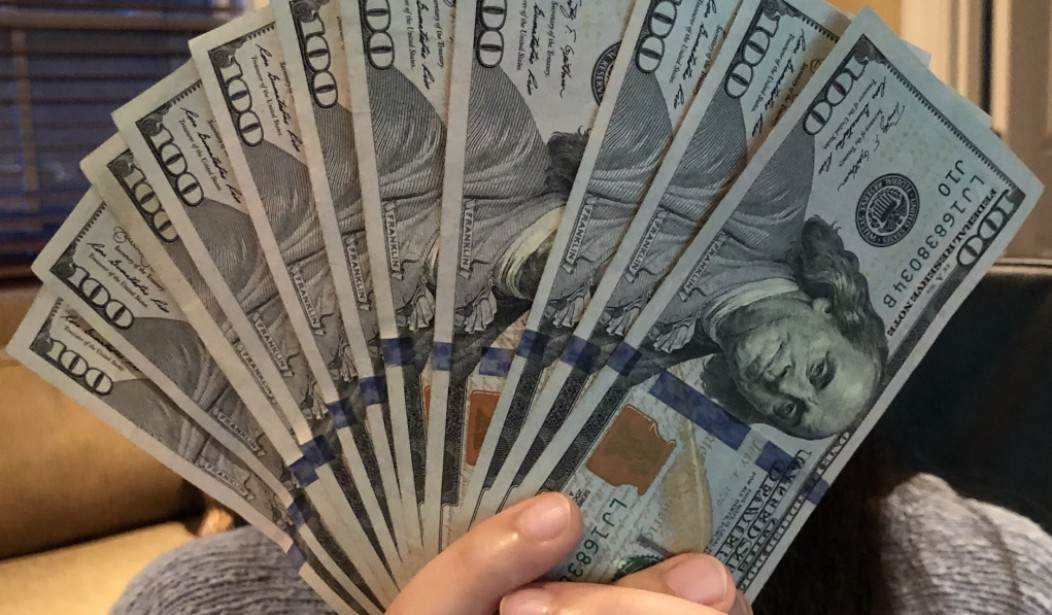
Money is not only a medium of exchange. In a modern economy, it's essential tool for trade. In a modern, high technology society such as ours, we can scarcely barter for all the needs and requirements of a modern lifestyle. Some universally accepted medium of exchange is required. That would be money. And the value of money is through the efforts of people, producing, creating, innovating.
Economist Ludwig von Mises, in fact, saw money as only a medium of exchange.
Money is a medium of exchange. It is the most marketable good which people acquire because they want to offer it in later acts of interpersonal exchange. Money is the thing which serves as the generally accepted and commonly used medium of exchange. This is its only function. All the other functions which people ascribe to money are merely particular aspects of its primary and sole function, that of a medium of exchange.
Note that line: "...the most marketable good which people acquire." Key concept. Most people don't think about money as a good in and of itself, although it is; money is the universally accepted good, the primary medium of exchange, which makes all else possible. It's a tool that we use to trade with one another. It's a symbol of the product of our efforts, which we use to trade with others for the product of their efforts, and it's a tool that allows us to trade in ways that would be impossible without money. For example, when you buy a new car, you are trading with thousands of people: The miners who dig the ore, the steelworkers who refine the metal, the assembly-line workers who put the vehicle together, the trucker who delivers it to the dealership, the bankers who arrange your auto loan, and the salesman at the dealership who hands you the keys. That long, involved process is not possible without money.
Here's the thing: There are, very broadly, two kinds of money: Hard currency, backed by some tangible asset, usually gold or silver. Then there is what we have, here in the United States: a fiat currency, a currency that depends on the faith people have in the government that issues the currency. It's not backed by gold. It's not backed by silver. And the United States has had a fiat currency since President Richard Nixon took us off the gold standard in 1971; I vaguely remember at the time, my grandfather railing against the stupidity of that idea.
Why is that a problem? Aside from the fact that our currency now is primarily backed by faith in a government in which an increasing number of people are losing faith, fiat currencies are prone to inflation. In fact, hyper-inflation, such as that suffered by the German Weimar Republic in the 1930s, can only happen with a fiat currency, which allows the government to simply print more and more and more money, backed by nothing, leading to a rapid increase in the money supply, which makes each unit of currency worth less. The currency loses value. People's savings are wiped out. Prices rise. Social unrest increases, generally with bad results; remember what happened to the Weimar Republic, and what replaced it.
We might note that this has been the policy of both American political parties for some time now.
In Atlas Shrugged, Francisco d'Aconia continues:
“When you accept money in payment for your effort, you do so only on the conviction that you will exchange it for the product of the effort of others. It is not the moochers or the looters who give value to money. Not an ocean of tears nor all the guns in the world can transform those pieces of paper in your wallet into the bread you will need to survive tomorrow. Those pieces of paper, which should have been gold, are a token of honor – your claim upon the energy of the men who produce. Your wallet is your statement of hope that somewhere in the world around you there are men who will not default on that moral principle which is the root of money. Is this what you consider evil?"
And here's the thing: Money is not evil. Money is good; without it a modern economy would not be possible. But a solid currency, backed by actual, tangible value, would seem to be more resistant to crisis than fiat currencies. That's a lesson that the Western world should have learned from the Weimar Republic; but clearly, we haven't — yet.