
In recent years, those of us who live in Western civilization and some other places with modern sensibilities, like Japan, have had some startling lessons as to the difference between a high-trust society and a low (or zero) trust society. The former is how we are accustomed to living and doing business; one key to life in a high-trust society is the expectation that we can enter into an economic transaction with some expectation that the trade will be free, above-board, and that both sides will realize a gain in perceived value.
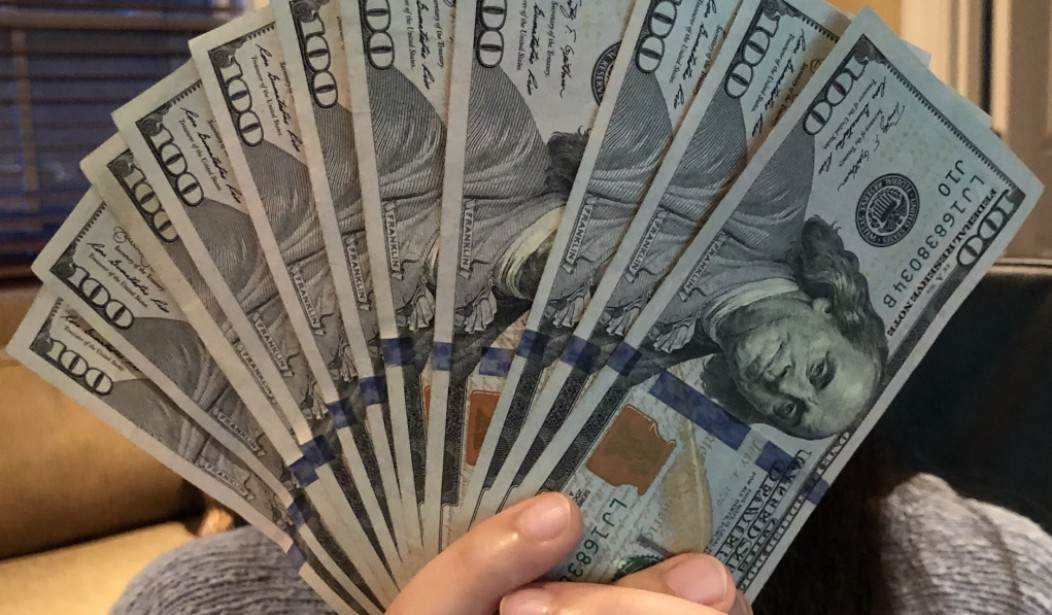
That's how free trade works; if I walk into the gas station and plunk down $3 for a bottle of pop, then I did that because I wanted the bottle of pop more than I wanted the $3, and the gas station wanted my $3 more than they wanted to keep that bottle of pop. Both sides gain. Win-win.
Low-trust societies are very different. There is no expectation of free trade. Fraud is rampant. Transactions frequently end up with one side taking a loss. This is much of the Third World, and it's a Third World that the United States and Europe are importing right now.
Here's the thing: High-trust societies are not easy to build. They don't rise up overnight. A recent piece at Mises Wire makes an interesting observation:
Social trust is essential to the quality of our lives, how society functions, and nearly everything else. This is where ignorance enters the picture. Ignorance is commonly treated as an epistemic failure. There are a lot of philosophers who hold that to be ignorant of something is to be intellectually or epistemically deficient.
This picture is incomplete, though, simply because knowledge is costly to acquire, maintain, and deploy, costing time, attention, cognitive effort, emotional bandwidth, and sometimes even social capital. Because those resources are scarce, agents face trade-offs about what to believe and how to pursue evidence for those beliefs. Once this point about scarcity and trade-offs is taken seriously, the normative landscape changes and the salient question here is whether there are forms of ignorance that are rational, and even socially and morally preferable.
There are, of course, some forms of ignorance that are rational and acceptable. I'm utterly ignorant about any of the various forms of sportsball. But that doesn't affect anyone else. But there's the single problem many have with these considerations: Confusing education with knowledge. That's the first part of our ongoing problems in the Western world: Education that fails to instill useable knowledge.
Consider the alternative where society with little social trust and where ordinary interactions become epistemically demanding with buyers vetting sellers, employers scrutinizing employees (more than they otherwise would), etc. In the absence of social trust, each transaction invites background checks, redundant documentation, contractual safeguards, surveillance mechanisms, and legal recourse. And these forms of verification are costly, placing an increasing epistemic burden on individuals.
By contrast, in a high-trust society, many of these epistemic demands are relaxed. This is because agents can reasonably assume norm compliance and reciprocity in most cases. They need not investigate every counterparty because they rely on stable social expectations backed by reputational incentives and institutional enforcement to do the verifying for them, in a sense, allowing them the freedom to forgo knowledge.
But in low-trust societies, like Somalia and many of the nations of the Middle East and Africa, there is no expectation of compliance. There is no expectation of trust. This fosters a society where people will grab what they can when they can, a society where fraud is rampant, where corruption is endemic, and where there is no social trust; those bonds simply don't exist, and in an economy where fraud and corruption are taken as a matter of course, there can be no prosperity. These people do not build, they do not innovate, they do not create value. They simply take. And no, this is not a racial problem. It's a cultural one, from parts of Southeast Asia to central Asia to the southern tip of Africa. This is a Third World problem.
Read More: Refugee Numbers Tank, Violent Crime Plummets: Coincidence?
FBI Releases Data on Historic Drop in Violent Crime Rate, Media Can't Figure Out Who to Credit
And we in fact do have good reasons—economic, moral, and political—to preserve high levels of social trust. Among its many benefits, social trust supports peaceful cooperation, reduces coercion, enables prosperity, and sustains civic life. A society that intentionally dismantles trust by insisting on too much verification would be more bureaucratic, more surveilled, and less capable of large-scale coordination. People would infer, rightly or wrongly, that such measures are necessary due to the fact that social trust has broken down.
This is the second part of our ongoing problems in the Western world: We are importing too many from the Third World, too many of those people are not assimilating, and they are comporting themselves as they would have back in the low-trust societies they came from. We are, as Mises Wire warns, dismantling trust.
In much of the Western world, that trust is, slowly, breaking down. We have imported millions from the low-trust societies of the Third World, in the United States, in Canada, and in much of Europe (and we should offer a shout of congratulations to Poland for resisting this trend). This has resulted in massive fraud overwhelming our social-welfare systems. It is overburdening our social and political structures. And now, here in the United States, we see "democratic socialism," or, in a word, communism, taking control of one of our major political parties and threatening to throw the gates open to the Third World, to import millions more from low-trust or no-trust societies, and to destroy the one thing that makes a modern, prosperous economy possible: Social trust.
As the Mises Institute points out, trust and knowledge are precious commodities, hard to come by and hard to keep. We are in serious danger of losing that, not just in the United States but in all the nations of the Western world. And that will not end well.