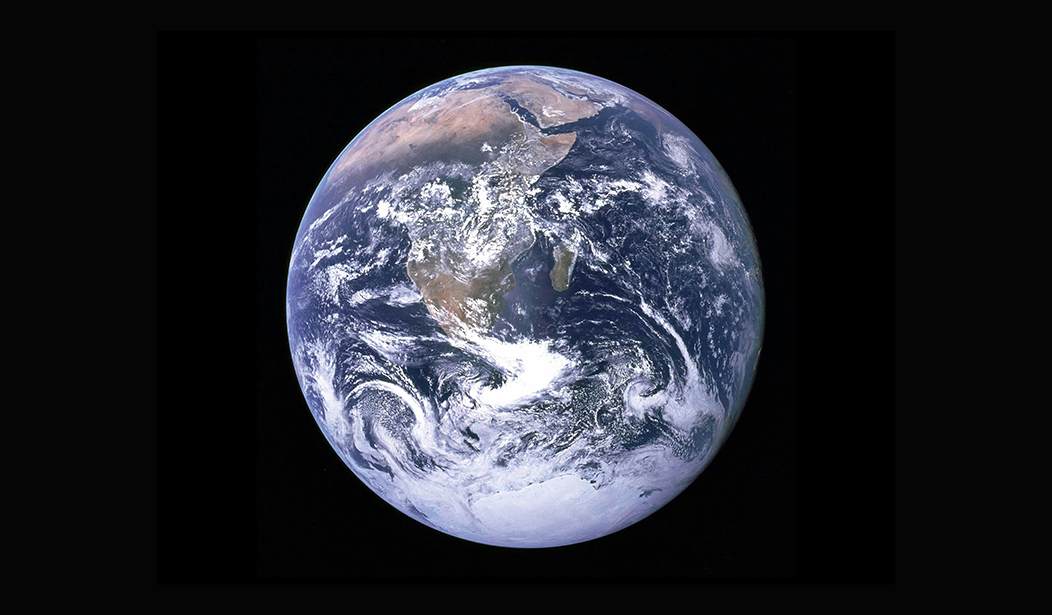

Every living thing on this planet is adapted to the day-night cycle, from humans to plants to bugs. Everything. That cycle changes; believe me, nowhere is the variation in the day-night cycle more apparent than right here in Alaska, where even in the southern part of the state, we deal with four to five hours of daylight in winter and 20+ hours in summer. But the cycle is there, every year, and we and everything else are adapted to that natural and fundamental rhythm.
That doesn't seem like something we should be messing around with, right?
Well, a company called Reflect Orbital Inc. is proposing something along those lines, and the Federal Communications Commission (FCC) has given a tentative approval to Reflect Orbital for the deployment of something you might expect to see in an Austin Powers movie.
Last week, the FCC authorized Reflect Orbital Inc. to launch a huge space mirror named “Eärendil-1.” From an orbit about 625 km high, it will cast a moving, 5-km-wide patch of light onto the Earth about as bright as a full Moon. Later, the company could combine beams from multiple satellites to create much brighter spotlights. Reflect Orbital wants to launch 50,000 more by 2035, selling sunlight-on-demand to solar farms, construction sites and search-and-rescue teams.
If Reflect Orbital's plan is realized, it could be calamitous not only for astronomy but also for the natural world as a whole. Nocturnal animals and night-blooming plants, tuned by evolution to the rhythm of day and night, would suddenly find their darkness interrupted by moving pools of redirected sunlight. Small favors? Reflect Orbital says the light will not be bright enough to start fires.
Sunlight on demand, in part to keep solar farms producing. What could possibly go wrong?
Note that each of these space mirrors will reflect a five-kilometer-wide spotlight on our planet. That's a little over three miles in freedom measurements. And they intend, note, to put multiple space mirrors in orbit, to direct multiple three-mile-wide beams of sunlight onto the Earth's surfaces.
Read More: Solar Farms Flop: Taxpayers Now Left Holding the Bag
Affordability: Now Another Nail in the Coffin of 'Green Energy'
We can make the case for search-and-rescue teams, who would certainly benefit from extra daylight to carry out their efforts. But other than that? There's really no good reason for this.
The downsides are considerable. These roving three-mile sunlight beams will screw up the circadian rhythm of every living thing they pass over. Nocturnal animals will have their normal activities disrupted. Plants will move back into the daytime photosynthesis cycles, flowers will open, only to have the artificial sunlight go away in minutes or hours, forcing all these living things to suddenly re-adjust. Humans may be able to adapt more easily than other animals and plants, but this could still disrupt sleep cycles. Bear in mind that the 3-mile-wide beam won't be the only effect; atmospheric scattering will light up the sky for a considerable distance around the direct projection. We can take comfort, at least, in Reflect Orbital's assurance that the reflected light will not be strong enough to start fires.
Presumably, the bulk of this proposed reflected sunlight will be aimed at solar power plants, which is another stunning illustration as to how solar farms are not a grid-scale solution; if this low-density, intermittent source needs an intervention like this to work, that's not a plus, it's a great argument for shutting down the whole show. Furthermore, the same problems that apply to solar power farms in natural daylight apply to this reflected light as well: Cloudy days will still reduce the amount of generation.
Also, aren't we supposed to be concerned about climate change? A few dozen big space mirrors reflecting sunlight onto the Earth's surface can't help but have some (probably local) effect. Granted, that effect would be puny next to the natural cycles of the Earth and the sun, but they would also be utterly unnecessary.
Spaceweather's report on this concludes:
The FCC itself acknowledged some of these concerns, but noted in its order that optical astronomy and the environment lie largely outside its jurisdiction. They can only regulate the project's use of radio signals. For now, no US agency regulates how bright a satellite may shine.
The company's FCC application attracted more than 1,800 public comments, most of them sharply critical. Nevertheless, the launch of Eärendil-1 is now expected before the end of the year.
Stay tuned for too much sunlight.
In the history of dumb ideas, this has to be pretty well up there on the list.
Now, the initial FCC approval limits deployment of these systems to narrowly defined locations, all in higher latitudes, from Alaska to Norway, Iceland, and Germany. Note that a good part of the year, locations at these latitudes already see extensive daylight hours, so presumably these deployments are intended for winter, when the opposite holds true. But a 3-mile-wide beam of sunlight suddenly lancing down out of the sky during a dark Arctic winter would likely have an even greater ill effect than it would in lower latitudes.
You can view the FCC's approval notice here.