






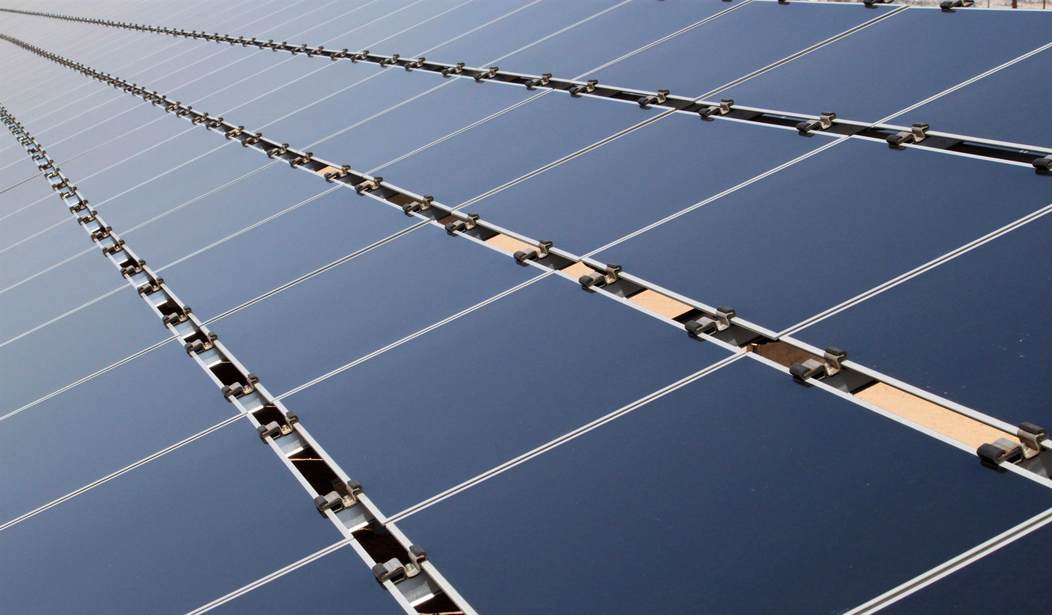
Well, this isn't as big a deal as the 250th anniversary of American liberty, but it's worth raising a glass to; on Saturday, July 4th, federal subsidies for wind and solar energy projects will end. To date, these have cost the American taxpayers around $141 billion.
The Trump administration is set to cut subsidies for new solar and wind power projects on Saturday. Estimates suggest the subsidies have cost taxpayers more than $141 billion over the past 16 years, more than any other energy source.
The Working Families Tax Cuts, a signature piece of President Trump's tax legislation signed a year ago, set Saturday as the deadline for federal tax credit subsidies on any new solar or wind projects not currently under construction.
U.S. Department of Energy Secretary Chris Wright touted the subsidy deadline and criticized solar and wind energy projects in a video posted to social media Thursday.
"The wind doesn’t always blow, and the sun doesn’t always shine," Wright said. "They drive up the system costs and increase Americans' electricity prices."
That much is certain. This has always been one of the primary problems with these alternative energy sources; they are intermittent, in addition to being low energy density sources. Moving from a high-density source to a low-density one never did make good sense. Subsidizing it made even less.
Read More: Why Solar Farms Are Now Prime Targets for Organized Crime
Weak Tornado, Strong Message: Solar Panels Shredded in Indiana
This boondoggle has been costing us a fortune, and not a small one.
From 2010 to 2023, solar and wind energy projects received more than $141 billion in government subsidies combined, according to an analysis by the Texas Public Policy Foundation. The projects received more in government subsidies than any other energy source in the United States, the group reported.
"Beyond their direct costs, subsidies are causing artificially low or negative wholesale prices, scarcity prices during periods of high demand and low wind and solar generation, inefficient use of existing assets, and increased transmission costs," Brent Bennett, a researcher at the Texas foundation wrote.
There's even more to it than that. Both wind and solar applications require a lot of raw materials, including rare earth minerals that, at the moment, we are still buying from China. They take up a lot of land that cannot be used for other purposes. Oh, in wind farms, there is a lot of space between the turbines, and one could theoretically grow crops or graze livestock between the eagle-killers. But solar farms? Hundreds or thousands of acres covered with big, expensive panels, on land that cannot now be used for any other purposes - and in an installation that one good hailstorm could utterly destroy.
So, this is a good deal for the taxpayers and for anyone who desires affordable, reliable electricity, which is pretty much everybody.
Not that there isn't a place for these things. If people choose to, say, have solar panels installed on their roof, more power to them, but the taxpayers shouldn't be shelling out a thin dime. If one lives in a place like Arizona, solar panels on the roof might even make good sense. In Alaska? Oh, in the summer, they may be great - but we have long, long, dark winters.
Choice, without subsidy. That should be one of the GOP's 2026 and 2028 campaign slogans.
Editor's Note: Do you enjoy RedState's conservative reporting that takes on the radical Left and woke media? Support our work so that we can continue to bring you the truth.
Join RedState VIP and use promo code FIGHT to receive 60% off your membership.


Join the Conversation
VIP members get the ability to comment on articles.