








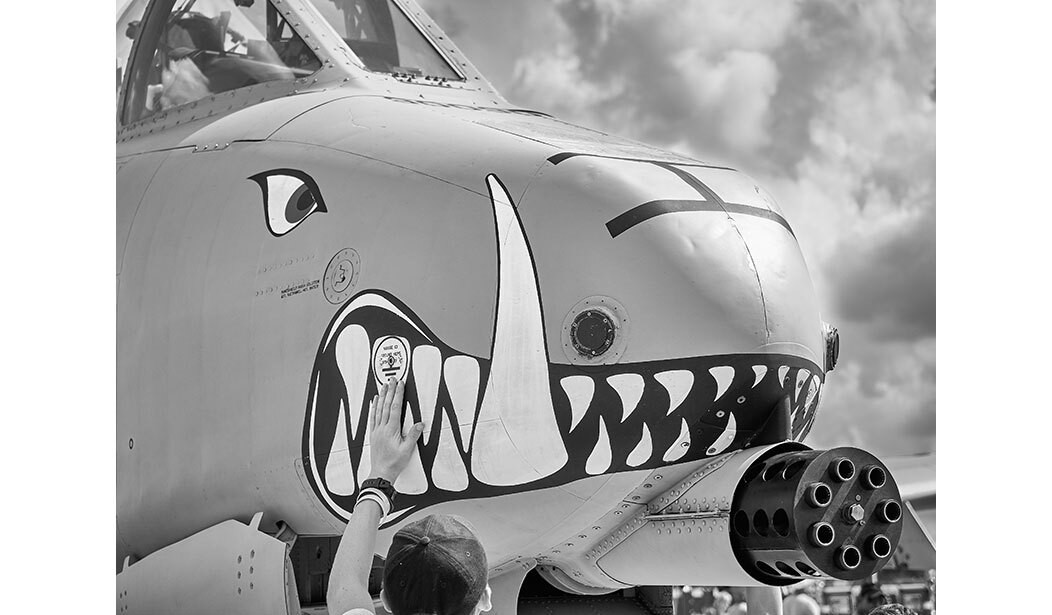
The A-10 Thunderbolt II (better known as the Warthog) is a wonderful piece of Cold War technology that, like the B-52, has lasted far longer than most people may have thought, and it has done so because it's remarkably useful. Not only is it a 30mm rotary cannon with wings, but it's also a flying tank, capable of flying low and slow, loitering over target areas for extended periods, and carrying a wide range of ordnance. In an asymmetric conflict, which is pretty much all the United States Air Force fights these days, the A-10 can operate with near-impunity in a sky utterly dominated by the United States' air superiority, and there are few things grunts on the ground like hearing more than the BRRRT of the 'Hog doing what it does best. So, we were pleased to see that, in the wake of the A-10's deployments and operations in Operation Epic Fury, the United States Air Force decided to keep the A-10 on until 2030.
There's just one problem: They may be keeping the Warthog technically active, but the Air Force, it seems, isn't funding it.
While the Air Force changed the headline, it has yet to follow through with the harder financial commitment needed to preserve actual A-10 combat power. Its fiscal 2027 budget, released shortly after the extension announcement, funds zero dollars of A-10 modernization, cuts depot maintenance below the service’s own stated requirement, and is crippled by “sunset” policy and institution resistance around the aircraft’s “upcoming divestment.”
In other words, by the end of this year, the A-10 will be without depot support, without a training pipeline, without weapons-school instruction, and without operational-test capacity. To a community that was scheduled for final retirement this October, every month waiting for the promised extension makes rebuilding slower, costlier, and closer to infeasible. Without action, the A-10 will transition from a combat asset to a line item waiting for liquidation.
2030, frankly, isn't long enough; not without an effective replacement for the A-10's unique role.
Read More: New Skyraider II 'Swiss Army Knife' Joins AFSOC Fleet
BRRRRT Lives On: Air Force Now Extending A-10 Warthog to 2030
In a near-peer conflict, the A-10 may run into some troubles; it is, after all, still mostly 1970s technology. But it's still a tough old bird, and while it was designed to kill Soviet tanks, it's just as capable of taking out terrorist bunkers and other strongpoints, as well as engaging and sinking light warships and boats. It's a remarkably useful bird, and if the Air Force is going to keep them, and they should, then they should fund it properly.
The A-10 was not preserved out of nostalgia. It was preserved because recent operations reminded the Air Force that immediate combat power still matters and the A-10 has proven useful in ways many planners underestimated. Today, it provides unique value unmatched by any of its peer tactical aircraft. It operates from austere locations, supports standoff and maritime strike, and validates emerging lower-cost weapons that reduces pressure on more expensive strike aircraft.
In other words, like the B-52, it's old but versatile, and there is no aircraft that does what the A-10 does - close air support - better than the A-10. There's nothing the grunts on the ground love to see overhead more than the A-10. There are few, if any, warbirds that goblins hate to know are in the area more than the A-10. The Cold War may be over, but as George Santayana famously said, only the dead have seen the end of war, and as long as we need close air support, the Air Force and the War Department should keep the Warthog fleet at full strength - at least until a worthy replacement is made.
Editor's Note: Thanks to President Trump and War Secretary Pete Hegseth's leadership, the warrior ethos is coming back to America's military.
Help us report on Trump and Hegseth's successes as they make our military great again. Join RedState VIP and use promo code FIGHT to receive 60% off your membership.



Join the Conversation
VIP members get the ability to comment on articles.