






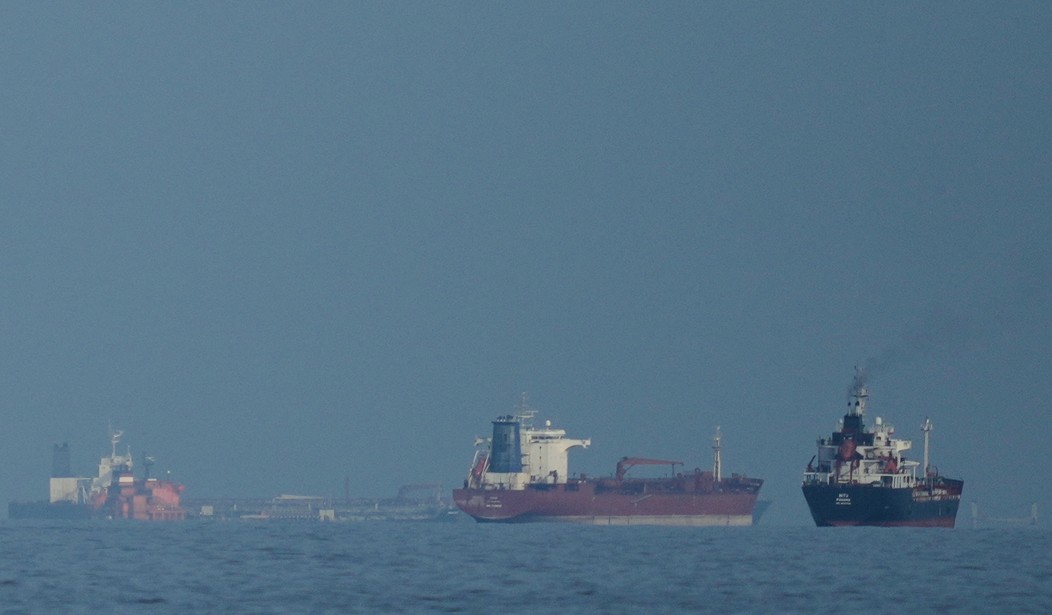
The problems in the Strait of Hormuz, we should remember, are not confined to Iran, the Middle East, or the United States. The troubles, the open-again, closed-again problems in the Strait of Hormuz are affecting the economies of Europe, Asia, and elsewhere, to the point where even a landlocked European nation and, by the way, a NATO member, is offering some help to the United States to get that sorted out. The nation is the Czech Republic, and they are offering to help with specialized surveillance tech.
The Czech Republic is prepared to help protect freedom of navigation in the Strait of Hormuz and is aligning closely with the Trump administration on security, NATO and Israel, Czech Foreign Minister Petr Macinka told Fox News Digital during an exclusive interview at the United Nations in New York.
Prague already had begun discussions about contributing specialized capabilities to help secure the strategically vital waterway amid growing tensions with Iran, Macinka said while speaking at Security Council-related meetings at the U.N.
"We are ready to contribute to freedom of passage and the Hormuz trade," Macinka said.
"We were among the first countries that were ready to contribute … We have no navy, as we are in the middle of Europe," he explained, "But we have some unique passive surveillance capabilities."
What's interesting about this is that the Czech Republic, being landlocked, is one of the few European nations not directly or even indirectly affected by the Strait of Hormuz, other than by the global rise in oil prices that's affecting the whole planet. Most of the Czech Republic's oil supplies come via pipeline; much from Russia until April of 2025, when the Republic stopped importing Russian oil, switching instead to a pipeline from the Italian port of Trieste, the oil supply for which comes from Kazakhstan and Azerbaijan, with smaller proportions from the USA, Norway, Libya, and some other places.
But the Czech Republic is a NATO ally.
Read More: Breakaway Somaliland Now Challenging Iranian, Houthi Dominance in Red Sea
Furthermore, the Czech Foreign Minister indicated that his government may be looking at the bigger picture.
Macinka warned that Iran posed a global threat through what he described as four main "war tools": nuclear proliferation, drones and ballistic missiles, international terrorism and threats to the Strait of Hormuz.
"Their nuclear military program must be stopped," he said. "It’s a global risk and global threat."
The comments come as the Trump administration has increased pressure on European allies to take a larger role in protecting international shipping routes amid Iranian threats tied to the Strait of Hormuz, one of the world’s most critical oil transit choke points. Roughly one-fifth of global oil consumption passes through the narrow waterway connecting the Persian Gulf to the Arabian Sea.
The Czech Republic, being landlocked, doesn't have a navy. The British Royal Navy, for centuries, the most powerful fighting force on the planet, is now a coastal defense force of small ships. Britain and France have offered to send some ships, but only after a cease-fire, like a bank offering to loan you money when you're no longer in debt. Not many of the nations of Europe have been too anxious to pitch in and help bring Iran to heel. So, it's great to see at least one NATO ally offering to help in a way that they can.
The Czechs aren't just offering to help in the Middle East, either. They have been providing arms, ammo, and other logistics to Ukraine to assist them in the Russo-Ukrainian War.
Editor's Note: For decades, former presidents have been all talk and no action. Now, Donald Trump is eliminating the threat from Iran once and for all.
Help us report the truth about the Trump administration's decisive actions to keep Americans safe and bring peace to the world. Join RedState VIP and use promo code FIGHT to get 60% off your VIP membership.


Join the Conversation
VIP members get the ability to comment on articles.