Every major conflict in human history has been won or lost by one factor: Logistics. In military circles, there's an old saying that applies: "Amateurs study tactics. Professionals study logistics." T'was ever thus; just read Julius Caesar's Gallic Diaries, and you'll see pages upon pages describing grain shipments, oil shipments, foraging; how he kept his armies fed, equipped, and on the move. More of that, in fact, than accounts of actual battle. Caesar intended his work to be read by the Roman officers who followed him, a sort of textbook of war, and he wrote accordingly.
In modern warfare, that largely comes down to fuel. In 1991, deployed for Operation Desert Storm, I remember being fascinated by the amount of fuel it took to keep a modern army on the move: A solid, almost unbroken stream of Army tanker trucks headed up to the front, and in the other lane, a solid, almost unbroken line of empty Army tanker trucks headed back to be refilled.
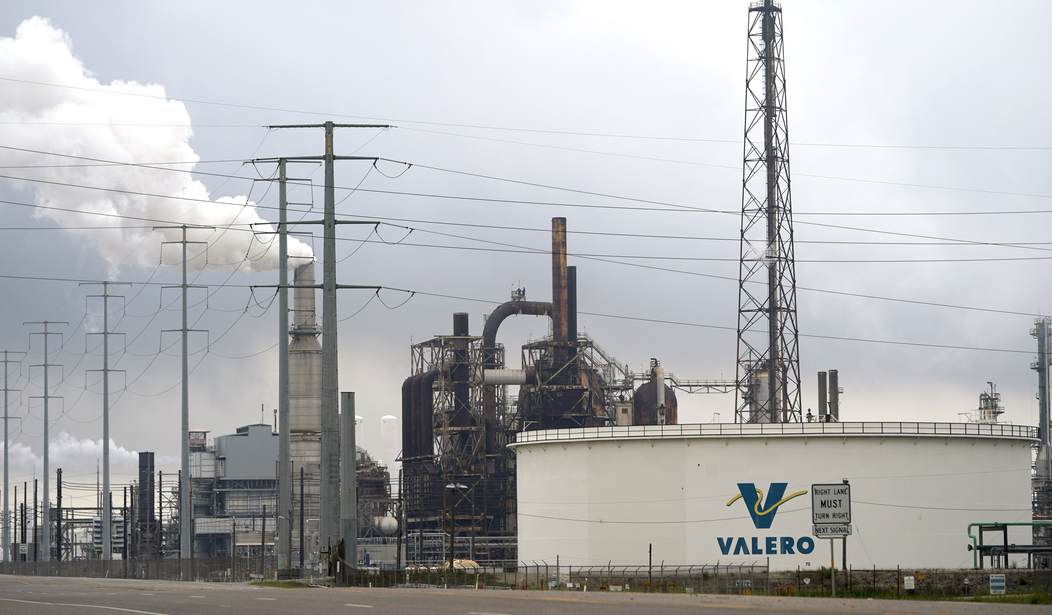
So, when our West Coast military bases, along with our civilian infrastructure and transport, are threatened by the accelerating shutdown of California's refining capacity, well, that could be a problem for the whole country. Engineer and energy consultant Ronald Stein, P.E., has some thoughts on that, and they merit consideration.
California is the 4th largest economy in the world and an “ENERGY ISLAND that is isolated from the other 49 States by the Sierra Mountains. There are no pipelines over those majestic mountains to connect the State to the rest of the country. Thus, California’s in-State refineries have been producing ALL the transportation fuels demanded on the California “Energy Island.”
- Bunker fuel, about 1 million barrels ANNUALLY for the ships servicing three of the busiest Ports in America, located in California.
- Port of Los Angeles had more than 1,800 vessel arrivals in 2024, which includes cruise and merchant ships.
- Port of Long Beach handled over 9.6 million container units in 2024, indicating a very high volume of ship activity, plus cruise ships.
- Port of Oakland, which also handles significant cargo volumes, contributes to the total number of cruise and merchant ships needing fuel.
- Jet fuel: California has over 2,400 airports and aviation facilities, including 9 international airports and 30 major military airports. The demand is 13 million gallons of aviation fuel DAILY. Several of those airports have direct pipelines to local refineries. In 2019, California consumed 16.7% of the national total of jet fuel, making it the largest consumer of jet fuel in America.
- Gasoline: For its 30 million vehicles, California is the second-largest consumer of motor gasoline among the 50 states, consuming 42 million gallons DAILY of gasoline, just behind Texas.
- Diesel: Diesel fuel is the second largest transportation fuel used in California, consuming 10 million gallons DAILY of diesel to support the state’s trucking of products from 3 of the busiest shipping ports in America.
Now, not all the fuel used in California is produced in-state; not anymore.
In the future, 181 new refinery units that are planned or announced in Africa, Asia, and the Middle East will be providing transportation fuels to California’s 9 international airports, 30 major military airports, and 3 of the largest shipping ports.
These modern refineries in other countries are designed to operate on a massive scale, process multiple types of crude oil, and export transportation fuels worldwide. Tanker transport allows refined transportation fuels to reach major consumption centers, including ports such as the Port of Los Angeles, the Port of Long Beach, and the Port of Oakland.
This is a serious problem.
Read More: California Fuel Prices Poised to Hit New Heights Due to Refinery Losses
More Winning: Drill, Baby, Drill Leads to Refine, Baby, Refine With New Texas Facility
Ronald Stein has one more vital point, noting that when oil comes out of the ground, it's just useless black sludge, and so it remains without refinery capacity:
Energy “REALITY” tells us that we need refineries to convert that useless black tar into usable transportation fuels and products:
- Planes, ships, trucks, and cars do not run on raw crude oil; they run on transportation fuels manufactured FROM crude oil by multi-billion-dollar refineries.
- With no pipelines over the Sierra Mountain, the new refinery in Brownsville, Texas, will be useless to the California Energy Island that demands in-state refineries to provide transportation fuels for 30 major military locations, 9 international airports, 3 of the busiest ports in America, and fuels for the trucks that transport imported products to the rest of America.
- Wind turbines and solar panels ONLY generate electricity, but CANNOT make any of the more than 6,000 products that are based on the oil derivatives manufactured out of raw crude oil, nor can wind and solar make any transportation fuels for the military, airports, merchant ships, automobiles, and trucks.
- The world is not dependent on raw natural fossil fuels, but has become dependent on the products and transportation fuels MADE FROM oil, the same products and transportation fuels that Wind and Solar CANNOT make!
- The world needs MORE REFINERIES to process that useless black tar into usable transportation fuels and products for life as we know it.
Incidentally, we have a similar problem here in Alaska. Oh, we have massive oil and natural gas reserves. But we lack refining capacity, not because, like California, we shut them all down, but because sparsely populated Alaska never had them. That's why I'm paying nearly $6 a gallon for diesel fuel right now, even though just north, at Prudhoe Bay, there is an ocean of that unrefined black sludge that my pickup won't run on. And that's an issue for our military forces here in the Great Land, too; but in California, this situation came about by a conscious decision, wherein California's Democratic Party declared oil refineries to be persona non grata in the once-Golden State, and in so doing presented us with a significant national security risk.
Logistics. It's always logistics. One of the greatest miscalculations in World War II, Operation Market Garden, failed because the entire operation depended on one line of advance: No rail line, just one highway, for the combat vehicles and the supply trains. One road, easily interdicted, impossible to run logistics trains efficiently.
California is setting itself up for the same kind of problem: The energy and the petroleum products that every aspect of our lives depends on will soon be coming mostly, if not totally, from foreign sources - and that includes fuel and supplies for our West Coast military installations.
That, folks, is a disaster waiting to happen, and California Democrats are responsible for it.