
On Sunday night through Monday afternoon, my wife and I left our compound in the care of our house-sitters and made the long, long journey from Alaska's Susitna Valley to Dallas, Texas, where I'll be spending a few days covering the 2026 Conservative Political Action Conference, or CPAC. It's an interesting gathering, with lots of great speakers, lots of interesting folks, and neat things to see and do. If you're ever able to attend, I recommend it.
But, oh, that trip. A nearly two-hour drive to the airport in Anchorage. Our redeye to Denver ran an hour late. After stressing that whole overnight flight about making our connection in Denver, we got there, raced to the gate, to find the flight to Dallas was likewise late, eventually running four hours behind schedule. Fine, fine; we made the flight just fine, and got to the hotel four hours late - but we got here.
And, for the second time this year, I find myself in Texas. That's interesting, because Alaska and Texas seem on the surface like very different places, America's two largest states actually have a lot in common.
My first experience in Texas was when I was taking Army training at Ft. Sam Houston, Texas, home of the Army Medical Department. My first stint was only ten weeks as an enlisted guy in the old 91A Combat Medic school; I didn't have a vehicle and couldn't get around much. But the second stint, I was a second lieutenant taking my Officer's Basic Course and the Medical Logistics Management course, which meant that I was there for the better part of a year. I had an apartment off post, I had my pickup there, and so I had the chance to explore. I hunted deer and turkeys. I explored the beautiful hill country around Kerrville, and spent a weekend checking out the beaches at Corpus Christi and the Aransas National Wildlife Refuge. Texas is a neat place; big, beautiful, with a lot of open country.
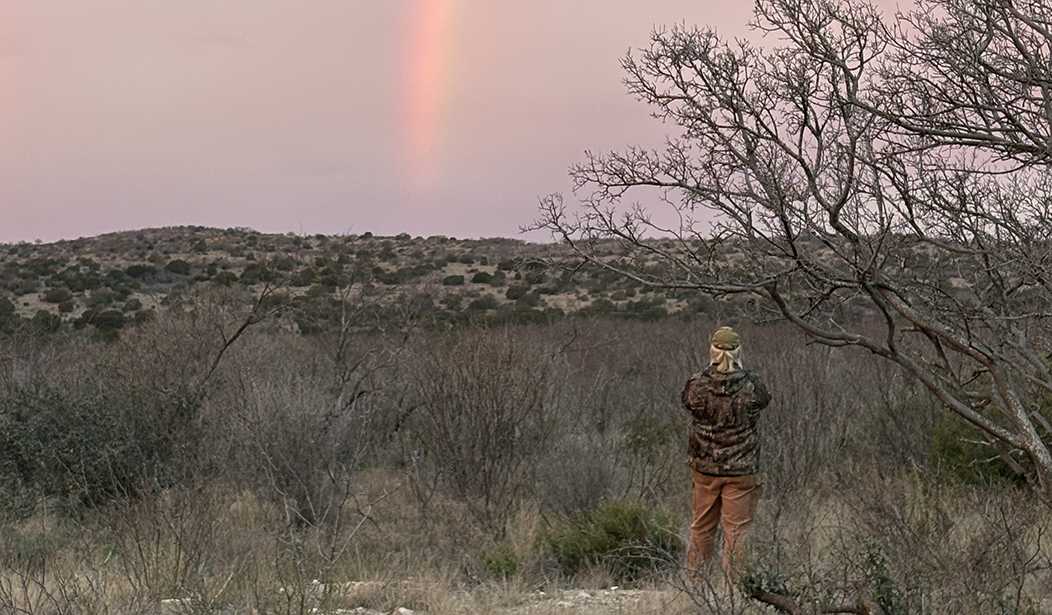
And then, just this past February, I spent a few days with my daughter, her husband, and her father-in-law, hunting feral hogs near Rocksprings. That was a lot of fun, and the hunt was in some pretty wild brush country.
Now, as you'll know if you've been reading my work for more than about ninety seconds, my wife and I make our home in Alaska's Susitna Valley. This has all made me devote some brain run-time to the things America's two greatest states have in common.
First: Both states are major energy producers. Texas has, among other huge oil and gas deposits, the Permian Basin, one of the biggest oil reserves on the planet. Alaska has the North Slope, with the great fields in the Alaska National Wildlife Refuge (ANWR).
Second: Both states have considerable mineral wealth. Texas has copper, graphite, iron, and more. Alaska has gold and silver, rare earth metals, copper, tin, and lead.
Third: Both states have compelling and heroic histories. Texas broke away from Mexico in 1836 and was, for nine years, an independent nation, the Republic of Texas, before joining the United States. Alaska, after being Imperial Russia's only New World holding, was bought by the United States before the Russian Empire knew about the state's great mineral wealth. In 1942, Alaska became the only United States territory to be invaded by an Axis power in World War 2. Our history is a history of gold rushes and desperate dog-sled runs with vital medicines, and a history of how intrepid bush pilots opened up the wilds of the Great Land.
Texas has vast cattle ranches; Alaska has rich offshore fisheries. Texas has some great tourist destinations, like the San Antonio Riverwalk, the Big Bend National Park, and South Padre Island. Alaska also has great tourist destinations, from the Alaska fjords to Denali National Park to the vast expanses of wilderness that are, well, everywhere.
But there are more compelling similarities.
Texas and Alaska are both (outside the cities, in particular) peopled with the same kinds of folks, in my experience. Texans and Alaskans, along with most of the rural and small-town denizens of most of our states, are tough, independent, and self-sufficient. Lots of people choose to live in the hill country or the piney woods of Texas because they value their independence, their privacy, and want to be left alone. The same applies to people who choose to live in the upper Susitna Valley, in the vast expanses of the Interior, in the villages and small towns of the Unorganized Borough.
And, not least important, Texas and Alaska are two states that could, if it were necessary, go it alone. Texas has good ports, ample energy, ample food production, and plenty of capable people. Alaska would have a rougher go of it, having essentially no manufacturing industries, but we have plenty of energy and mineral wealth to trade. Perhaps even as part of a great free trade pact, the Republic of Texas/Alaska Free State Trade Agreement.
Last but not least, I'm fond of both places. Alaska and Texas are both states that command great loyalty in the people who call them home. I'm fond of repeating my claim that you couldn't pull me out of Alaska with a tractor, and I knew more than a few Texans who feel the same way.
So, for the next few days, I'll be bringing you news from CPAC 2026, right here in the Dallas suburb of Grapevine, Texas. Stay tuned!