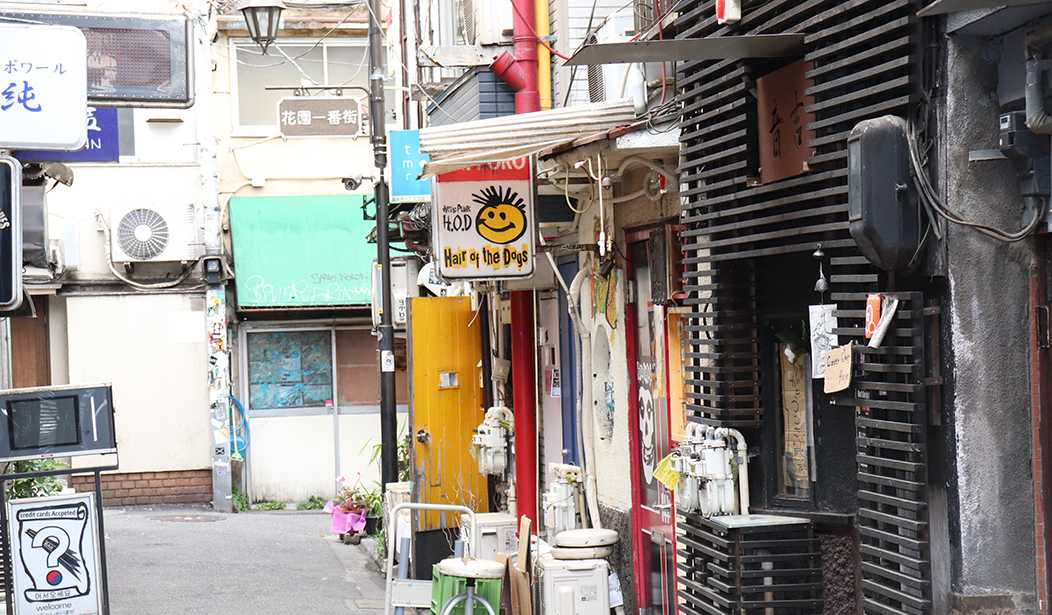

If you've been reading my work for any length of time, you'll know of my fondness for Japan. In my previous life, I did a lot of business in Japan, and have traveled about that country quite a lot. I've seen Osaka, Kyoto, Tokyo, and Sendai. I've drunk beer with three guys in Kyoto who I am nearly certain were yakuza. I've eaten whale in Sendai, noodles in Kyoto, and pork curry in Osaka. I'm about halfway to the status of being a Tokyo Ramen King, which requires one to have eaten in a ramen joint in each of Tokyo's wards - I know the rules for that because I invented the thing myself. I've traveled the countryside, too, and discovered that small towns anywhere are a lot like small towns everywhere.
While I'm not a fan of cities in general, though, I confess a sneaking affection for Tokyo. Tokyo dwarfs American cities, but it doesn't have most of the problems American cities have; crime is low, housing isn't terribly expensive if you're willing to live in a typically urban Japanese broom-closet of an apartment in a 30-story building. You can walk down alleys in Tokyo at 2 AM on Saturday with 100,000-yen notes hanging out of your back pockets, and nobody will bother you.
I've spent a lot of fun evenings in Japanese restaurants and bars. They are smaller than American examples, and I'm bigger than most Japanese people, so that makes it... interesting. And speaking of small, one of my favorite places in Tokyo is in Shinjuku: The Golden Gai.
The Golden Gai is in the entertainment district of Kabukichō, an area known for host and hostess clubs, bars, restaurants, love hotels, and nightclubs. Kabukichō is already a fun place to hang out, especially on a Friday or Saturday night, but at the heart of this district, which was once a nearly-impassible swamp, lies the Golden Gai.
The Gai is a small place, consisting of six narrow alleyways separated from each other by even narrower passageways, narrow to the point where it's difficult to squeeze through. There are over 200 businesses there, mostly small diners, bars and private clubs. Most of them only seat six to eight people, although if there's music, especially a live band, you'll often see a club with the door open and people hanging out in the alley, listening.
What makes the Golden Gai interesting is that it's a look at pre-war Tokyo. Most of Tokyo was destroyed in the war, thanks to allied fire-bombing, and afterwards, most of Tokyo, including Shinjuku, was rebuilt along more modern lines. But the Gai survived, and survives to this day.
My first foray there came when I was on a consulting project out in the western part of the city, in Akishima. One Friday night, I intended to explore Shinjuku; I ended up going alone, as my usual partner in such forays, my buddy Paul, who speaks Japanese, wasn't available. No worry, I was familiar enough with Tokyo to know my way around, so a short train ride later, there I was in Shinjuku Station - one of the busiest passenger rail stations in the world, with as many as 3.5 million people passing through per day. A short ramble and one convenience-store beer later (you can not only buy beers in Japanese convenience stores, but you can walk around drinking it) I found myself at the entrance to the Golden Gai.
Read More: Thoughts on the Upcoming Trump-Takaichi Meeting
Japan's Prime Minister Wins Supermajority and Charts New Course for Japan and Western Pacific
What a night that was! I squeezed into one place, hearing live music, which ended up being one guy with a guitar. I tapped into my limited Japanese to call for a beer, only to be told that the place was a private club - but then the guy behind the counter looked at me, with my tooled boots, big rodeo belt buckle, and white Gus-crown cowboy hat, and asked in passable English if I was an American. I said yes; he said, "Come in. You are my guest." I ended up having a couple of convivial beers with him and the other 3-4 people in the club before proceeding on my way.
That's been my experience in Japan, almost every time: The people are polite, friendly, and hospitable. I wandered the Golden Gai some more, stuck my head in a few more doors, had another beer or two. It was a great evening in a unique place that I had never even known existed until I literally walked into it. That's one of the fun things about exploring Japanese cities; there are millions of these little, intimate districts. It's a lot of fun.
And finally, I suspect that the beautifully done Japanese television show Midnight Diner is set in the Golden Gai, although that's not confirmed anywhere in the show - but I'm pretty sure I recognize some of the outside scenes.
If you're ever in Tokyo, proceed to the Shinjuku station, take the north exit, and then it's a short walk to the Golden Gai. It's like no other place in Japan - but then, there are a lot of places in Japan that are like no others. That's one of the reasons I'm so fond of the Land of the Rising Sun.