






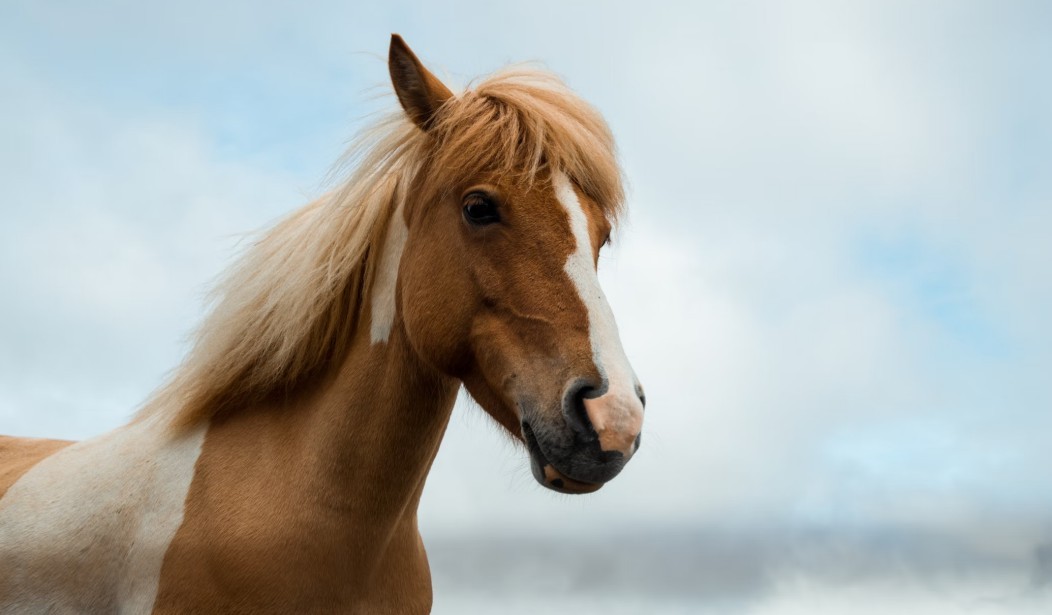
Horses are neat critters. While I haven't sat on a horse in many years myself, I still find them interesting. The domestication of the horse, after all, completely changed human history; for the first time, people found a way to haul heavier loads more easily, and more importantly, to travel faster than a person could travel on foot. The domestication of the horse ended up being a net positive for both species. Entire cultures have risen around the horse, from the Mongols to the Cossacks to the latter years of the American Plains Indians.
Another neat thing about horses is the distinct noise they make: The neigh, or whinny. It's a sound unlike any other in the animal kingdom, and now, thanks to some new research, we have a little better idea as to how they do it. The interesting thing is that the whinny has two components, one high-pitched, one low. The low-pitch one is nothing unusual.
How exactly horses produce that distinctive sound — also called a neigh — has long eluded scientists.
The whinny is an unusual combination of both high and low pitched sounds, like a cross between a grunt and a squeal — that come out at the same time.
The low-pitched part wasn’t much of a mystery. It comes from air passing over bands of tissue in the voice box that make noise when they vibrate. It’s a technique similar to how humans speak and sing.
Here's where it gets interesting.
But the high-pitched piece is more puzzling. With some exceptions, larger animals have larger vocal systems and typically make lower sounds. So how do horses do it?
According to a new study, they whistle.
Researchers slid a small camera through horses’ noses to film what happened inside while they whinnied and made another common horse sound, the softer, subtler nicker. They also conducted detailed scans and blew air through the isolated voice boxes of dead horses.
The whinny’s mysterious high-pitched tones, they discovered, are a kind of whistling that starts in the horse’s voice box. Air vibrates the tissues in the voice box while an area just above contracts, leaving a small opening for the whistle to escape.
Work like this is far too interesting to be reined in. Horses use this sound to communicate, mostly, with other horses - although I have heard it used on humans, too, as though the horse was lapsing into Elizabethan English, objecting to something a human is doing by, in effect, calling out "I say thee neigh!"
Read More: You Really Otter Watch This: Snowstorm Frolics in Baltimore
Punch the Lonely Baby Monkey Has a New BFF, and It's a Beautiful Thing
This appears to have been a carefully considered study. The researchers clearly didn't just gallop right in. If you research in haste, it's very likely your conclusions will be unstable. Better to pace yourself, to make hay as the sun shines. No reason to stirrup trouble, after all.
And, while horses aren't always known as the brainiest of animals, we do know of at least one equine who not only is a great communicator, but who is also capable of planning for his future.
I'll be here all week. The steak and lobster here is great; you should try it.Editor’s Note: Do you enjoy RedState’s conservative reporting that takes on the radical left and woke media? You can't say neigh to a deal like this!
Join RedState VIP and use the promo code FIGHT to get 60% off your VIP membership!



Join the Conversation
VIP members get the ability to comment on articles.