
There's a thing all the kids are talking about (at least, my kids are) called "first world problems." These are things seen as crises by people living comfortable, clean, warm, and dry lives in the more-or-less prosperous nations of the developed world. Comfortable people can afford to worry about ephemeral things like the global mean temperature rising by a degree and a half over the next century.
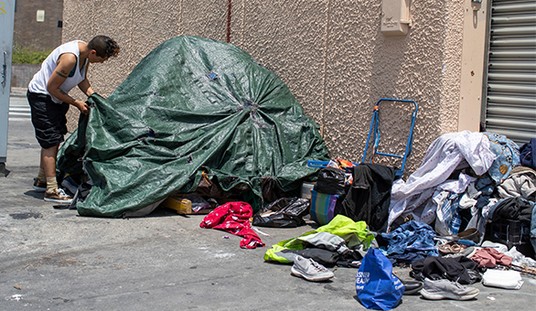
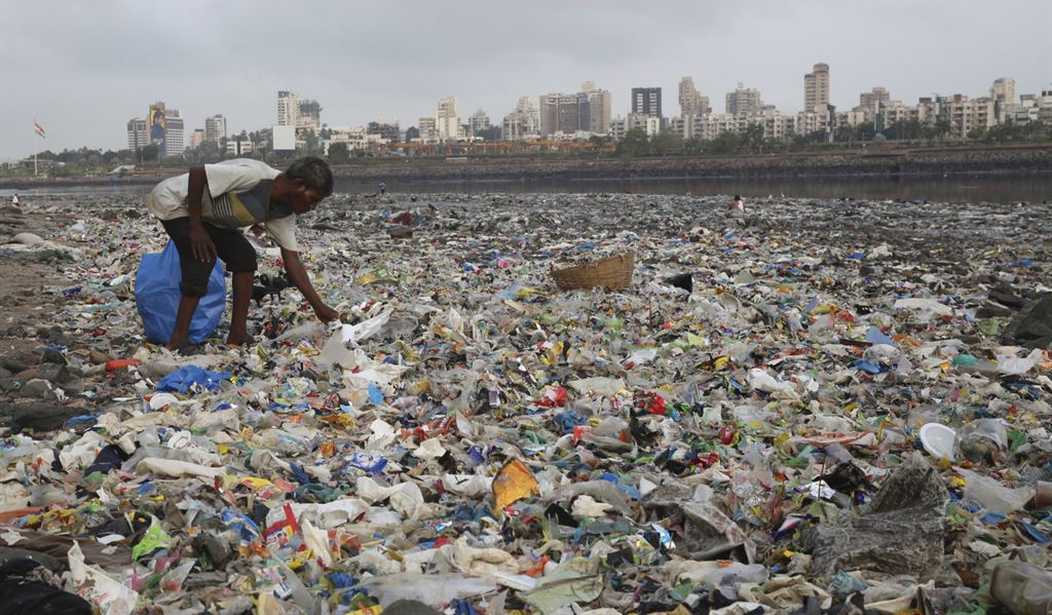
Meanwhile, an eight-year-old boy and his six-year-old sister, somewhere in the euphemistically described developing world, are frantically hunting for edible scraps in an enormous garbage heap on the edge of a slum with no running water or sanitation.
In places like sub-Saharan Africa, Southeast Asia, and other places, that's the real environmental crisis. It's real, it threatens the health and even the lives of people who live in those places, and it is terribly damaging to the ecosystems, and yet the United Nations is concerned that the United States isn't putting up enough solar panels.
Over at one of my favorite climate/environment sites, Watts Up With That, author Vijay Jayaraj has some interesting things to point out.
What if the worst environmental problem wasn’t the one everyone is talking about? While Western elites sip fair-trade coffee and obsess over carbon footprints, the developing world drowns in a toxic soup of its own making – a crisis entirely distinct from the phantom menace of climate change.
The real environmental emergency isn’t the modest warming that has helped humans thrive. It’s land degradation, poisoned water and other forms of pollution that are burying the Global South alive.
Yes, we’ve been fighting the wrong environmental war.
The foaming black sludge in the rivers, the mountains of untreated garbage festering in streets and the invisible superbugs breeding in waterways represent a true crisis that extends across continents.
If you are, like me, a graying Boomer, you may well remember when we had problems like that here in the United States. When I was a kid, the highways were strewn with trash, our major cities had frequent air quality warnings, and some of our waters were so polluted you couldn't eat fish from them, even if you could find one.
We fixed our problems. In the United States, in Europe, in Canada, in most of the modern, developed world, our environment is cleaner than it has been since before the Industrial Revolution. But in the "developing" world, things are much worse.
Vijay Jayaraj writes:
In Ghana, only one-quarter of the daily trash is gathered for disposal. Uncollected waste breeds insect vectors that transmit malaria and dengue fever. In South African townships, nearly three-quarters of the residents report diseases directly attributable to improper waste disposal. Cholera dominates the list.
Southeast Asia now ranks among the largest contributors to marine plastic pollution. Mismanaged waste flows through rivers into coastal waters, damaging fisheries and tourism. Plastic pollution stems from governance failure, not atmospheric chemistry. The solutions are mundane but unapplied: collection trucks, engineered landfills and modern incineration with air-emission controls.
Yet here emerges the peculiar tragedy of our moment: While our children drink poisoned water, our governments have burned billions of dollars at the altar of net zero. They divert precious financial resources, energy and administrative bandwidth toward fighting a ghost. They chase the approval of the United Nations and the World Economic Forum, pledging allegiance to a “war on carbon.” They announce billion-dollar “renewable” targets for solar and wind installations.
This, not carbon footprints, is what the environmental activists should be worried about. So why aren't they? I have a theory, and it boils down to "it's too hard." It takes little time and effort to buzz off to Brazil, ride in an air-conditioned limousine down a few miles of pristine new highway ripped out of the famous Amazon rain forest to spend a few days sipping lattes and whining about the nasty American President Trump failing to appease the carbon gods. But actually finding some way to clean up the mess in these developing nations? That would involve commitment. That would involve sending people out to build infrastructure. That would be hard. There would be no limousines, no lattes, no air-conditioned conference rooms - and no cocktails at the lounge when the day's pearl-clutching was done. Fixing these environmental calamities will require not only massive cleanup efforts but building modern waste disposal, water treatment, and sanitation infrastructure. It will also require a generational shift in attitude, which was in large part what happened in the United States; starting in the 1970s, it simply stopped being acceptable to throw trash out of your car window.
These are the changes that would have to happen. They aren't glamorous, they aren't highly visible, and they require a lot of work in dangerous and unsavory parts of the world.
Read More: New York Times' New Trump Weather Witch Hunt Debunked
$20 Trillion Down the Drain: Renewables Barely Dent Fossil Fuels
It's an even greater irony that the proponents of this first-world climate panic are invariably leftists. Communist and socialist governments have an absolutely abysmal track record on environmental issues. The Soviet Union was notable for foul air and water. In China, air quality in Beijing and other major cities is dangerously bad; before China could host the 2008 Olympics, it had to shut down all of the industry in and around Beijing to allow the air to clear before the competitors and people from all over the world arrived. China today has issues like undrinkable tap water, rivers turning red from spilled dyes and other chemicals, and air in the urban areas being unbreathable. If there's one thing that's harder on the environment than poverty, it's socialism.
If the environmental left really wanted to make a difference, these are the problems they'd be worried about. This is where the United Nations' efforts would be focused. Not on solar panels and windmills, not on fruitless Net Zero schemes. But these aren't first-world problems. These are real, no-Schiff catastrophes, and it's funny how comfortable American climate scolds so rarely talk about them.