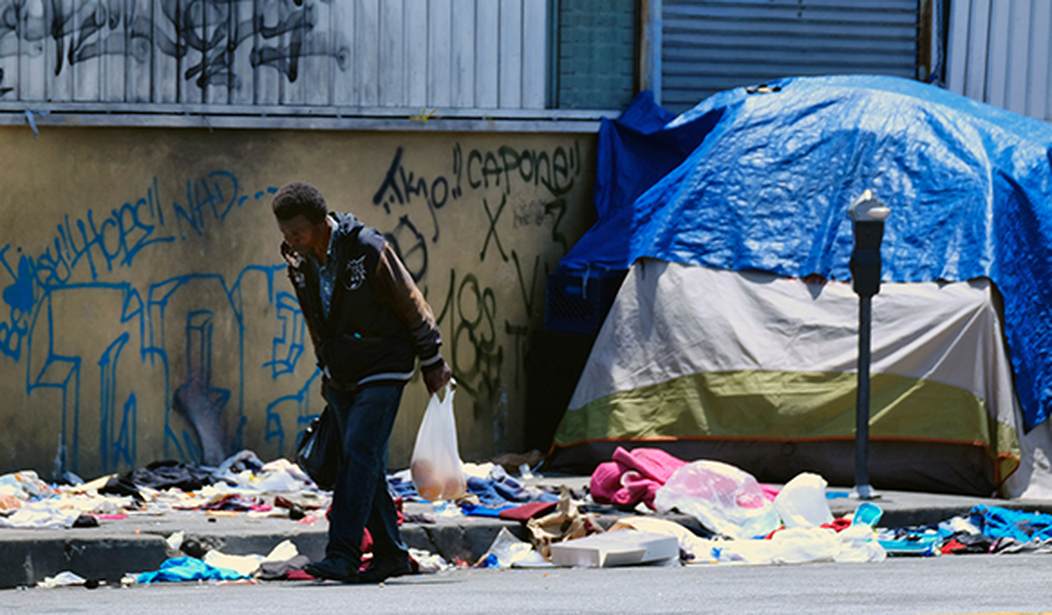

Yes, once again, I'm still an odd one to be writing about the state of America's urban areas. If you've been reading my work for more than about six minutes, you know I grew up in a rural setting in Iowa and am a content rural dweller myself now. I have little time for cities, despite having lived in them for four decades. I find them unpleasant; crowded, noisy, and, to be honest, they smell bad. I like the clean country air of the Susitna Valley, and if that means I have to put up with the occasional temperature drop into the cellar, that's fine.
With that being true, why am I still worried about America's cities? Because our cities are the beating hearts of our nation. Much of the country's economic activity happens there. Urban areas contain a lot of the country's industry and academia. What's more, our cities used to be the pride of the nation, but that's not so much the case anymore. Rampant open-air drug use, huge homeless encampments, and rampant crime, including rioting against federal immigration officers, are taking their toll.
But there's another factor, a critical public health factor, that surrounds those huge homeless encampments: Disease.
Read More: The Downfall of America's Cities: City of Rats
The Downfall of America's Cities: The Homeless Problem Nobody Wants to Discuss
Here are just a few recent outbreaks:
- 2026, Berkeley, California: Leptospirosis, a disease spread by rat urine, was found in an expansive, longstanding homeless enclave.
- 2025, Bangor, Maine: An HIV outbreak, the state's largest, prompted by sharing needles and healthcare shortages; also, a major homeless enclave was cleared, scattering the former denizens to the four winds before any disease checks were done.
- 2025, Anchorage, Alaska: Three people died in a homeless enclave, not from bears, but from Streptococcus A, which can cause serious infections.
- 2024, San Jose, California: An outbreak of Shigellosis, a severe bacterial infection that can result in runaway dysentery, was going in at least three people in several homeless enclaves.
- 2022, San Francisco, California: Several suspected cases of Mpox, a viral disease that can cause rashes, blisters, and swollen lymph nodes.
There are more, some documented, some only suspected. The news of the first case mentioned here, from Berkeley, broke only on the day of this writing: January 15th, 2026.
Health officials are warning of a dangerous bacterial infection that has been detected at a homeless encampment in Berkeley, California.
Leptospirosis, which is caused by Leptospira bacteria, is a zoonotic infection that can be passed from animals to people.
The disease has been confirmed in multiple rats and dogs at the homeless encampments along Harrison Street near Eighth Street in West Berkeley, according to an alert from City of Berkeley Public Health.
Rats and their urine are the primary vectors of the disease. "Homeless encampments breed sewage, which attracts rats," Dr. Marc Siegel, Fox News senior medical analyst, told Fox News Digital. "Rats may carry leptospirosis in their urine."
The Centers for Disease Control (CDC) has this to say on the topic:
People experiencing homelessness are at increased risk for infectious and non-infectious diseases. Homelessness is known to increase the risk for infectious diseases such as Viral Hepatitis (especially Hepatitis C), Tuberculosis (TB), Human Immunodeficiency Virus (HIV), and Coronavirus Disease 2019 (COVID-19). People experiencing homelessness also commonly face mental illness, alcohol and substance use disorder, diabetes, and heart and lung disease.
Setting aside the "people experiencing homelessness" horse squeeze, in this, the CDC is correct; homeless encampments are reservoirs and breeding grounds for communicable diseases, and present a major threat to public health. There couldn't possibly be a friendlier environment for any pathogen. Plagues sweep through places like this when you have a population of creatures confined to a small area, in close quarters, many already in poor health, many with compromised immune systems. In these encampments, many of the residents are addicted to drugs and/or alcohol, which exacerbates the problem; not only does it compromise immune systems, but practices like needle-sharing and even drinking from the same bottle can spread various diseases.
And sanitation, the ancient Romans knew better than the denizens of our urban homeless enclaves and the city officials who supposedly watch over them. Even the city of Rome itself had one of the first engineered sewers, the Cloaca Maxima. While Rome was frequently swept with disease due to cramped housing, high population density, and uncertain water sources - many took their drinking water straight from the Tiber, the vaunted aqueducts notwithstanding - the Romans at least knew which efforts to take. They were leaning into the effort more so than many of our urban so-called leaders today.
It's only a matter of time before a serious disease outbreak rips through a major city like wildfire, and it won't just cause a week of elevated temperature and sneezing. This next one, this unimagined future pandemic, may be one like the Black Death that killed as many as 25 million in Europe and Asia - solid numbers aren't known, due to the disease causing major breakdowns of societal order - or the 1918 Spanish Flu that may have killed 50 million.
And there's a major strategic vulnerability here as well. I have repeatedly pointed out that, while World War 1 was the war of chemists, and World War 2 was the war of physicists, World War 3 will be the war of biologists, and there is no better place to infect a population with a bioengineered virus or other pathogen than in one of the homeless enclaves.
Our cities can't afford this. Our society can't afford this. Our national security can't afford this. For all these reasons and more, not to mention ordinary human dignity, these homeless enclaves, these wandering street people, have to be cleaned up. They have to be removed from the streets, and if it has to be done involuntarily, then it does, in the name of public health. But the people running these major cities seem content with mostly symbolic efforts.
And under those efforts, trouble is brewing. In rats, in insects, on animals, in the soil, on needles being passed around, trouble is brewing. And if it breaks into the open, it may well be too late.