






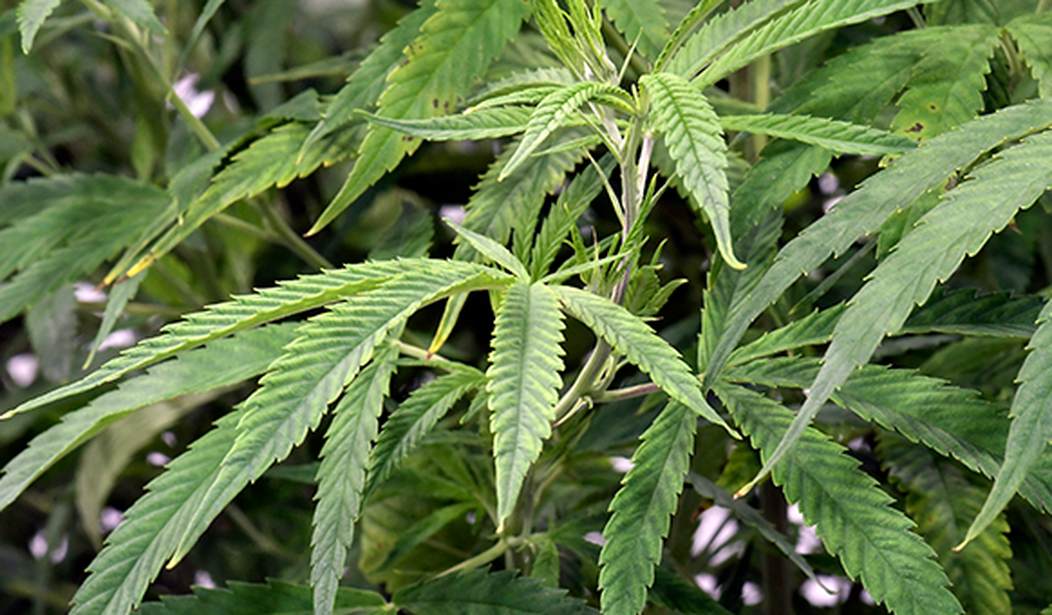
The federal Drug Enforcement Administration regulates drugs under five schedules, known (obviously) as Schedule I through Schedule V. On Thursday, President Donald Trump signed an executive order reclassifying marijuana from a Schedule I controlled substance (high risk of abuse, no known medical use) to Schedule III (lower risk of use, some medical benefits). The president cited some of those medical benefits at the signing.
.@POTUS: "I'm pleased to announce that I will be signing an Executive Order to reschedule marijuana from a Schedule I to a Schedule III controlled substance with legitimate medical uses." pic.twitter.com/yzFcv9Qpyg
— Rapid Response 47 (@RapidResponse47) December 18, 2025
The president said:
Today I'm pleased to announce that I will be signing an executive order to reschedule marijuana from a Schedule I to a Schedule III controlled substance with legitimate medical uses. We have people begging for me to do this. People that are in great pain. For decades this action has been requested by American patients suffering from extreme pain, incurable diseases, aggressive cancers, seizure disorders, neurological problems, and more, including numerous veterans with service-related injuries and older Americans who live with chronic medical problems. Those can severely degrade their quality of life.
The White House has also released a fact sheet with further details on what the rescheduling will allow:
- The FDA reviewed the landscape of medical use of marijuana and found credible scientific support for its use to treat anorexia related to a medical condition, nausea and vomiting, and pain.
- Chronic pain affects nearly one in four U.S. adults and more than one in three U.S. seniors, and six in 10 people who use medical marijuana report doing so to manage pain.
- One in 10 seniors used marijuana in the last year and evidence shows improvements in some seniors’ health-related quality of life and pain with medical marijuana use.
- However, the lack of appropriate research on medical marijuana and consequent lack of FDA approval leaves American patients and doctors without adequate guidance on appropriate prescribing and utilization, especially as just over half of older Americans using marijuana have discussed the usage with their healthcare provider.
- Schedule III status will allow research studies to incorporate real-world evidence and models that can assess the health outcomes of medical marijuana and legal CBD products while focusing on long-term health effects in vulnerable populations like adolescents and young adults.
Marijuana has been claimed to be an effective treatment for long-term chronic pain and other syndromes, such as glaucoma and cancer.
Read More: Weird: FBI Meth Burn Smokes Out Animal Shelter
Latest Research: Cannabis Can Mess Up Human Egg Cells
Medical marijuana has been shown, in some studies, to have a positive analgesic effect that can help long-term chronic pain sufferers. And speaking from a personal note, as someone whose spouse has suffered with long-term chronic pain from low-level nerve agent exposure in 1991, if anything will help, most chronic pain sufferers may be willing to give it a go.
This rescheduling isn't legalizing marijuana for recreational use; at the federal level, it remains a controlled substance. But, as the president notes, this action will open up avenues of research that were previously unavailable. More research is generally better than less research, and this opens a lot of doors.
Editor’s Note: Do you enjoy RedState's conservative reporting that takes on the radical left and woke media? Support our work so that we can continue to bring you the truth.
Join RedState VIP and use the promo code FIGHT to get 60% off your VIP membership!



Join the Conversation
VIP members get the ability to comment on articles.