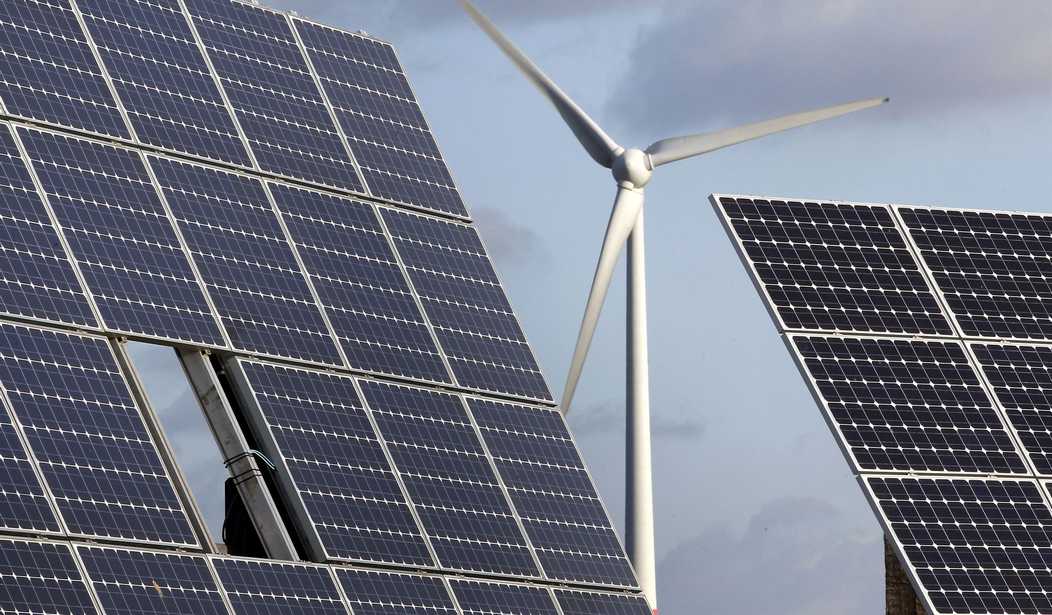

Wind and solar power on the grid scale always have been and always will be pipe dreams. They're great in niche applications, but impractical at scale. The primary problems are reliability, consistency, and energy density, but there are even more problems than these; there is the problem of the amounts of raw materials, energy used in production, energy used in transport, energy used in assembly; these factors all apply to fossil-fuel generation as well, but a good look at the math between the methods is revealing.
Dr. Lars Schernikau, an energy economist at the CO2 Coalition, writing at his blog The Unpopular Truth, makes a great (and very, very detailed) analysis of the Primary Energy Fallacy and how it knocks "green" energy advocates out - with math.
Let's look at some highlights. First, primary energy - what is it?
I want to ask you a question we don’t usually think about when we flip a light switch or fill up a tank…and that is, where does the energy actually come from?
Sure, sunlight, wind, and even coal and gas are technically free, they are energy sources just sitting there in nature to be used… some facing more limitations than others. But turning them into power we can actually use to run Santa Claus’ chocolate factory or light our christmas trees? That’s a whole different story.
This is where the idea of primary energy comes in. It’s actually not about the electricity we see listed on our bills, but is really about all the raw energy we have to pull from nature, to process, convert, and deliver before we get anything useful, such as 24/7/365 electricity, every single second we need it. And once you start looking at energy this way, things get a lot clearer.
More to the point, the argument is about inputs and outputs: The amount of primary energy is the denominator, where the deliverable energy is the numerator. This is where what Dr. Schernikau describes as the Primary Energy Fallacy comes in.
Understanding primary energy helps cut through the feel-good stats and get down to the physics. It assists in showing us the full cost of electricity (FCOE), time, money and materials used in making any source truly usable…and once you see it, you can’t unsee it.
That is why looking at the real problem with the “Primary Energy Fallacy” often used by supporters of grid-scale wind and solar, is worth it!
In other words, we must do what the climate scolds never do: Examine all of the inputs involved in the various methods of electricity generation, and compare them to their outputs. This is more complex than many might think, and it comes off making the claims of the green energy advocates look like the purest of horse squeeze. We knew that, of course, but Dr. Schernikau has done the math, and in so doing, driven many nails in the green energy coffin.
Read More: New Study Reveals Wind Farms Fracture Marine Food Chains
Net-Zero Nightmare: Renewables Require 10x More Land Than Fossil Fuels
Next, let's look at those inputs.
First “input energy and input raw materials” you can clearly see that the dramatic overbuild required for wind and solar installation has a direct impact on the input energy and input raw materials required to build the equipment used to “collect” the free wind and solar power from nature. This energy and raw material input far exceeds that of building conventional thermal power plants or producing “free” coal, gas, oil, or uranium available for “combustion”. This is entirely unaccounted for in the “primary energy fallacy calculations” and of course also in any primary energy reporting.
Second “Ancillary Systems” it becomes obvious that a large array of ancillary systems is required to integrate wind and solar into our existing systems and to at least partially overcome the natural disadvantages of wind and solar namely: low energy density, short lifetime and intermittency. These systems are required to “convert” wind and solar power into power with the correct voltage, frequency, phase, and current. Such systems are not included in any reporting or calculations, it is simply too complicated.
But included or not, they remain fixed costs of energy production; specifically, electricity generation. And that's where the whole green energy argument comes tumbling down:
We are often told that solar and wind are clean, free, efficient, and the future. But when you really look at what it takes to turn those natural flows into dependable, usable 24/7/365 on demand electricity at the correct voltage, frequency, phase, and current, the story is not so simple. Yes, the sun and the wind are free, same as coal or gas, but making them work at scale requires a very large amount of infrastructure, energy, money, and raw materials.
This is why the idea of primary energy matters. It forces us to look at the full picture, from raw extraction to usable output, not just the electricity that shows up on a meter. It helps explain why conventional fuels fuels such as coal, gas, or nuclear despite their obvious drawbacks, still deliver more energy per unit of investment, and why global energy use keeps rising even as wind and solar expand.
There's a lot more at Dr. Schernikau's blog, not just in this article but many more; it bears a read.
But setting aside the math for just a moment: This is why the claims of the climate scolds and the green energy advocates always fall sadly short. Most of the advocates of "green" energy are just not deep thinkers. This is an agenda driven by ideology, not science, not mathematics, not a scrupulous examination of facts. And the primary energy problem, that ratio of inputs to outputs, that's not even the entire cost. There is the ecological damage as well: The astounding number of birds killed by windmills and some solar plants that can actually cook them in flight. There is the land taken up, most especially by solar plants, which preclude any other land use. There is interference with ocean currents by offshore wind plants. There's the footprint ratio: A coal or gas power plant takes up a tiny fraction of the land per kilowatt-hour produced compared to a solar or wind facility, and a nuclear power plant, even less so, and the electricity they produce is reliable and consistent.
There is the fact that these huge solar and wind installations are just plain ugly.
Solar and wind power will never replace fossil fuel and nuclear power plants. We shouldn't make the effort. The math - the facts - put the lie to any claim about efficiency and cost savings. They remain good for niche applications and emergency use, but that is all they ever will be economically viable for. Fortunately, the United States has plenty of gas and coal for the foreseeable future - now we should get cracking on building more nuclear plants, as well.