
As I'm fond of pointing out, we solve today's problems with tomorrow's technology. Now, in many cases, we don't know what tomorrow's technology will look like until it happens; in the '90s, one may have bemoaned the problem of having to carry around a bulky plastic Walkman and several cassette tapes if one wanted music while on a long walk or a jog, and then, boom, iPods!
Nuclear power for electrical generation, though, has been around for quite a while, and it still produces about 20 percent of the United States' electrical generation. But it's still a major part of America's energy future, and new reactor designs are still in the category of tomorrow's technology. But our current reactors are aging. The average time in service of American commercial reactors is about 43 years. We need to get cracking on building new ones, and this is a case where we can't just mark time. We should be increasing our country's reactor generation capacity. But there are a few things in the way. A recent RealClear Energy piece by William D. Fletcher and Craig B. Smith lists some of those obstacles.
First, here's how things stand at the moment:
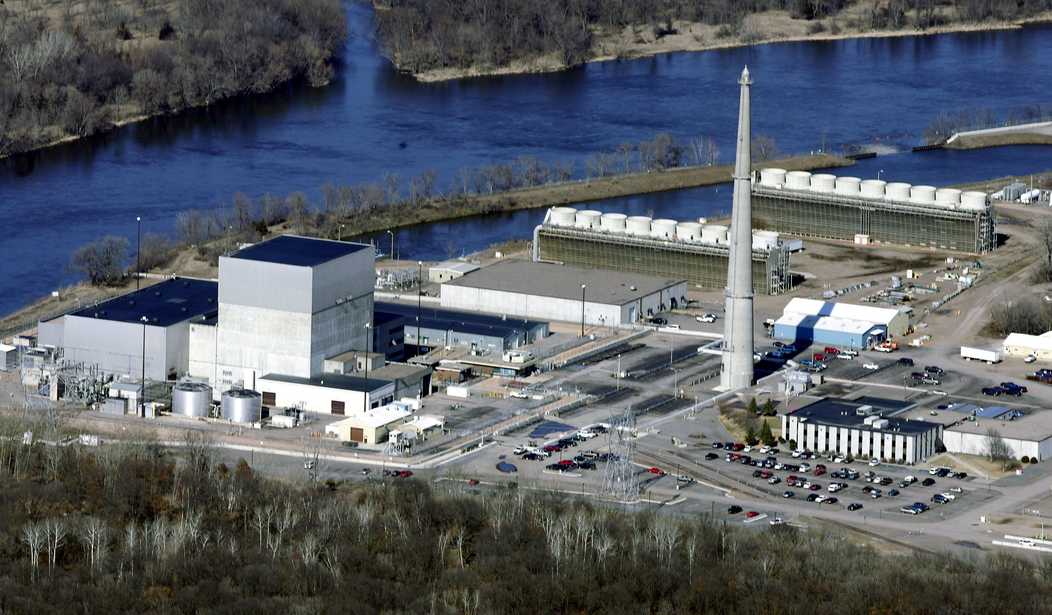
The United States generates more electricity from nuclear energy than any other country with 93 nuclear reactors operating at 54 nuclear power plants in 28 states. Unfortunately, the average age of these reactors in 43 years. Some of these plants are being licensed by the Nuclear Regulatory Commission (NRC) to operate for 60 to 80 years compared to their initial design life of 40 years. Many of these reactors will be shut down over the next 30 years because the electricity they produce is not competitive with alternatives or they need expensive repairs that cannot be justified. The San Onofre nuclear power plant was shut down prematurely due to steam generator problems.
This is a can that we should not be kicking down the road. If our current trajectory continues, electricity demand in the United States is only going to increase, not decrease. New technologies demand increased generation capacity, new technologies like artificial intelligence (AI) and the massive data centers that this tech requires. Our modern lifestyle is only going to grow more, not less, energy-hungry over the next few generations, barring some disaster.
Read More: New: America's Nuclear Renaissance, Driven by Data Centers
Solar and wind power, so often touted by the legacy media, Democrats, climate scolds, and the far left (but, I repeat myself, fourfold), are laughably unsuited for the task. They are unreliable, intermittent, and low-density energy sources; nuclear power is the diametric opposite of all those things. In fact, nuclear power is everything that the left and the scolds should want: Safe, reliable, high-density, with negligible emissions. But their opposition is political, not practical.
And it will have to be overcome, because we're not just going to have to replace current reactors; we are going to need more.
If we want to continue to produce 20% of our electricity from nuclear energy it would require us to build about 90 new 1,100 Mwe nuclear reactors to replace the existing reactors that will exceed their service lives over the next 30 years plus another 25 to 50 additional reactors to meet increasing demand for electricity. If we want a higher percentage of our electricity to come from nuclear energy, than a proportionately larger number of reactors would be required.
In the U.S., electricity demand has been fairly flat since 2010 at about 4,100 TWh/year but has started to grow again. Demand is expected to increase substantially due to the greater use of electric vehicles and heat pumps, the expansion and electrification of manufacturing, and new uses such as AI data centers.
So, that's anywhere from 115 to 140 new reactors in the next few years. That's a heck of a feat, suitable to be listed along with the labors of Hercules. But it's something the United States is going to have to do.
Read More: Net-Zero Nightmare: Renewables Require 10x More Land Than Fossil Fuels
There are a couple of obstacles: New reactor designs are taking a long time to approve, and new facilities are expensive.
If we want to revive nuclear power near-term, it has to be based upon available proven designs: large, pressurized water reactors (PWR). This is the most common reactor today by far and has a long history for safety and reliability with power ratings of 1,100 to 1,400 Mwe. There are several designs to choose from.
Small modular reactors (SMR) are small enough to be assembled in a factory and shipped to the final site. Their power output is from 70 to 300 Mwe. There are no SMRs operating in the U.S. today. Their cost, performance and safety need to be demonstrated by constructing and testing each new design. PWRs and SMRs likely serve different markets. A utility is unlikely to order 10 or more SMRs instead of one PWR.
Other designs are being proposed. Even if these designs have promise, it will take a very long time before their cost, performance and safety can be demonstrated before they can be constructed in the numbers required.
And:
To solve the cost problem in the U.S., there needs to be economies of scale by building a large number of reactors of the same design, at some regular production rate. There should be a large number of reactors built at each site.
If you ask me, the small modular reactor is the solution to a lot of America's energy needs. At present, there are none, but that could change. Many smaller American communities, like our own small Susitna Valley community, could be powered by one or two SMRs. There are thousands of small towns and small rural communities that could profit from locally produced, reliable, clean energy. And it will meet a compelling national security issue, as well: Decentralization of the electrical grid. Each community is independently powered; a much more robust, decentralized system. And the traditional designs would still be usable by the nation's major cities.
We solve today's problems with tomorrow's technology. Nuclear power has to be part of our nation's energy future, with existing and new reactor designs. Maybe someday, someone will make fusion reactors economically viable, but that is, as the saying goes, 40 years away - and has been, for half a century. Fission reactors will meet these needs now, and the Trump administration should look into streamlining the approval of new construction and new designs, because as it stands, we're already behind the curve. We can't afford to let our reactor capacity drop, and we must be increasing, not just maintaining, that capacity.
Let's get cracking, Mr. President! The future is nuclear. Embrace it.