
A headline on the New York Post website caught my eye because it's something I'm living with right now. It read, Male Gen Zers are dropping out of the U.S. job market in droves: ‘Susceptible to being displaced by AI’, and the article goes into details about the alarming number of young males who are dropping out of the workforce.
I am the mother to four Gen Z kids (ages 19 to 28) and can confirm that they all hate AI and refuse to use it or consume media made with it. More than that, my young adult son is particularly convinced that his generation will be hosed by AI taking over all the good gigs.
To his credit, however, he is gainfully employed and looking at trade programs that are as AI-proof as possible.
The Post article reveals that July statistics showed that "the labor force shrank by more than a quarter million people versus a year earlier, hitting its lowest levels since the pandemic." Particularly worrying, it noted, was the number of men aged 16 to 24 who have dropped out entirely from the labor pool.
One key point of worry: the share of men aged 16 to 24 participating in the labor market dipped to 56.1% – tumbling nearly 13 percentage points from 69% in 2000, according to data from the Bureau of Labor Statistics.
What’s more, the share of young, unemployed men who are not looking for work at all has doubled since the 1990s to 8%, according to Ben Smith, head of research at the American Institute for Boys and Men.
That is, indeed, concerning. It seems like more young men than ever are failing to launch into adulthood at the expected time of life, preferring to stay at home and prolong their childhoods.
Male Gen Zers are dropping out of the US job market in droves: 'Susceptible to being displaced by AI' https://t.co/gDPbKSGHl6 pic.twitter.com/FLHExOaFeP
— New York Post (@nypost) August 17, 2026
But, as I noted, there definitely is a concern amongst this generation that they will eventually be supplanted by artificial intelligence. My husband uses AI often to help sort through large sets of data, and it's become an invaluable tool for him.
That definitely comes with risks, though, as my son is more than willing to remind him. And that's backed up by Ben Smith of the American Institute for Boys and Men, who warned “men and the occupations they tend to be in are more susceptible to being displaced by AI.”
The stats for young men look dire versus other key groups: Over the same 26-year span, labor force participation actually increased for those 65 and over – to 19.2% in July from 12.5% in 2000. Men aged 25 to 54 saw just a 2.9 percentage point drop over the same period, while men 55 and over saw a slight increase.
A perfect example of someone trying to offer young men (and women) a different path is Mike Rowe, the longtime host of “Dirty Jobs,” who has spent years pushing back against the idea that a four-year college degree is the only way to success.
SEE ALSO: Mike Rowe Absolutely Demolishes the DSA's Useful Idiots, One Painful Comment at a Time
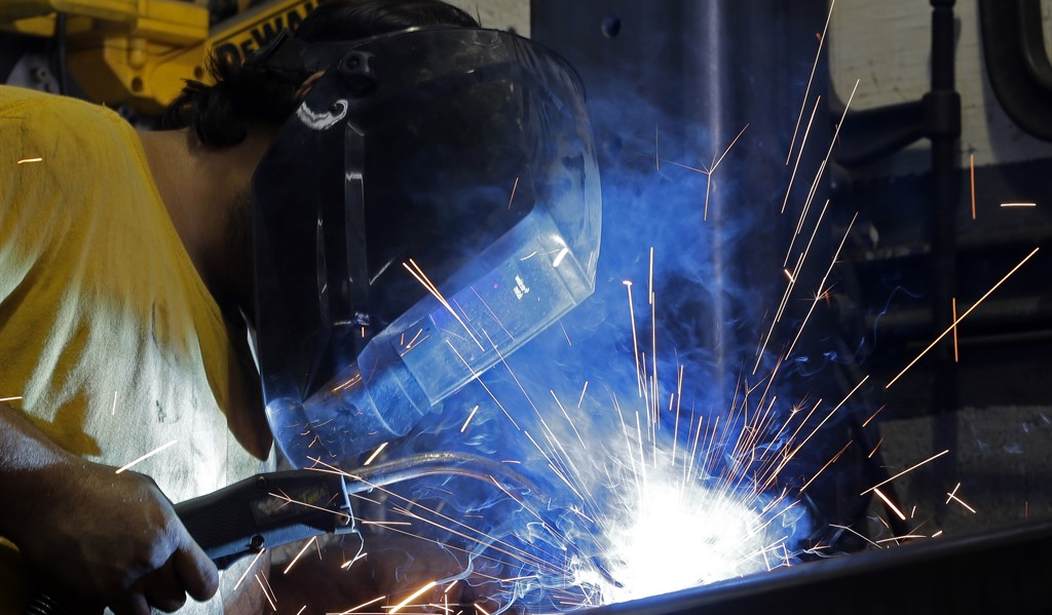
His mikeroweWORKS Foundation provides Work Ethic Scholarships for young people pursuing training in skilled trades such as welding, plumbing, electrical work, HVAC and construction. This year alone, the foundation says it plans to award $10 million in scholarships to those willing to learn a trade.
Rowe is also partnering with Meta on America's Workforce Academy, a $115 million program to train electricians, welders, plumbers, and fiber technicians – professions essential for building the infrastructure need to power AI. And perhaps that's the exact right way to lure young men back into the workforce?
Let's hope these kinds of pushes gain traction – and soon – because, as Marie Flynn of the nonprofit Jobs for the Future, told the Post, "The longer the individuals sits out of the labor market, particularly early in their career, the harder it’s going to be for them to build the skills and the network and the work experience that really shape earnings in future decades."