






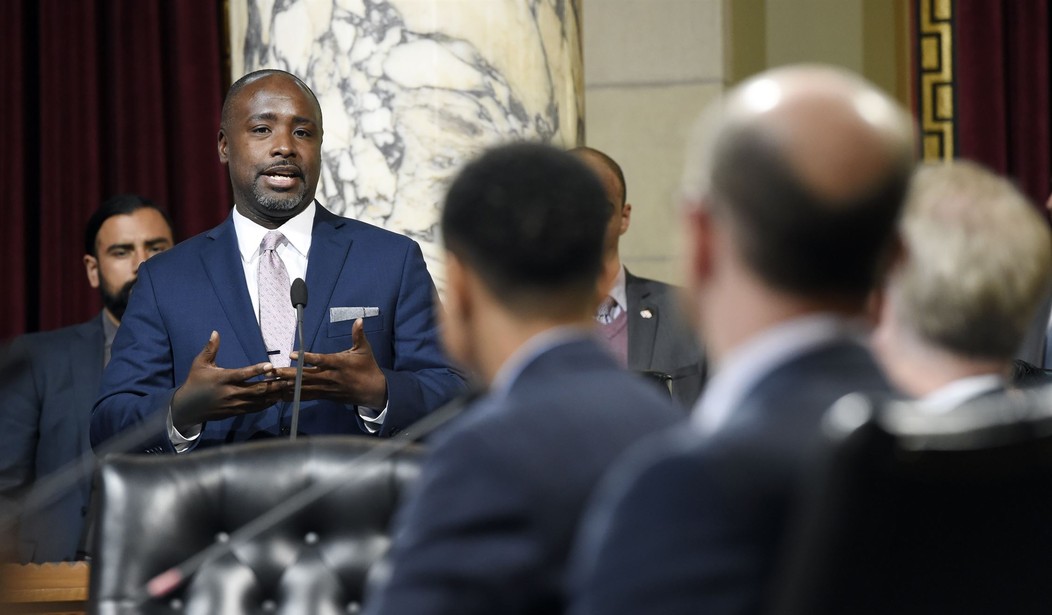
Most people think political power is decided on Election Day.
It is not.
It is decided in City Council chambers, often on a Tuesday night, where votes on housing, development, and public safety quietly shape everyday life. For decades, those decisions followed a simple rule.
If you showed up, you had influence. If you did not, you did not.
That rule is changing.
SB 707, authored by California State Senator María Elena Durazo (D-Los Angeles), was signed into law last October and takes effect in stages beginning July 1, 2026. The bill is a major update to the Brown Act, which governs how local governments conduct public meetings, and requires cities, counties, and other large public agencies to fundamentally restructure how meetings operate and how the public participates.
At its core, SB 707 mandates hybrid government. Which means, remote participation is no longer temporary or optional. It is now built into the structure of government.
Local agencies must provide real-time access through live streaming and allow the public to attend and comment through two-way telephonic or audiovisual platforms. Now a function of connectivity, involvement does not require physical presence.
The bill also requires expanded language access. Agendas must be translated when certain population thresholds are met. And if the technology fails, agencies must pause meetings and attempt to restore access.
In some cases, they must recess altogether.
On paper, the goal is straightforward. Expand access. Increase engagement. Modernize government. That is the headline.
But access is not the same as influence.
The old system had friction. If you wanted to be heard, you had to physically attend. That limited participation, but it also created presence and pressure. When residents stood in a room and addressed elected officials directly, the interaction carried weight.
It was visible. It was immediate. It was difficult to ignore.
SB 707 lowers the barrier. More people will be able to watch. More people will be able to comment. But more importantly, it changes the structure of how people will partake in government.
When engagement moves to screens and phone lines, it becomes easier to manage. Public comment becomes segmented, timed, and processed in ways that are far more controlled than a room full of constituents. The number of voices may grow, but the impact of each individual voice shrinks.
Cities are already working through how to implement these requirements. Those decisions matter. Practices such as time ceding, where multiple speakers combine their time to make a longer and more coherent argument, are being reconsidered.
Great turnout at the Special Districts Association of Riverside County luncheon last week!
— California Special Districts Association (@CSDAdistricts) March 6, 2026
The discussion focused on #SB707 and the Brown Act, with thoughtful conversation about how recent updates affect transparency, remote meetings, and public participation for local agencies.… pic.twitter.com/I0sPo6O27r
In some cases, they are being limited or eliminated in the name of equalizing participation across in-person and remote speakers. That shift changes outcomes.
Instead of coordinated presentations that sustain pressure and present structured arguments, public input is fragmented. More speakers. Less continuity. And less ability to influence the direction of a discussion.
SB 707 does not stand alone, however. It sits within a broader set of policy changes that are reshaping how the public interacts with government.
The Democrat supermajority in California has introduced roughly a dozen proposals affecting transparency, disclosure, and public engagement, including:
- AB 359, which reduces reporting on enforcement of local ethics rules
- AB 775, which delays disclosure of “behested payments,” donations directed by politicians to nonprofits or public entities
- AB 950, which allows campaigns to move donor disclosure off printed materials and onto websites
- AB 1392, which restricts access to elected official information used by journalists and watchdogs
- SB 760, which decreases reporting requirements for certain fundraising activity tied to nonprofits
Different mechanisms. Same direction.
Beyond legislation, there have been documented practices that raise similar concerns. State officials have used privately funded burner phones to communicate with business leaders outside normal public disclosure channels. Lawmakers and staff have signed non-disclosure agreements tied to taxpayer-funded Capitol renovations.
Related: Move Over, Obama Phones: Newsom's Gifting CA's Biz Titans Burner Phones, With His Digits Preloaded
Individually, each can be explained. Taken together, these are not isolated changes.
This is the tradeoff that is not being discussed. Yes, more people will be able to participate. But the intensity of accountability will be reduced.
Pressure is not just about being heard. It is about being felt. That is hardest to replicate when participation is mediated through technology. And as influence is diluted through procedural control, the reality shifts.
But not everyone loses power.
In this new environment, influence will belong to those who can adapt faster than everyone else. Those who can organize at scale and operate effectively within a system that is easier to access but harder to impact.
Because one thing will not change: Decisions will still be made by the people who show up.
The only difference will be this: Most people will not know how.
Editor’s Note: Do you enjoy RedState’s conservative reporting that takes on the radical left and woke media? Support our work so that we can continue to bring you the truth.
Join RedState VIP and use the promo code FIGHT to get 60% off your VIP membership!


Join the Conversation
VIP members get the ability to comment on articles.