








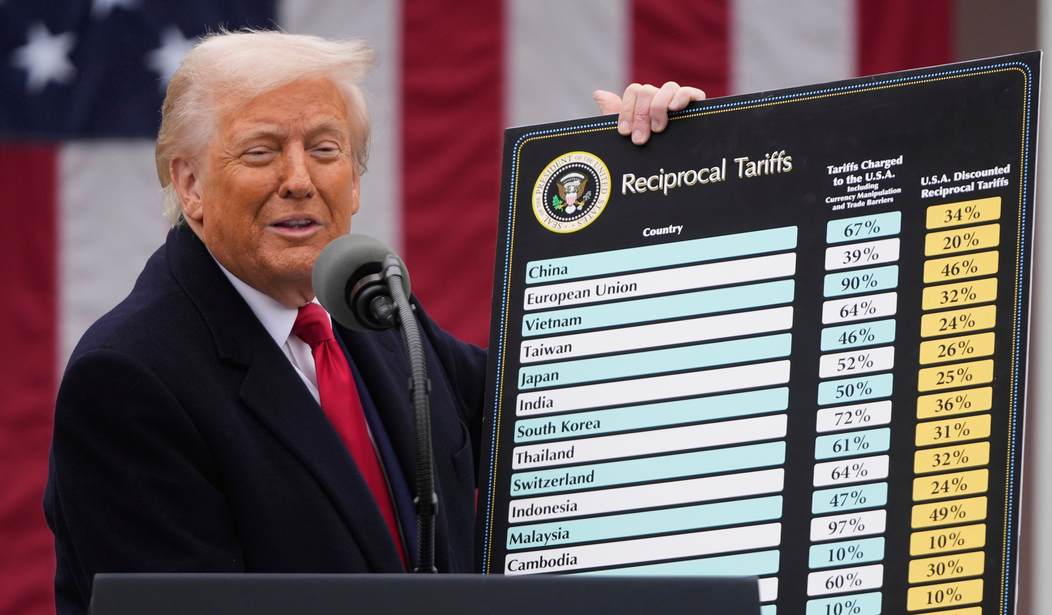
It's a highly anticipated decision — one with a significant impact on the Trump presidency and the relation of the U.S. to the rest of the world. On Friday, the Supreme Court issued its decision in the case(s) of Learning Resources, Inc. v. Trump and Trump v. V.O.S. Selections, Inc., holding that the International Emergency Economic Powers Act (IEEPA) does not authorize the president to impose the tariffs. Chief Justice John Roberts authored the 6-3 decision, with Justices Clarence Thomas, Samuel Alito, and Brett Kavanaugh dissenting (though there are some concurrences, as well).
How Did We Get Here?
Almost immediately upon (re)taking office, President Trump declared national emergencies arising from the influx of contraband drugs into the U.S. from Canada, China, and Mexico, as well as from the exploding trade deficit. Based on those declarations, the administration subsequently imposed tariffs on a broad array of imports pursuant to IEEPA, which permits the president, upon a valid emergency declaration, to:
investigate, block during the pendency of an investigation, regulate, direct and compel, nullify, void, prevent or prohibit, any acquisition, holding, withholding, use, transfer, withdrawal, transportation, importation or exportation of, or dealing in, or exercising any right, power, or privilege with respect to, or transactions involving, any property in which any foreign country or a national thereof has any interest[.]
However, IEEPA does not explicitly mention tariffs.
Several cases were filed challenging the imposition of the tariffs — Learning Resources by two family-owned companies that import directly from China; V.O.S. Selections by several small importing businesses. (A third case filed by 12 states was joined with the V.O.S. case.) The D.C. District Court ruled in favor of plaintiffs in Learning Resources, and the Court of International Trade ruled in favor of plaintiffs in V.O.S. Both cases were appealed, and they ultimately made their way to the Supreme Court, where they were consolidated for oral argument.
READ MORE: Breaking: Federal Court of Appeals Strikes Down Trump Tariffs
Big: Supreme Court Agrees to Take Up Tariff Cases, Expedites Proceedings
The Court was called on to determine whether IEEPA authorizes the president to impose tariffs, and if so, whether the statute unconstitutionally delegates legislative authority to the president.
What the Court Held
As noted above, the Court answered the initial question in the negative, with the Chief Justice writing:
Based on two words separated by 16 others in ... IEEPA, 'regulate' and 'importation' -- the President asserts the independent power to impose tariffs on imports from any country, of any product, at any rate, for any amount of time. Those words cannot bear such weight.
Now, one interesting facet to the decision is that the Court agreed that the challenges can only be/should only have been brought in the Court of International Trade, so the Learning Resources case is sent back to be dismissed for lack of jurisdiction. And, as noted, there are multiple concurrences and dissents — it's an opinion with multiple moving parts. But the heart of this ruling is what matters, and, at bottom, it is that the president lacks tariff-imposing authority under the IEEPA.
Where Do We Go From Here?
Alright, so what is the practical effect of this ruling? The immediate effect is less dramatic than critics will claim — but it’s still significant. The ruling does not eliminate presidential tariff authority or weaken emergency powers altogether; it simply reaffirms that tariffs require express congressional authorization. Presidents remain free to impose duties under statutes that explicitly contemplate them, while IEEPA returns to its traditional role as a sanctions- and asset-control statute.
Longer term, this ruling places responsibility squarely back where it belongs: with Congress. Lawmakers who prefer to outsource politically difficult trade decisions to the executive can no longer hide behind statutory ambiguity. If Congress believes tariff authority should be available in emergencies, it can say so — explicitly. If it does not, the Court’s ruling here ensures that “national emergency” won’t serve as a rhetorical workaround for legislative inertia.
Also, as Justice Kavanaugh notes in his dissent:
The Court says nothing today about whether, and if so how, the Government should go about returning the billions of dollars that it has collected from importers. But that process is likely to be a “mess,” as was acknowledged at oral argument.
There will be much more to chew on in relation to this case, and we'll have more on it, but for now, we've got the bottom line, and it's that tariffs imposed under IEEPA won't fly.
Editor’s Note: Do you enjoy RedState’s conservative reporting that takes on the radical left and woke media? Support our work so that we can continue to bring you the truth.
Join RedState VIP and use the promo code FIGHT to get 60% off your VIP membership!

Join the Conversation
VIP members get the ability to comment on articles.