






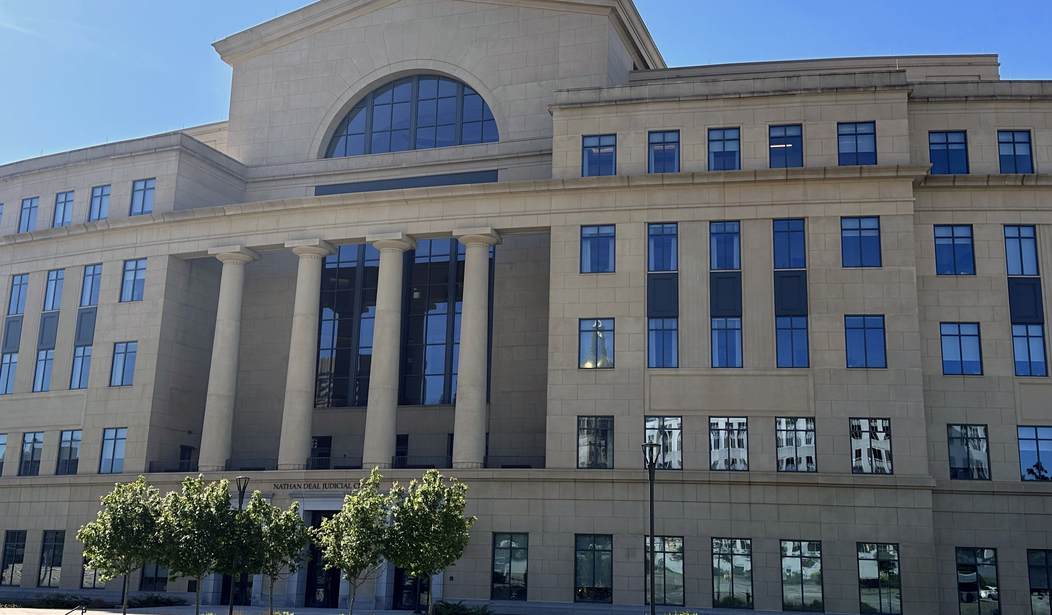
Back in mid-March, a video of a Georgia Supreme Court justice questioning an assistant district attorney on case citations contained in a trial court's order related to the State v. Hannah Payne murder case went viral.
In the clip from the proceedings, Georgia Supreme Court Chief Justice Nels S.D. Peterson informed Clayton County Assistant District Attorney Deborah Leslie that "there are at least five citations to cases that don't exist." And that wasn't all:
"Unfortunately, in reviewing the trial court's order denying the motion for new trial, there are at least five citations to cases that don't exist, and there's at least five more citations to cases that do not support the proposition for which they're cited, including three quotations that don't exist," Justice Peterson said at the time.
"My understanding is that you prepared the ... denial order for the trial court," Justice Peterson said. "Were those citations in the version of the order that you submitted to the trial court?"
Leslie said in response at the time that she "did not believe so," later adding, "I'm not aware of that, but I would be glad to research that and provide the court with a supplement."
As I watched it, I remember thinking that Leslie probably wished a hole would form below her that would allow her a chance to escape and collect herself.
Watch:
An absolutely excruciating moment at the Georgia Supreme Court this week.
— Anna Bower (@AnnaBower) March 20, 2026
Justice Peterson pressed state attorney Deborah Leslie over her citations to cases that apparently don’t exist. pic.twitter.com/D9Ww7sYvBF
As it turns out, Leslie had used AI, and in a supplemental brief filed, she stressed that the "errors were not intentional." But though Clayton County District Attorney Tasha Mosley subsequently apologized to the court, and noted that "strict disciplinary action has been taken against the attorney, including, but not limited to, a grievance with the State Bar of Georgia, suspension, performance plan development, loss of privileges, etc.," the Georgia Supreme Court meted out its own punishment for the D.A.'s office on Tuesday:
The Georgia Supreme Court has vacated a lower court's denial of Hannah Payne's request for a new murder trial, citing fake AI citations that made it into the Clayton County court order.
The decision does not grant Payne a new trial. The Court's summary notes the opinion "does not decide any of the merits of Payne’s or the State’s arguments."
"Instead, it vacates the trial court’s order denying Payne’s motion for new trial and instructs the trial court to issue a new order not prepared by counsel for either party," the summary states.
According to a summary of the opinion issued Tuesday, the state high court has "sent the case back to the trial court with instruction that it issue a new order that does not contain citations of fake cases or other misattributed case citations."
The Clayton County DA's Office prosecutor who filed the order, Deborah Leslie, has also been admonished and suspended from practicing law in the state Supreme Court for six months.
The DA's office was also admonished by the court "for failing to verify the accuracy of case citations and then including a substantial number of inaccurate case citations" in filings "before this Court and the trial court."
In Payne v. State, the Supreme Court of Georgia has suspended the prosecutor's ability to practice before it for six months, admonished the District Attorney's Office, and directed the trial court to write its own order. https://t.co/sQXdYBZc6u pic.twitter.com/2TR3BpEe8u
— Andrew Fleischman (@ASFleischman) May 5, 2026
In response to the court's opinion, some legal-minded folks on X like The Federalist co-founder Sean Davis argued that Leslie should be disbarred and thrown in prison:
Suspended for six months? The person should be disbarred and imprisoned. https://t.co/a4nHEX7xKm
— Sean Davis (@seanmdav) May 5, 2026
Relatedly, there was a footnote in the opinion stressing that "Nothing stated herein shall be construed to affect, in any manner, any disciplinary proceedings that may be brought by the State Bar of Georgia, the Judicial Qualifications Commission, or any other entity."
The Order does specify in a footnote that nothing in the order precludes further sanctions from the Bar or JQC.
— Douglas Weinstein (@DouglasWei43233) May 5, 2026
To me that invites at least an inquiry.
In other words, it ain't over until it's over.
While the court didn't discourage the use of AI, they had a similar mindset on the issue of trial court reviews of proposed orders, writing that "We strongly encourage trial courts to carefully review proposed orders with the understanding that artificial intelligence software, with all of its potential risks and benefits, may have been used to prepare such proposed orders."
Just wanted to add one more thing. Trial courts, across the board, need to be much more diligent in their review of proposed orders. There are some unethical prosecutors that really Love abusing the proposed order process. https://t.co/PrPmFzOha5 pic.twitter.com/RAO9pweq8A
— Jim Robichaud (@HappilyAngryEsq) May 5, 2026
The full opinion can be read here. To get a more complete background on the State v. Payne case, make sure to read this X thread for how it all began and how it got to this point.
Editor's Note: Do you enjoy RedState's conservative reporting that takes on the radical left and woke media? Support our work so that we can continue to bring you the truth.
Join RedState VIP and use promo code FIGHT to receive 60% off your membership.

Join the Conversation
VIP members get the ability to comment on articles.