






By Stephen Moore
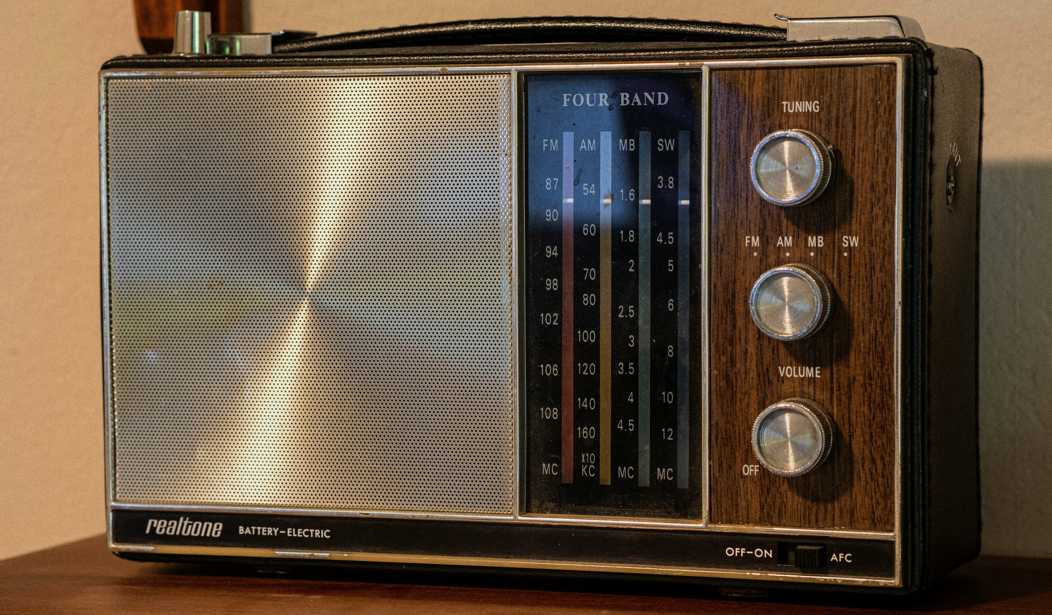
We are quickly approaching the 40th anniversary of President Reagan’s repeal of the so-called Fairness Doctrine, a long-standing policy that prohibited radio stations from presenting arguments without government-mandated “balance.”
The administration argued the rule restricted broadcasters' free speech by making them fear government reprisals and penalties for discussing tough subjects. Although presented as a safeguard for public debate, the policy gave federal officials extraordinary power to second-guess broadcasters’ editorial decisions.
The repeal, which was controversial at the time, unleashed a revolution in broadcasting, creating the modern talk-radio industry and giving millions of Americans access to voices and viewpoints the old media establishment had long ignored.
Reagan recognized that government-supervised “fairness” was incompatible with a genuinely free press.
In June 1987, he vetoed legislation that would have written the doctrine into federal law, declaring that government policing of broadcasters’ editorial judgment was “antagonistic to the freedom of expression guaranteed by the First Amendment.” That August, the Reagan-appointed FCC voted unanimously to stop enforcing it.
This episode is another example of what can happen when the government gets out of the way. Unlike its opponents' dire warnings, the broadcasting market didn’t collapse. Rather, we saw two decades of growth, innovation, and creativity. Suddenly, names like Rush Limbaugh and Mark Levin on the right became household names, as did Cenk Uygur and Thom Hartmann on the left.
But removing one barrier did not mean that Washington stopped limiting radio’s potential. Even today, the FCC maintains outdated ownership restrictions created for a media marketplace that bears little resemblance to the one broadcasters now operate in.
Under the FCC’s Local Radio Ownership Rule, a company may own no more than eight stations in a market containing 45 or more stations—and no more than five may be AM or five FM. The limits fall to seven stations in markets with 30 to 44 stations, six in markets with 15 to 29, and five in the smallest markets. Congress set these numerical limits in 1996, before podcasts, satellite radio, smartphones, streaming services, and personalized digital playlists transformed the audio marketplace.
Think about the information landscape when that rule was put in place. The Internet was in its infancy. Spotify, Apple Music, podcasts, and dozens of streaming platforms didn’t exist. Consider the impact these platforms have today. The central issue in the Senate race in Michigan is that the Democratic candidate invited a controversial “Twitch streamer” to campaign for him. Twitch didn’t even exist until 2011.
The head of the FCC, Brendan Carr, recognizes that arbitrary government prohibitions make no sense. In August, the FCC repealed its 39 percent ownership cap on television networks and replaced it with a commonsense, case-by-case review. Radio faces an even more competitive playing field than television. In fact, this information marketplace is radically different from the one that existed when its ownership limits were established.
The Trump administration, like the Reagan administration before it, has made deregulation central to its governing agenda. Across the federal government, it is reviewing old rules, eliminating wasteful red tape, and returning decisions once dictated by Washington to individuals and the marketplace. Modernizing radio ownership rules would fit squarely within that effort.
President Reagan used to quip, “The nine scariest words in the English language are: ‘I’m from the government, and I’m here to help.’” He was exactly right. The repeal of the “Fairness Doctrine” showed that the government was stifling creativity and economic growth. Nearly 40 years later, the FCC is again considering whether rules written for an earlier media age continue to serve the public interest. Local radio’s future should be determined by competition, consumer choice, and today’s vastly expanded information marketplace, not outdated rules written in a previous century.
Stephen Moore is a former Trump senior economic adviser and the cofounder of Unleash Prosperity, which advocates for education freedom for all children.
Editor's Note: Do you enjoy RedState's conservative reporting that takes on the radical Left and woke media? Support our work so that we can continue to bring you the truth.
Join RedState VIP and use promo code FIGHT to receive 60% off your membership.

Join the Conversation
VIP members get the ability to comment on articles.