
There's a basic problem negotiating with the Iranian regime: You can't trust anything they say.
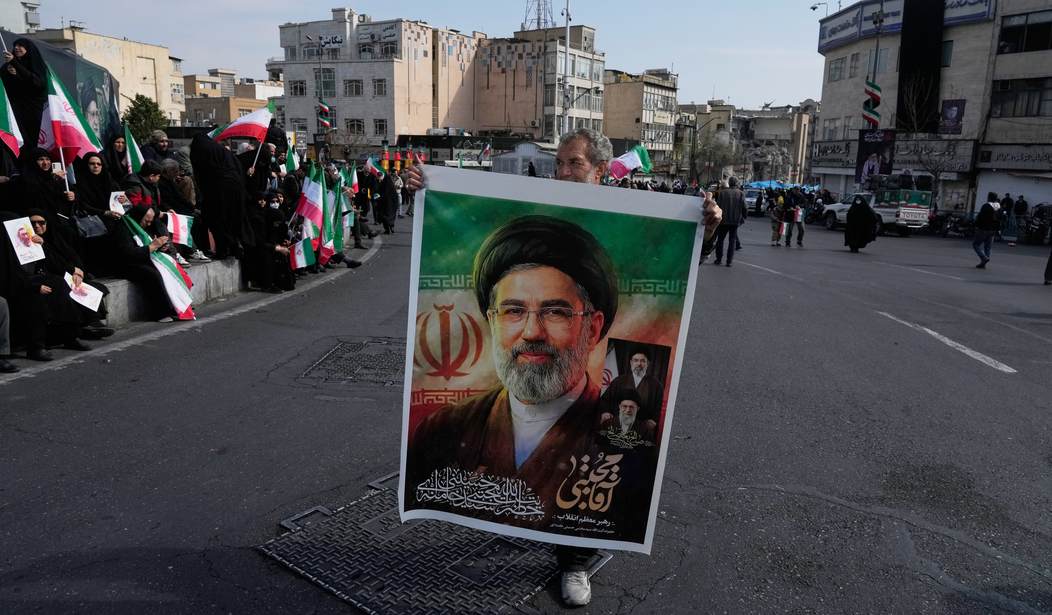
We saw that with their claim that the Strait of Hormuz was open on Friday, when the Iranian Revolutionary Guard Corps (IRGC) decided that the negotiators had gone too far, or not sufficiently tweeted about stopping the U.S. blockade. The IRGC-affiliated news agency Tasnim slammed the Iranian Foreign Minister Abbas Araghchi for what they felt was a bad tweet about the Strait opening up, and he hasn't tweeted since. The Parliament Speaker Mohammad Bagher Ghalibaf then reneged on the opening.
The Iranian regime announced that it wouldn't send anyone to Islamabad for the second round of talks with the U.S. this week, saying the U.S. demands are excessive. But they're really not. The problem is really on Iran's side: The IRGC doesn't think anything is acceptable except them getting everything they want, which isn't going to happen.
READ MORE: Here's More Evidence the Iranian Regime Is Fracturing and in Trouble As Trump Holds Its Feet to the Fire US Negotiators Head Back to Islamabad, but the Iranians May Not Be There
Ghalibaf has defended the talks.
In the interview, Ghalibaf framed negotiations not as a retreat but as a continuation of the conflict by other means. Diplomacy, he said, is neither a withdrawal from Iran’s demands nor separate from the battlefield, but a way to consolidate military gains and translate them into political outcomes and lasting peace.
Most notably, perhaps, he cautioned against exaggerating Iran’s leverage, stressing that US military superiority and capabilities should not be underestimated.
It's that last part that is the problem for the even crazier folks in the IRGC: They don't even think you should admit realities like that.
Hardline critics have intensified attacks on Ghalibaf, particularly on domestic social media platforms such as Eitaa, accusing him of ignoring red lines set by Supreme Leader Ali Khamenei and signaling weakness toward the United States. [....]
The controversy widened after a social media account linked to ultrahardliner Saeed Jalili, a longtime political rival of Ghalibaf and a member of Iran’s national security council, published a post with the hashtag “coup plotter.”
The post called on Mojtaba Khamenei to publicly clarify his position if he indeed supports the negotiations, warning that without such confirmation officials could be accused of acting without the leader’s authorization.
The account was deactivated shortly afterward without explanation.
But since the alleged Supreme Leader refuses to show himself and even prove he's alive, that creates even more lack of clarity.
So how do you sign a deal with an enemy you can't trust to stick to the deal, who keeps reneging, and indeed, may not even be able to make a real deal?
Truly, the only way to ensure that they do stick to the deal is with complete regime change to people you can have some trust in.
But that's the real question, given that's not the stated goal. We don't want to become bogged down or put more Americans in harm's way to get there. Then how can you be assured that you wouldn't have to come back in another few years and have to deal with them again, if the IRGC still holds the reins of power? You have them over the barrel now; you don't want to make the mistake of not doing all you can to stop them now, and have it come back to hurt us in the future. You don't want to have an unstable, lunatic power with nuclear weapons capability and ballistic missiles.
So, what helps you get there with the least risk to American lives if they won't make a deal? Their recalcitrance just puts them in more peril.
The U.S. could continue to pound them so they can't recover their capacity, and continue the blockade until their economy collapses. If they're really losing $435 million a day, that's not sustainable for very long. If you're ever going to have the Iranian people rise up again, that will help them get there. Turn all those economic screws and seize the regime's cash they have squirreled away in Gulf state banks. That will hit the regime in the pocket. If they can't pay their thugs, they're going to lose even more people, and that gives the Iranian people more of a chance.
If they don't agree to a deal, that's what's likely to happen by default.
The U.S. has shown they aren't bluffing; they even fired on and seized an Iranian container ship trying to run the blockade, and there are indications there could be some problematic things on that ship.
READ MORE: Video of US Boarding Iranian Ship - and What Might Have Been on It
VIDEO: USS Spruance Lights Up Iranian Blockade Runner in a Formidable Demonstration of FAFO
So the clock is ticking. If they can't get their act together, the U.S. is going to get it together for them.