


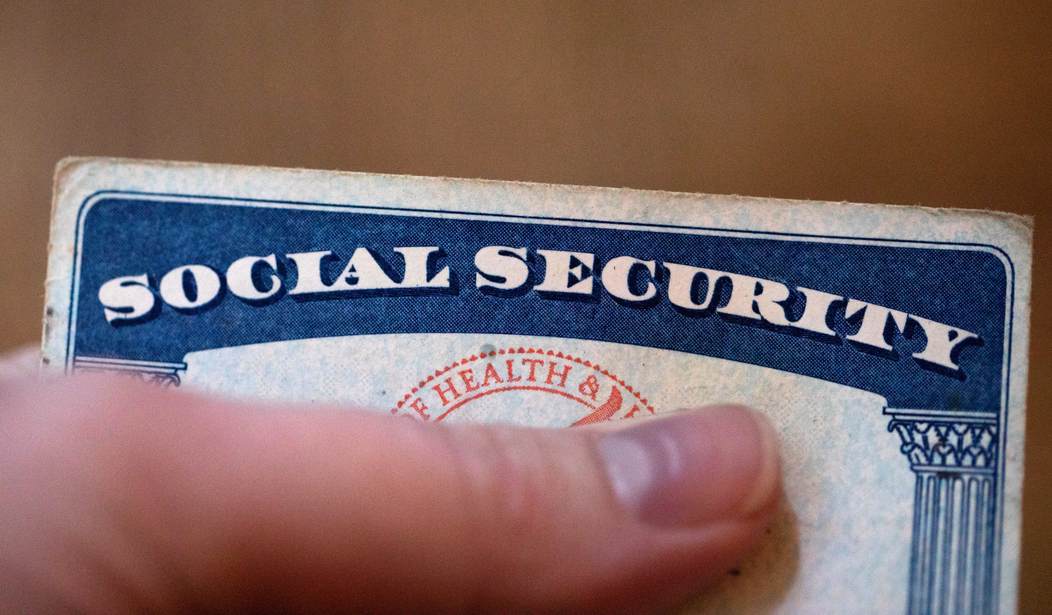

For decades, Americans have been told that Social Security would be there when they retired. They paid into the system with every paycheck, trusting that Washington would uphold its end of the bargain.
Now, the government's own financial projections are delivering a warning that should concern millions of Americans approaching retirement.
According to the 2026 Social Security Trustees Report, the trust fund responsible for paying retirement and survivor benefits is projected to exhaust its reserves in the fourth quarter of 2032. At that point, continuing revenues would cover only about 78 percent of scheduled benefits.
That means retirees could face an approximately 22 percent reduction in benefits unless Congress acts. For the average retiree receiving roughly $2,080 per month, that translates into a potential loss of approximately $460 every month, or more than $5,500 annually.
Here is the warning from the trustees:
Based on our best estimates, this year's reports show that:
• The Old-Age and Survivors Insurance (OASI) Trust Fund will be able to pay 100 percent of total scheduled benefits until the fourth quarter of 2032, one quarter earlier than projected last year. At that time, the fund’s reserves will become depleted and continuing program income will be sufficient to pay 78 percent of total scheduled benefits.
• The Disability Insurance (DI) Trust Fund is projected to be able to pay 100 percent of total scheduled benefits through at least 2100, the last year of this report’s projection period. Last year’s report projected that the DI Trust Fund would be able to pay scheduled benefits through at least 2099, the last year of that report’s projection period.
• If the OASI Trust Fund and the DI Trust Fund projections were combined, the resulting projected fund (designated OASDI) would be able to pay 100 percent of total scheduled benefits until the third quarter of 2034, unchanged from last year’s report. At that time, the projected fund’s reserves would become depleted and continuing combined fund income would be sufficient to pay 83 percent of scheduled benefits. (The two funds could not actually be combined unless there were a change in the law, but the combined projection of the two funds is frequently used to indicate the overall status of the Social Security program.)
Americans who have spent decades contributing to Social Security could suddenly find themselves receiving substantially less than they were promised, not because they failed to pay into the system, but because Washington failed to address a financial problem it has known about for generations.
Remember the Social Security "lockbox"? Politicians repeatedly invoked the idea that Americans' retirement contributions were safely protected for their future. But the reality was considerably more complicated.
Social Security's surpluses were invested in special Treasury securities, while the cash was available to finance other federal government activities. The trust fund holds genuine federal obligations, but it isn't a private savings account containing the money each worker contributed.
Social Security Deficit Blows Out: Trust Fund, Income, Costs, Deficits, and Interest Rates in Fiscal 2026. 3 months before insolvency of SS in 1983, Congress passed and Reagan signed a fix that lasted 40 years. Now Congress needs to stop dilly-dallying https://t.co/L61HSGXmdF https://t.co/3mJrUaF6MB
— Wolf Richter (@wolfofwolfst) November 10, 2026
When Social Security needs to redeem those securities to pay benefits, the Treasury must find the cash through taxes, borrowing or other financing. And the financial pressure has been building for years. The last major bipartisan effort to shore up Social Security came in 1983. Those reforms included gradually raising the retirement age and taxing certain benefits, buying the system additional decades of financial stability.
But the underlying demographic challenges never disappeared. Americans are living longer, birth rates have declined, and fewer workers are supporting each beneficiary. The program has increasingly relied on its trust fund reserves to cover expenses exceeding its non-interest income.
The latest trustees' projections show the outlook getting worse. In addition to the 2032 depletion date for the retirement and survivor benefits fund, the report projects that the combined retirement and disability trust funds would exhaust their reserves in 2034, leaving enough continuing income to cover approximately 83 percent of scheduled benefits. Under current law, those funds are separate, so combining their reserves would require congressional action.
The trustees also identified lower fertility assumptions, reduced immigration projections and the revenue effects of the 2025 One Big Beautiful Bill Act as factors contributing to the worsening outlook.
The program's long-term financial imbalance now amounts to approximately 4.42 percent of taxable payroll over the next 75 years. These aren't problems that appeared overnight. Congress has received repeated warnings about Social Security's financial trajectory, yet lawmakers have failed to agree on a comprehensive solution.
Meanwhile, Washington has somehow managed to approve massive spending packages, fund countless federal priorities and accumulate an enormous national debt.
But when it comes to protecting a retirement program that millions of Americans have spent their entire working lives funding, politicians continue kicking the can down the road.
So, what are the consequences of this financial malpractice? Is Washington setting up taxpayers for yet another enormous bailout?
Congress has several options, including raising payroll taxes, increasing the amount of earnings subject to Social Security taxes, adjusting future benefits or finding additional federal revenue. Every option carries political consequences, which helps explain why lawmakers have repeatedly delayed making difficult choices.
But waiting creates its own consequences. The closer the trust fund gets to depletion, the less time Congress has to phase in changes that could reduce the burden on workers and retirees.
To be clear, Social Security wouldn't simply stop paying benefits in 2032. Payroll taxes would continue flowing into the program, providing enough revenue to cover most scheduled payments.
But that offers little comfort to a retiree who could lose hundreds of dollars from a monthly check. And while the 22 percent reduction remains a projection rather than a certainty, it is the outcome the trustees foresee under current law if Congress fails to address the shortfall.
The government has known about this problem for decades. It has produced reports, held hearings, debated proposals and issued warnings. What it hasn't done is deliver a lasting solution. For Americans over 40 who are making retirement plans, the message is becoming increasingly urgent.
The Social Security promises they have counted on are running into a financial reality that Washington can no longer afford to ignore. And unless lawmakers finally act, millions of Americans could be left paying the price for decades of political inaction.