






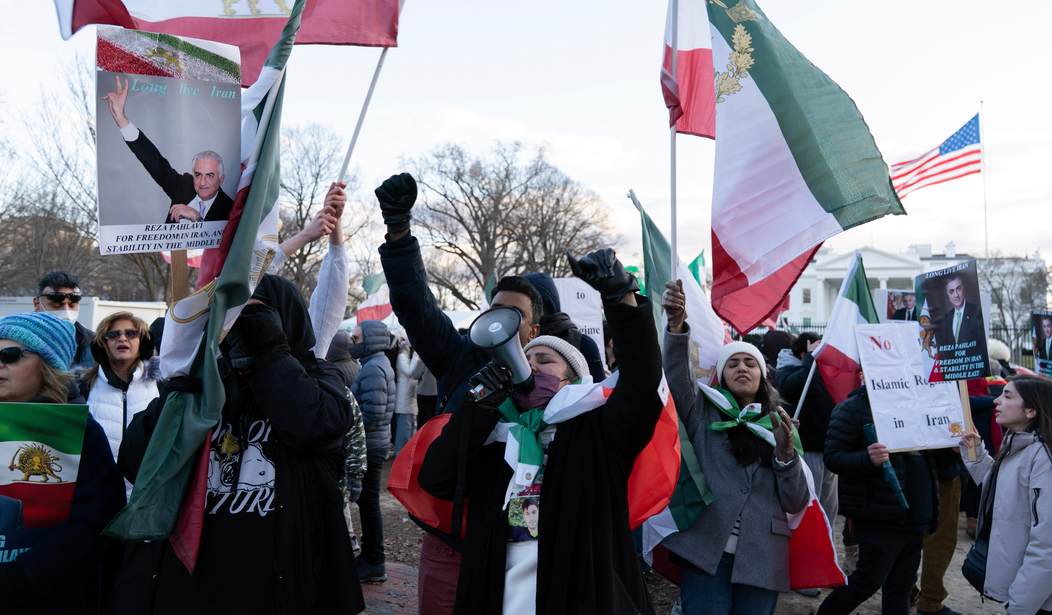
The United States imposed new sanctions Friday against Iranian officials overseeing the brutal crackdown on nationwide protests that has left thousands dead, the State Department and Treasury Department announced.
The coordinated action targets six officials overseeing Iranian security forces accused of shooting protesters during demonstrations that began in late December over economic hardship and grew into broader anti-government protests.
Who the Sanctions Target
The Treasury Department focused the designations on officials directing Iran’s security apparatus during the crackdown. Among those sanctioned is Eskandar Momeni Kalagari, Iran’s Minister of the Interior, who oversees the country’s Law Enforcement Forces.
The Treasury Department also sanctioned Ali Larijani, Secretary of the Supreme Council for National Security. Officials accuse Larijani of being among the first Iranian leaders to call for violence against protesters following demonstrations that erupted across the country.
The sanctions also target Babak Morteza Zanjani, an Iranian investor accused of embezzling billions of dollars in Iranian oil revenue. The Treasury says Zanjani was freed from prison to launder money for the regime and has bankrolled projects supporting Iran’s Islamic Revolutionary Guard Corps.
Two digital asset exchanges linked to Zanjani that have processed large volumes of funds associated with IRGC-linked entities were also designated.
Death Toll Estimates Vary Widely
The scale of casualties from Iran’s security force response is difficult to verify due to internet shutdowns and communication disruptions across the country for weeks.
The US-based Human Rights Activists News Agency reported Tuesday that at least 6,126 people have been killed in the crackdown. The group verifies deaths through a network of activists inside Iran and said the dead include at least 5,777 protesters, 214 government-affiliated forces, 86 children, and 49 civilians who were not demonstrating.
Other estimates put the number much higher. CBS News reported that activist groups compiling data from medical officials across Iran believed the toll could be at least 12,000 and possibly as high as 20,000.
Iran’s government has put the death toll at 3,117, saying 2,427 were civilians and security forces, and labeling the rest as terrorists.
Economic Crisis Fuels Unrest
The protests began on December 28 following the collapse of Iran’s currency, the rial, which hit historic lows amid international sanctions and domestic economic mismanagement.
Iran International reported the rial fell to approximately 1.64 million per US dollar on unofficial markets, a record low for the currency.
The State Department declared support for the Iranian people protesting “47 years of catastrophic economic mismanagement.” The regime continues to fund “terrorist militias abroad and its vast weapons programs over the basic needs of everyday Iranians,” the statement said.
The Treasury Department said Iranians suffer from rising inflation, crumbling infrastructure, and shortages of water and electricity because the regime is “squandering their wealth on its malign activities.”
How the Sanctions Work
The penalties deny designated individuals and entities access to any property or financial assets held in the United States, limit travel to America, and prevent US companies and citizens from doing business with them.
Treasury Secretary Scott Bessent said the department “will continue to target Iranian networks and corrupt elites that enrich themselves at the expense of the Iranian people.”
The sanctions were imposed under Executive Order 13553, authorizing sanctions for serious human rights abuses by the Iranian government, Executive Order 13224 related to counterterrorism, and Executive Order 13902 targeting Iran’s financial, petroleum, and petrochemical sectors.
European Union Coordination
The European Union imposed its own sanctions against Momeni, along with members of Iran’s judicial system and other high-ranking officers Thursday.
The EU said those sanctioned “were all involved in the violent repression of peaceful protests and the arbitrary arrest of political activists and human rights defenders.”
In response, Iran is considering designating the militaries of EU countries as terrorist groups, according to a post on Friday on X by Ali Larijani. The Iranian parliament is expected to pass that measure on Sunday.
What Comes Next
The Trump administration has also revoked travel privileges for Iranian senior officials and their family members as a consequence of the protest crackdown.
Secretary of State Marco Rubio took action this week to revoke the privilege of Iranian senior officials and their family members to be in the United States.
The sanctions also target 18 individuals and entities accused of participating in laundering money from sales of Iranian oil to foreign markets as part of a shadow banking network of sanctioned Iranian financial institutions.
The State Department said the United States will continue to implement National Security Presidential Memorandum 2, which directs the imposition of maximum pressure on the Iranian regime to deprive it of revenues that fund its destabilizing activities.

Join the Conversation
VIP members get the ability to comment on articles.