








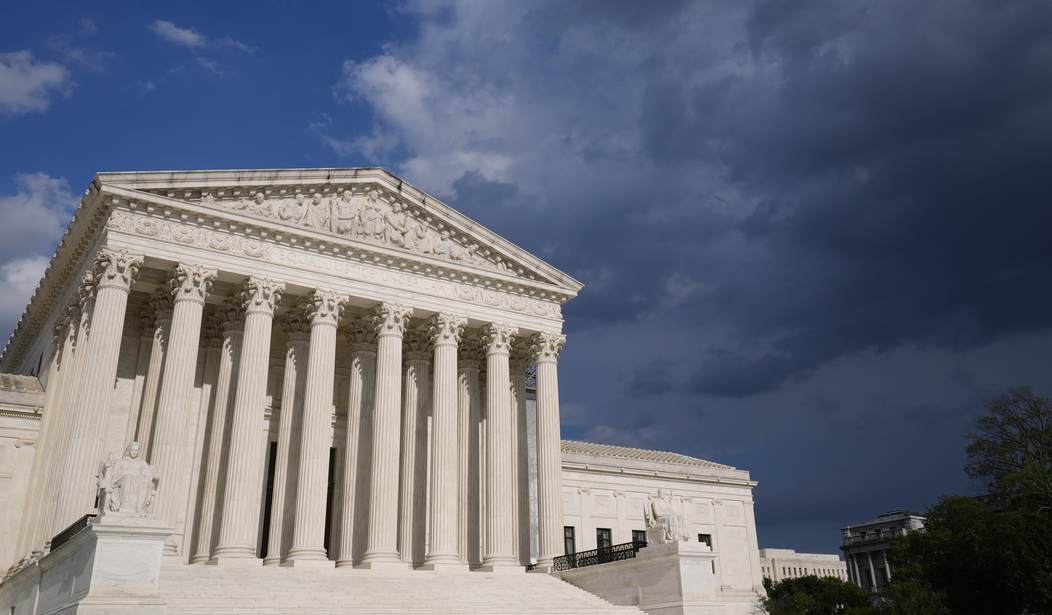
For the first time, the Supreme Court will directly confront the legality of Donald Trump’s executive order restricting birthright citizenship. The politics around the case are loud and predictable. But the constitutional question at the center of it is much quieter, and far more consequential: Can any president, Republican or Democrat, unilaterally reinterpret the Fourteenth Amendment?
After reviewing the Court’s recent decisions and the skepticism justices have already shown toward this executive order, it’s clear that the conservative majority may not be willing to hand the White House a power this sweeping. In fact, the justices most hostile to broad federal authority—Clarence Thomas, Samuel Alito, and Neil Gorsuch—are the same ones who have consistently rejected presidents accumulating powers that properly belong to Congress.
If that principle holds, the Court may uphold birthright citizenship not because they agree with its modern application, but because they don’t believe a president can rewrite constitutional meaning through executive order.
The Long Shadow of Wong Kim Ark
The administration’s order is designed to challenge a 127-year-old precedent: United States v. Wong Kim Ark. In that case, the Court held that a man born in San Francisco to Chinese immigrants, during an era of laws explicitly hostile to Chinese immigration, was a U.S. citizen. The ruling was rooted directly in the Fourteenth Amendment’s text: “All persons born or naturalized in the United States, and subject to the jurisdiction thereof…”
That interpretation has been reaffirmed repeatedly. Modern scholars note that birthright citizenship has been the governing rule for so long that undoing it would effectively redefine who counts as American overnight. Even conservative legal analysts who question the policy concede that presidents cannot unilaterally change a constitutional rule written by Congress and ratified by the states.
As the Associated Press reports, the Court’s decision will determine whether the executive order “violates the Constitution’s guarantee of citizenship by birth.”
Lower Courts Have Rejected the Order Unanimously
Before reaching the Supreme Court, Trump’s order faced a wall of defeats in the lower courts. Judges appointed by both parties concluded that the executive branch lacked the authority to redefine citizenship. Even after the Supreme Court limited “universal injunctions” last term, lower courts permitted challenges from affected children to continue as class actions.
According to SCOTUSblog, the case now before the Court—Trump v. Barbara—raises the very constitutional question the justices avoided in their prior injunction ruling.
And notably, during arguments in the earlier case, several conservative justices expressed deep skepticism toward the order’s legal foundation. That skepticism spanned justices who rarely side with limits on presidential authority.
Why the Conservative Court May Still Rule Against Trump
This brings us to the heart of the issue: separation of powers.
This Supreme Court has spent years pushing back against executive overreach. They have curtailed agencies, limited presidents’ ability to reinterpret federal statutes, and reaffirmed Congress as the rightful source of major policy changes. This is the same Court that struck down the Biden administration’s student loan plan, restricted the administrative state through the major questions doctrine, and repeatedly warned that presidents cannot act without congressional authorization.
If any president, regardless of party, can unilaterally redefine who is or isn’t a citizen, that authority would instantly surpass Congress. It would also allow a future Democratic president to expand citizenship through executive order. Whatever power you give your guy today, you hand it to the other guy tomorrow.
The conservative legal movement has spent decades resisting the expansion of presidential power. It would be out of character for this Court to reverse course and allow the executive branch to rewrite a constitutional guarantee.
What a Narrow, Institutionalist Ruling Could Look Like
If the Court rules against the administration, a likely opinion could include:
- The Fourteenth Amendment’s meaning cannot be revised by executive order.
- Any change to citizenship laws must come through Congress—or through a new constitutional amendment.
- The Court will not endorse every modern application of birthright citizenship, but will reject unilateral executive revision.
- The Court will refuse to give itself or the executive branch the power to strip citizenship from hundreds of thousands of people.
That last point is critical. If the Court allows the executive to eliminate citizenship, it must also allow the executive to grant it. This Court does not appear eager to open either door.
ABC News notes that the ruling could reshape presidential authority far beyond immigration.
Limited Government Means Limited Presidents
For conservatives who value constitutional limits, there is real tension here. Many on the right support restricting birthright citizenship because they believe it incentivizes illegal immigration. But the mechanism used to achieve that goal, a sweeping executive reinterpretation of a constitutional text, directly conflicts with long-standing conservative principles of limited executive power.
You can support Trump’s immigration priorities and still oppose giving the executive branch the authority to rewrite the Constitution.
And that, ultimately, is why the Court may rule against the order. A conservative majority skeptical of federal power, doubtful of unilateral executive policymaking, and protective of congressional authority may be unwilling to hand the White House the ability to determine who is and who is not an American.
If you value limited government, that’s not the worst outcome.

Join the Conversation
VIP members get the ability to comment on articles.