
Beijing’s export controls last year brought China’s stranglehold on rare earths into sharp focus. Rare earth elements (REE) are needed for everyday electronics, magnets, and military equipment. The Trump administration has been working to reshore critical mineral mining and processing/refining.
While securing the REE supply chain is crucial to U.S. national security, less attention has been paid to another vulnerability that the Chinese Communist Party (CCP) would exploit as part of its unrestricted warfare: medical supply chains.
During the COVID-19 pandemic, Chinese state-controlled Xinhua News Agency threatened to restrict pharmaceutical exports to the U.S., saying:
If China retaliates against the United States at this time, in addition to announcing a travel ban on the United States, it will also announce strategic control over medical products and ban exports to the United States. Then the United States will be caught in the ocean of new coronaviruses.
Also according to the US CDC officials, most of the drugs in the United States are imported. If China banned exports, the United States will fall into the hell of a new coronavirus pneumonia epidemic.
We should say righteously that the US owes China an apology, the world owes China a thank you.
This statement isn’t an empty threat. It reveals the Chinese government’s plan to cut off the flow of life-saving drugs to the U.S. at a time when they are most needed. Our elected officials need to take this warning seriously.
RELATED: From Lithium to Rare Earths, New U.S. Technologies Threaten China’s Toxic Grip on Critical Minerals
How a Two-Cent Item Threatens U.S. National Security
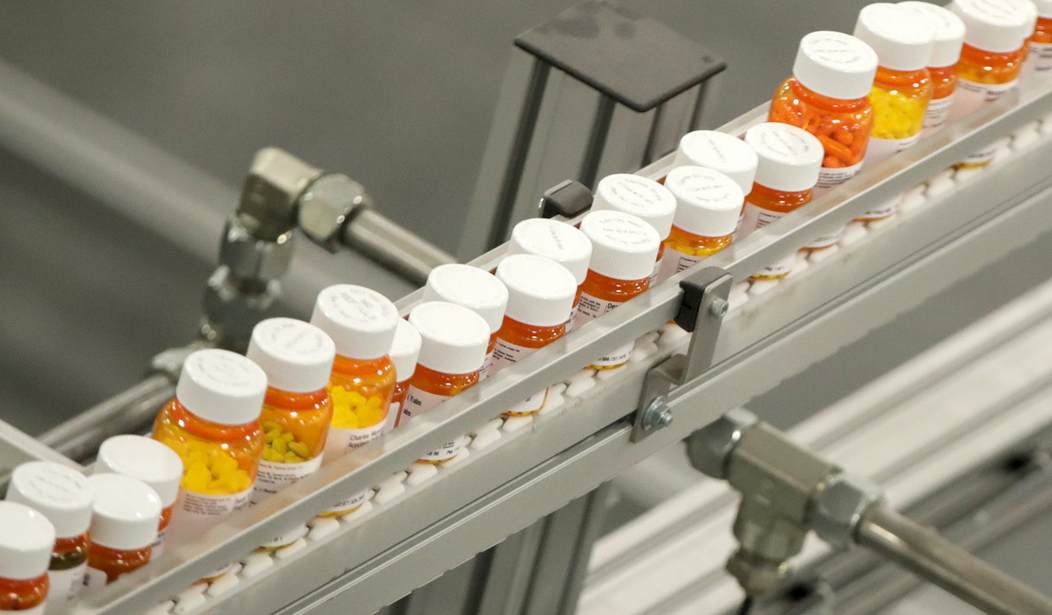
The U.S. imports approximately 90 percent of the key compounds that are needed to produce antivirals and antibiotics. China supplies anywhere between 80 and 90 percent of the world’s active pharmaceutical ingredients (APIs) and key starting materials (KSMs).
Seventy to 80 percent of the America’s generic drugs — which account for the vast majority of prescription medications dispensed — come from China and India, with around half of the U.S.’s generics being produced in India alone. Indian pharmaceutical manufacturers source about 80 percent of their APIs and KSMs from China. For some drugs, they rely 100 percent on Chinese starting compounds.
Ninety-five percent, 91 percent, and 70 percent of the U.S.’s ibuprofen, hydrocortisone, and acetaminophen, respectively, are made in China.
Besides supply chain weaponization, Chinese and Indian pharmaceuticals pose a safety hazard to American patients. In 2008, contaminated heparin, a blood thinner, produced in China killed over 80 Americans and seriously injured hundreds more. The Food and Drug Administration (FDA) concluded that the blood thinner had been intentionally adulterated for economic reasons.
Between 2018 and 2019, Chinese- and Indian-produced blood pressure medications were recalled after they were found to contain traces of a highly toxic carcinogen.
This year, the FDA recalled cough suppressants manufactured by China-based Xiamen Kong Zhongyuan Biotechnology Co., Ltd., due to insanitary conditions. And in 2025, the FDA cited two Chinese API producers for quality control issues. Chinese pharmaceutical companies are notorious for failing to comply with American manufacturing standards.
China accounts for more than 50 percent of critical medical supplies imports, including gauze, surgical gowns, masks, syringes, catheters, and nitrile gloves. In 2024, about 60 percent of all syringes imported into the U.S. were made in China.
The U.S. currently imports 99 percent of its nitrile gloves, most of which is either produced by or reliant on China. In recent years, China has moved nitrile glove manufacturing to affiliates in Southeast Asia that are fully dependent on Chinese nitrile butadiene rubber (NBR) feedstock. Beijing could weaponize its monopoly on the nitrile glove supply chain not only to wreak havoc on our healthcare industry but also to bring our manufacturing and agricultural sectors to a standstill — and halt our efforts to reindustrialize.
The U.S. has all the ingredients that are needed to make NBR. What’s lacking is the capacity to convert these raw materials into NBR and gloves.
The federal government must take action to address this vulnerability. The Trump administration was right to direct the Department of Health and Human Services to start filling the API stockpile created in 2020, something that the Biden administration neglected to do. Now, the administration must make sure this happens.
Additionally, the Centers for Medicare and Medicaid Services is considering rewarding hospitals that purchase American personal protective equipment and critical medications. This is a great way to increase demand for American medical products.
It’s also incumbent upon us to work closely with allies and partners to decouple KSM and API production from China and for Washington to forge close ties with pharmaceutical manufacturers in those countries.
To rebuild our medical industrial base, it will take substantial government action — including tax credits and cutting red tape — paired with persistent private sector support. The latter is key, especially when it comes to developing the capacity to manufacture at scale.
If Washington does its part in addressing this national security threat, it’ll attract private investment. It may be costly, but it’s an investment in this country’s future.