






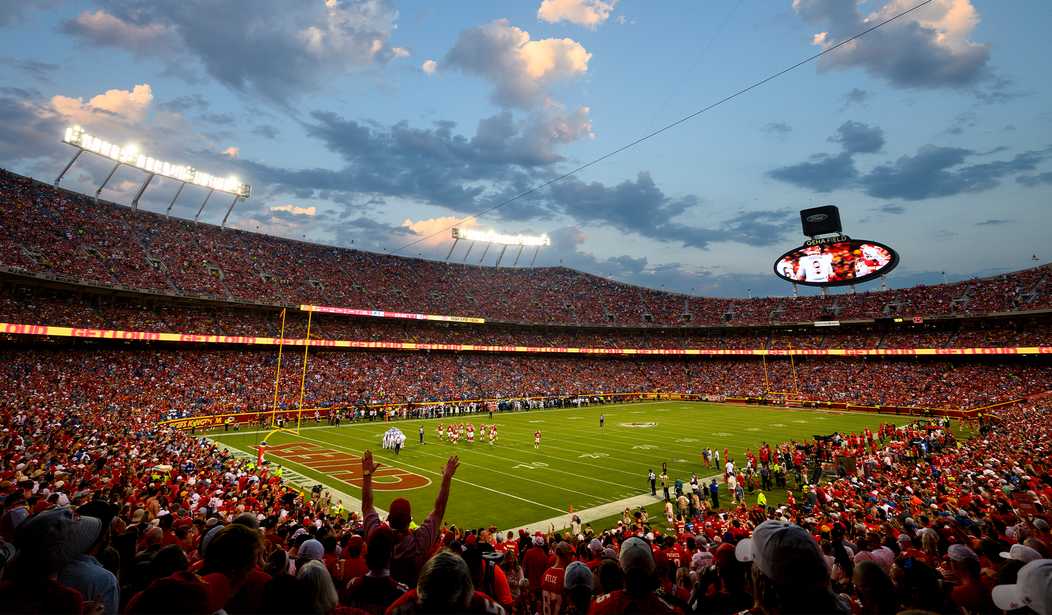
My family and I live in northeast Kansas, a mere minutes away from where the new Kansas City Chiefs stadium is set to be constructed. There is a lot of emotion on both sides of the state line since the announcement that the team is moving 24 miles west from the Show Me to the Sunflower state.
Admittedly, the sports fans in my family won’t mind having a much shorter drive to watch the game. As one who aims to “Pursue the wellbeing” of the land in which we live—as commanded in Jeremiah 29:7—I felt a tinge of excitement at the news of a major investment nearby. Then, as details of the deal were later released, the heavily one-sided nature of the agreement between Kansas lawmakers and Chiefs ownership cast doubt in my mind on the prudence of this arrangement.
The Kansas City metro region includes cities on both sides of the line dividing Kansas from Missouri, and the Chiefs are thought of as the team for both states. Kansan residents drive to Arrowhead Stadium in Missouri—just as we use the airport there—without thinking about these things being in another state. In the days since the team announced its intentions to move, I’ve observed some Missouri residents expressing anger on social media, saying that they helped build the team and accusing Kansas City Chiefs owner Clark Hunt of disloyalty. Those feelings are understandable, given the substantial amount of public money invested in Arrowhead Stadium by taxpayers.
Many reasons exist to justify why the Chiefs should have stayed in Missouri or relocated, which is beyond my intent to analyze here. But the bottom line is that big sports is a business. Professional teams exist to turn a profit. In our age, the majority of them do it with major taxpayer subsidy.
Once upon a time, professional sports functioned like other businesses and paid their own way. Roughly one century ago, municipalities began helping to pay the bill. That financial burden continues to climb as the cost of new mega sports venues is measured today in the billions of dollars. When these massive facilities begin to show some age, most pro-sport franchises play what I call the we’ll move if you don’t pay up game. When a team owner wants the stadium or arena renovated, or another venue built entirely, most come with hat in hand to taxpayers.
Nevermind the billions in their personal coffers. The pitch is always the same: Give us new and shiny, or we’ll find somewhere else that will.
This always ends with team owners getting what they want, whether from taxpayers in the current locale or the next one. Things would change if all municipalities nationwide declined to participate in this scheme. Teams would stay in their venues longer and find ways to efficiently make upgrades along the way, as people who own homes and business real estate still do today. But having a major sports franchise in one’s territory is a bragging right that many major American cities and states find irresistible.
Pro sports teams, as corporate entities, care about their fans to the extent that those fans spend money. Neither the fans’ voice, love of the game, nor tax dollars invested over previous decades matter to ownership. It's only "What will you do for me now?"
Fans are nothing more than economic agents to professional team franchise owners. Beyond the stadium funding game, many mega sports executives have turned in recent years to using their influence as progressive ideological bully pulpits. Consider NFL Commissioner Roger Goodell selecting Bad Bunny to headline the Super Bowl LX halftime show next year. The NFL continues pushing anti-American messaging onto a fan base that is largely opposed to the woke agenda. For all the eye rolls, Americans continue rewarding such reckless behavior. Attributed to the Roman poet Juvenal, the proverb Panem et circenses da eis et numquam rebellabunt remains true. “Give Them Bread and Circuses and They Will Never Revolt.”
Returning to flyover country, the reality is that Kansas offered a deal that would have been business malpractice for KC Chiefs owner Clark Hunt to reject, literally the biggest giveaway in the state’s history. The amount approved by legislators is projected at up to $2.775 billion in a state ranking 33rd nationally in GDP, 45th out of 50 for economic growth, and consistently losing thousands of residents annually.
The Kansas Department of Commerce claims this as a statewide economic victory.
“The project will be a massive economic win for the state, with the construction phase alone creating over 20,000 jobs and $4.4 billion in economic impact for Kansas," the department said. "From there, the stadium will bring over $1 billion in annual impact.”
But it seems more likely that Kansas used the only play it ever attempts—using public dollars to lure developers. There is a palpable lack of imagination in other ways to make the state an attractive business and cultural location. Thanks to unique laws on the books here, housing developers remain lined up to tap into the public dole through Residential Housing Incentive Districts. Larger projects ante up to the taxpayer table through STAR Bonds. Proponents of using both programs always claim that these are noble means because they don’t raise taxes.
That’s technically true. Each program redirects sales or property taxes to developers. The rest of the story is that municipalities and the state must make up that divested revenue elsewhere. With nearly $3-billion in sales tax being put toward a new stadium, headquarters, and training camp for the Chiefs, rest assured that the state and municipal governments involved will look elsewhere to make up the shortfall in revenue rather than trim spending.
That likely dooms efforts to meaningfully reduce the high tax burden on Kansas residents for years to come. In contrast, Missouri legislators are focused on enhancing the economy there by trying to eliminate the state income tax.
We’re Chiefs fans in my house, no matter which state they sit in. I truly hope the optimistic projections surrounding the Chiefs’ move to Kansas prove true and my concerns are unwarranted. It’s my desire for this move and development deal to prove a good thing. But the fiscal result of similar previous deals around the nation brings to mind more questions than assurances. Thus, I remain skeptical that the move—funded mostly by taxpayers—is a financial win as much for Kansas residents as it is for the Chiefs as a business organization. Let’s get back to professional sports paying its own way.
[Editor's Note: The original version of this column stated that all professional sport teams use public financing for venue construction or renovation. Only some do, and this has been clarified post-publication.]
Editor’s Note: Do you enjoy RedState’s conservative reporting that takes on the radical left and woke media? Support our work so that we can continue to bring you the truth.
Join RedState VIP and use the promo code MERRY74 to receive 74% off your membership.


Join the Conversation
VIP members get the ability to comment on articles.