
I was in the fifth grade when a family moved in next door. They had many children, one of whom was my age. We would spend a lot of time hanging out in front of our house, where his older brother would come out and talk with us from time to time.
At the time, I never thought about how I spoke or the words I used, but right in the middle of talking, the older brother would sometimes interrupt me.
"You're using so many big, fancy words. Just talk normally."
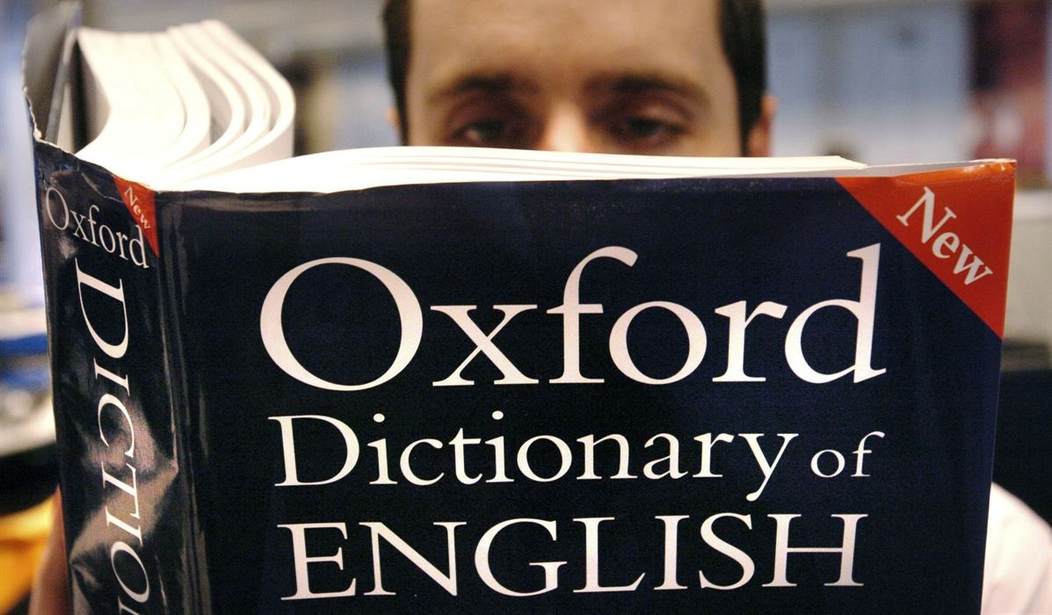
I thought I was talking normally. I'd always talked like that, and to this day, I don't think I ever really kicked the habit. I sometimes feel like I have a tick in my brain that makes me search for accurate, descriptive words that aren't used in everyday conversation, especially when I'm excited, because I can't find simpler words that are just as accurate.
Regardless, from then on, I tried to tamp down on using "big words" because I thought I was weird for my vocabulary. Like those smart kids on Disney Channel shows that had a high vocabulary and were also nerdy and weird, and were sometimes even the main character's antagonist.
It wasn't until much later that I found I wasn't the weird one. For all intents and purposes, I actually spoke normally for a basic English speaker. Compared to some others, my vocabulary isn't even as enormous as it could be. I just happened to read a few more books than others when I was a kid, and was blessed with an interest in writing. It gave me an edge among my peers, that's all.
The more I read, the more I realized how much of the English language I didn't know. C.S. Lewis, the person who inspired me the most in almost every way, was dishing out words that I'd never heard, though, once learned, became way more common for me in everyday life. In fact, he was so inspirational that I didn't find out until later that I was actually spelling more than a few words the way the British would spell them, not the American way. Regardless, my vocabulary expanded.
It was when I got into writing professionally that it was made pretty clear that I still had a massive chunk of knowledge missing about my own language. Over time, my vocabulary expanded even more, and that knowledge gives me the ability to read and comprehend important books and writings.
To be clear, I'm not saying I'm smarter than everyone. Far from it. The more I learn, the more I realize how dumb I am. I'm probably just a man of average intelligence who reads a lot of books and articles, and gets first-hand experience because I'm also a habitual writer both on and off this site.
Why am I telling you this about myself?
Because the more I interact with people, especially my own generation and Gen Z, the more I realize how lucky I am that I know my own language as well as I do, because others don't, and it shows in their knowledge, their lack of logical thinking, their reliance on emotions to guide them, not outcomes, and their struggles with abstract concepts.
What inspired me to write about all this was a video I came across on YouTube by a young girl who started up a YouTube channel called "The War on Beauty." Unlike "modern" Gen Z girls, the beauty this one is concerned about is the beauty of Western culture. Her YouTube is full of videos discussing what's causing the West to decline and celebrating aspects of it that are worth holding up and preserving.
The video that got my attention, however, was one titled "The past is a foreign language," where she details the societal angle of everything I just talked about above. People are losing the English language. They're not being taught how to use it properly; in fact, using it as you should is considered pompous and nerdy. It was my friend's older brother's attitude, but it spread across the Western world.
And she makes an incredible point in her video.
If we can't understand our language to the extent we should today, then we're definitely not going to understand the people who built our civilizations, the wisdom they held, their reasoning behind the decisions they made, and even the laws by which we function as a society.
I'd encourage you to watch her video in full. It's about 11 minutes long, but she makes some incredible points about how our lack of understanding of our own language is actually helping to erode our civilization. We can't read our own laws, we can't imbibe the wisdom of those who came before, and we can't expand our imaginations through storytelling or think critically.
What alarmed me in this video is that she points out an article called "The End of Reading Is Here" by The Atlantic, published earlier this month. In it, a Harvard assistant director claimed that a student was struggling to read a book written in "Old English."
The book?
"A Clockwork Orange."
The student was apparently using ChatGPT to "translate" the book into easier words.
Language naturally shifts and changes over time. In 500 years, the way I'm speaking now may sound pretty archaic, but I fear that the change won't have happened because our speech evolved, but that it will become less than what it is. That we bred people less willing to embrace the incredible intellectual power of the English language, which helped build incredible wonders the world has never seen before, so they could be "like folks."
If that's the case, I have to wonder if we'll ever see that kind of advancement again.