
I've always been more of a Star Wars guy, at least when Star Wars was good, and while I would randomly have weeks where I'd take an interest in Star Trek, it was never exactly something I regularly gravitated to. Despite that, if Star Trek: The Next Generation were on television, I'd always find myself pausing to watch it for a moment, especially if Captain Picard was on screen.
It wasn't until recently that I became friends with people who really love Star Trek to the point where they talk about it regularly. My friend "Red" loves to show the old Trek movies sometimes for community movie nights in my Discord, and my fellow YouTuber Janelle Waz has built her channel around talking about old Trek. Just by being around them, I've gained enough Trek knowledge to be dangerous.
But even without them showing me the deep cuts of Trek and the principles and philosophies behind it, I would be able to tell that whatever this modern Trek is, it isn't Star Trek at all. In fact, if it didn't bear the name and even some of the symbols, I would probably say it's an entirely different sci-fi show.
I recently watched the breakdown of the latest Trek offering from the Critical Drinker, and all I could think to ask was "Who is this show for?"
Not that I needed someone to answer. I already know. It's the same people that the new Star Wars is for, or the new Indiana Jones is for, or the final season of Stranger Things was for. It's for the "modern audience":
The idea that “modern audiences” are a factor that needs to be taken into consideration is a demonstrable lie. To be sure, there are people out there who would love nothing more than to see a sex and race-swapped James Bond defeat the bad guys through the power of homosexual intercourse, but the issue is that this loud group of people demanding this movie be made is actually very small.
Even then, only a fraction of that group is going to go see the movie.
The “modern audience” doesn’t actually exist. There are audiences for various things to be sure, but the audience that would enjoy social justice propaganda would likely be more entertained by a cheap demonstration or Avant-garde performance at a local theater. Paying audiences who want to be taken away have no interest in being preached at, even symbolically, while they watch space wizards wave laser swords around.
Read: The Lie of the 'Modern Audience'
But as I've covered before, there is no modern audience, and if there is, it's so small it's hardly worth trying to appeal to. It's so minuscule that Gary from Nerdrotic literally beat the livestream by putting a Spock action figure on a chair and going live on his own stream. It so roundly whooped the Star Trek livestream that Greg Gutfeld talked about it on his show.
My Spock action figure made it on the Gutfeld show.
— Nerdrotic (@Nerdrotics) January 17, 2026
Thanks for the shout out @greggutfeld!!!
Sincerely,
Some dude, a YouTuber. pic.twitter.com/EMxCib7zTj
The other day, I was watching The Wrath of Khan during a Discord movie night, the first time I'd ever seen it, and I couldn't help but note a few things about the vibe of the movie.
The first is that it took itself seriously. It was a movie for everyone, but it treated its audience like adults. The philosophical aspects that were talked about through the actions and dialogue felt coherent and mature. The movie wasn't trying to shove the message in my face; it was letting the point play out naturally. The "representation" on screen wasn't there on a skin-deep level; it was buried in the nature of a character. Spock's sacrifice, Khan's villainy, and Kirk's reflections made this movie entertaining, but also something you wanted to mull over and think about.
It's like a really good scotch. You don't chug it and move on. You sip it, sit with it, and experience the flavor profile.
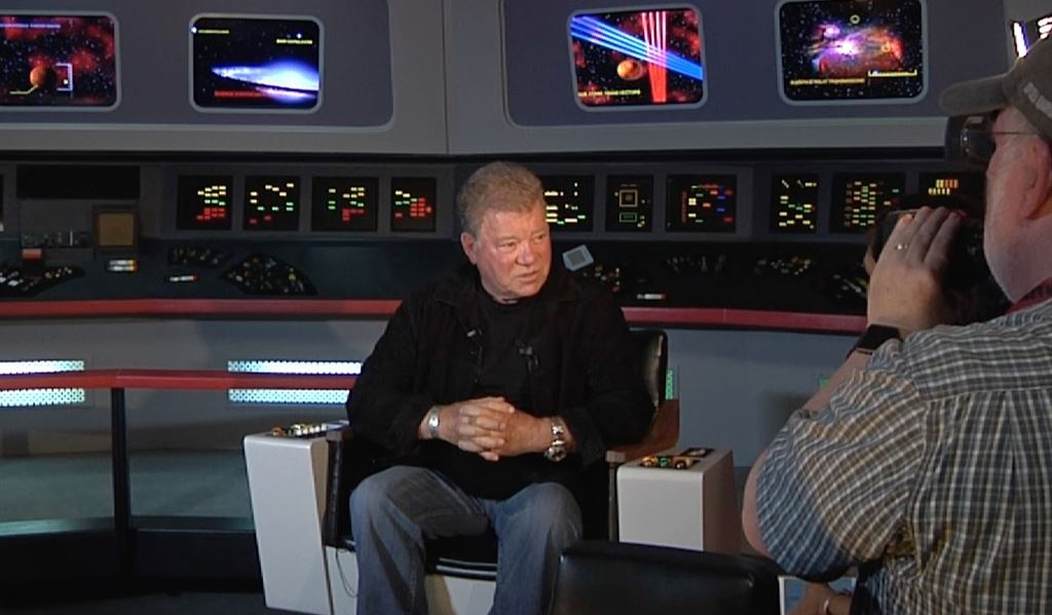
Even the sets were more mature. I grew up on The Next Generation, and the bridge of the ship felt both futuristic and refined. It was stylish but also, in a sense, homey. The executive officer's chairs were together, as if meant more for conversation than just command. It felt like a space to get comfortable in, but also one where decorum was to be maintained.
Compare that to today's bridges, which look like hyper-stylized, shiny rooms of chaotic energy. It's not a place where sitting and thinking would be encouraged. It's there to make dramatic and action-packed moments look more dynamic.
And I think that could be a solid representation of the issue. Modern Star Trek, and I'd say a lot of modern anything, doesn't really want you to stop and think. It wants you to consume what's served without too much thought and move on to the next offering. There's no real issue tackled because the issues modern shows want to tackle are done so through characters based solely on skin-deep representation and speeches and conversations that sound more like propaganda than actual dialogue.
And this is done in between ridiculous action sequences that often don't make any sense either. These are added in almost as if they're trying to make sure the audience stays glued to the screen in between dialogue that they know doesn't exactly pass for decent.
You're not being invited to think, ponder, and consider. You're being preached at and then distracted. You came for the scotch, and you got a shot of some Fireball knockoff.
It's exhausting in its own way, and it doesn't exactly excite or grab you. Old Trek, and indeed older movies, didn't have CGI budgets and complicated action sequences. The Next Generation wasn't a roller coaster ride, and some of the sets looked DIY, but it still felt and sounded like the future.
Modern television, especially modern Star Trek, looks like the future but feels like Los Angeles 2025, just like everything else that's made for the modern audience that doesn't actually exist.