






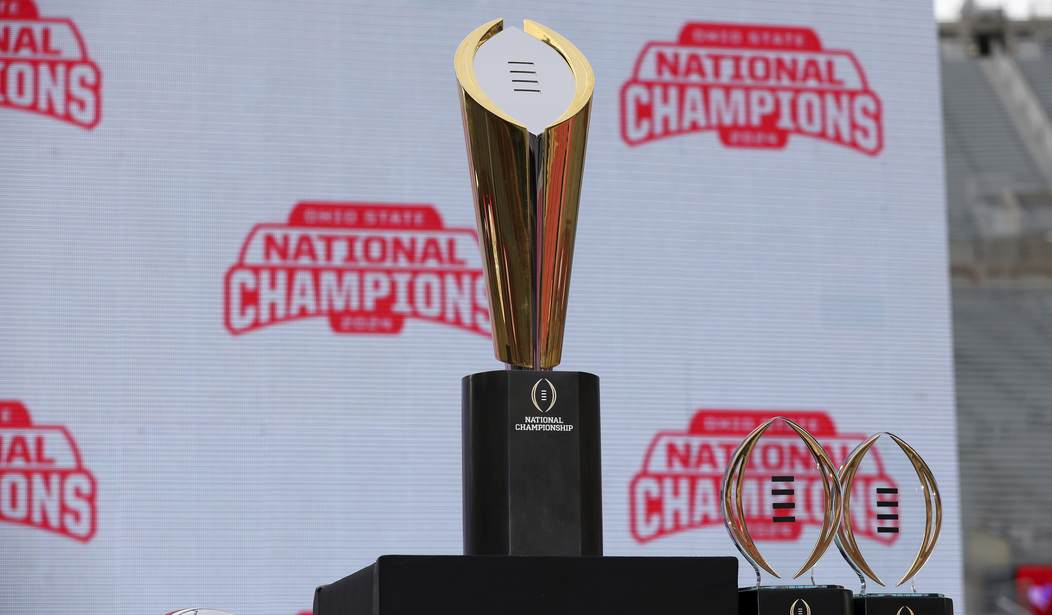
To say the pendulum has swung way too far in college sports is a given. In football alone, the money that has flooded into the process has become so large that it rivals professional sports is not an outlandish theory, and now it has become more invasive. We are now seeing that select states are looking to actually alter their tax structures to aid and benefit the college athletics in their universities. It is an enraging development in an already out-of-control system.
It was in 2021 that the landmark Supreme Court ruling in Johnson vs. NCAA was handed down, which stripped away NCAA restrictions on college athletes earning money while in school. It was (initially) a sound decision; after generations of universities and the NCAA pocketing billions of dollars from players' efforts and appearances, athletes could now profit personally from their Name, Image, and Likeness (NIL).
But, as an unchecked entity, this has become a burdensome development in college sports. Schools are doling out tens of millions of dollars annually to draw in recruits and lure players from other programs. Since the NIL decision, we also saw the removal of restrictions for changing schools; each year sees a flurry of players entering the transfer portal as a form of free agency. After this past season, almost 4,000 players tossed their names into the portal.

Because of this unhinged environment that has taken over college sports, President Trump just convened a “Saving College Sports Roundtable,” with a collection of names from the NCAA sector, professional sports, and government, to sit in and concoct possible solutions to rein in some of the Wild West activity taking place.
It is a bemusing reality displayed by Pete Bevacqua, the athletic director from Notre Dame, as he sounds like an addict who is checking into a rehab center.
"I think everybody around this table knows that we need help to straighten this out; we need the help of Congress. It's [college football] become a runaway financial train.”
Well, I suppose the first step is admitting you have a problem. What is amazing is how rapidly this all has turned. It was just years ago when players were under suspicion if they pocketed any kind of ancillary income, and today, some NFL franchises may look jealously at schools that are paying out cash to players without a salary cap.
To see the tectonic shift, compare these two realities. Back in 1987, Southern Methodist University was handed down the death penalty by the NCAA for illegal payments to numerous players, estimated to total a couple of hundred thousand dollars. Today, that sum may not even turn the head of blue-chip players. Before playing a single down in college at the start of last season, Michigan agreed to terms with quarterback Bryce Young for a $12 million contract.
Back in the 1980s era, boosters paying off players was a known but veiled activity. A player might get a job cleaning an office and be instructed to be sure to empty the trashcan with an envelope of cash, or get a “valet” job that required keeping that brand new Cadillac safely parked outside their frat house. When SMU managed to coax running back Eric Dickerson away from the cross-state rival Aggies, it was remarked that he had initially been recruited with a new car, called the “Pontiac Trans A&M.” It used to be a dark joke to say that when some players turned pro in the NFL, they took a pay cut. These days, that is a reality.
Now, schools are in a bidding war with each other for players, and a common enticement seen in professional sports is looming into play. One of the gripes heard in the NHL, mostly from tax-burdened Canadian teams, is that the Florida Panthers have built a Stanley Cup dynasty because they enjoy the benefits of playing in a state with no income tax, a tool used when signing free agents. (Just ignore that teams in other, no-income tax states are not as dominant perennially.) Now, not only are colleges using this negotiation tactic, but some states are looking at changing their tax laws to help out their universities.
The Mississippi state legislature is in the process of passing a bill that will grant income tax exemptions for college athletes. This bill matches one that was actually passed last year in Arkansas, so colleges in the state will now have a competitive advantage over schools in states without an income tax. The Mississippi measure has cleared the House this week, and has been moved to the state Senate.
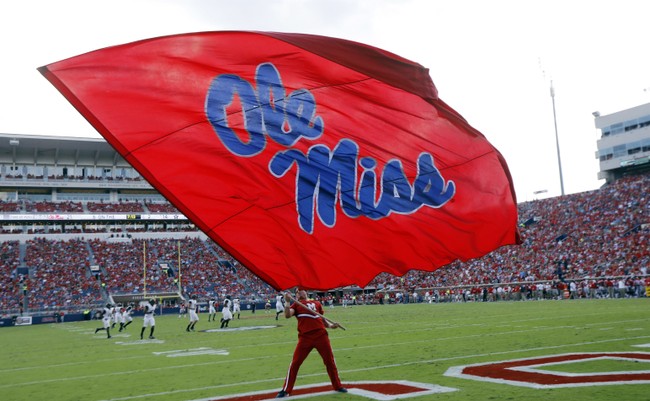
This selective tax exclusion has to be regarded as a middle finger to residents. How will one feel to be subjected to your state’s tax requirements, but watch a teenager come gliding in from out of town and pocket millions without a tax obligation? Well, for some at least, if it leads to an SEC title and making the college football playoffs, taking a pay cut might be worth it. It is a similar mindset seen in fans who will fork over for $17 beers at the game if it means keeping a 20-win pitcher in the rotation. But for most, this is offensively elitist.
This type of preferential tax evasion also exposes the hidden paradox of confiscatory tax policies. That legislative move, made to lure in better players for the benefit of schools, is a tacit admission that taxes repel talent and opportunity. Conversely, this tax credit is expected to bring in better quality, deliver wins, and, down the road, provide better opportunities and more revenue. This will lead to increased tax revenue.
Of course, this reality will fall on deaf ears for stalwart tax-and-spenders of a certain persuasion. After all, those are the type to operate with the same kind of mental dexterity seen from Notre Dame’s AD, so you get a similar type of plea lacking in self-awareness: “You need to pass laws to save us from ourselves!”
Editor’s Note: Do you enjoy RedState's conservative reporting that tells the truth about the terroristic threats to our country?
Join RedState’s VIP and use promo code FIGHT! to get 60% off your membership.

Join the Conversation
VIP members get the ability to comment on articles.