









I was listening to an episode of the Rob Lowe podcast Literally!, which featured fellow actor Adam Scott. I wanted to hear the two as they bandied about their time together on the former NBC sitcom Parks and Recreation. It promised to be a cool listen, as the genuine friends kicked back and discussed a variety of topics in the industry, but the host let slip a surprising nugget.
He currently is the host of the Fox Network game show The Floor, and Scott was jarred when Rob let it be known that they film the program entirely in Dublin, Ireland. What makes this so obtuse is that the game's format involves a crowd of people who have a preferred topic on which they challenge others.
What is remarkable is that it makes sense from a cost perspective for the network. As Lowe explains, “It is cheaper to bring 100 American people to Ireland than to walk across the lot at Fox, and do it there.” Then Adam Scott acknowledges that he has seen this reality in Studio City, where he has an office. He said it is near the production lot where they used to shoot Parks and Recreation, and noted that things are very quiet there.
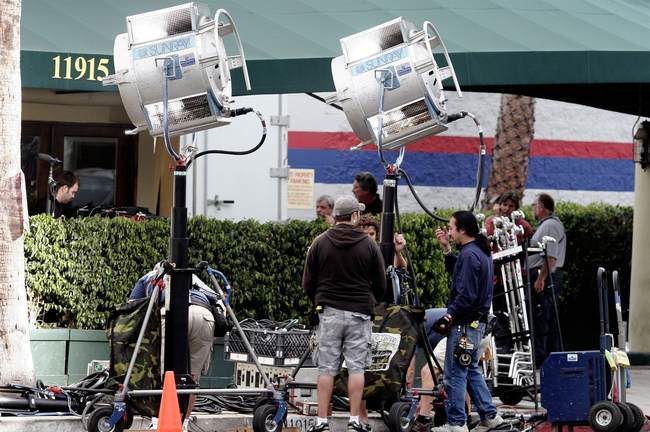
This is not an anomaly, something where the arcane specifics of a game show require a European location. Film and television production has evaporated in Southern California over the past few years, and it is past crisis mode. The reasons for this are numerous and interwoven. And much of it is self-created.
GOING BROKE BEYOND GOING WOKE
Right now, California production work is on a three-year losing streak that sees it not just sliding, but plummeting. Coming out of the industry shutdown in 2020, things had returned to levels close to those of previous years. But starting in 2023, the work in the region began to drop, and today there is a stark statistic: Entertainment productions in the Los Angeles region are down to pandemic levels, when the industry had closed down almost entirely.
LosAngeles in particular has crashed out as far as shooting days for entertainment, but it is a national flight of productions as well.
— DISASTERS IN THE MAKING (@DITM_Podcast) February 10, 2026
Europe has become the hotbed, for various reasons. pic.twitter.com/NUcX5b8AoE
What we see taking place is that the studio system is voting with their wallets, which means they are voting against the very type of platforms the Hollywood elite have long been promoting. The reasons for this migration of work are complex, but it can be traced to the very decisions these same entertainment titans have fostered for years.
Coming out of the COVID closures, logic would dictate that there would be a logjam of work as studios had stalled productions stacked up on planned projects. But as they were playing catch-up, the strike of 2023 rose up and altered the recovery efforts. Studios had to scramble while negotiating, and solutions had to be drawn up. After ponderous months, they were able to get back to work, but things were drastically altered.
New payment structures made European work far more favorable, as did the generous tax benefits offered to lure more projects. Another factor that labor failed to account for was that the pandemic showed that many facets of the filming process - from editing, animation, audio work, sound design, CGI content, and other components - could be done remotely, and much cheaper.
Add to this that while the streaming platforms were rapacious for content, they were also long-suffering as far as turning a profit. With the exception of Netflix, most of the streamers have been enduring years with billions in losses, and new costly requirements would inevitably chase them out of town for more economically favorable locales.
This flies directly in opposition to what the Hollywood players and celebrities usually tout with their activism. Promoting Democrats, supporting unions, and backing tax rates is the norm coming from these luminaries, yet when faced with the very policies they were pushing, they beat cheeks out of town.
In recent years, other domestic locations have been trying to curry favor with studios. Georgia long ago grew into a major player, New Mexico is a growing landing spot, and New Jersey has been welcoming and growing, with expansion taking place as Netflix and other studios are committing to work there. Newer locations are seeking a foothold in Texas, North Carolina, and even Kentucky. One outfit in Dallas has soundstages with a couple of film commitments that could lead to growth and becoming another destination option.
The SAG-AFTRA strike is a prime example of this. The performers lobbied for higher royalties, increased health benefits, and more talent-friendly restrictions, and did so at a time when studios were reining in budgets and expenses. One other wrinkle from the strike was the longest negotiating point.
AI Becomes More Than a Plot Point
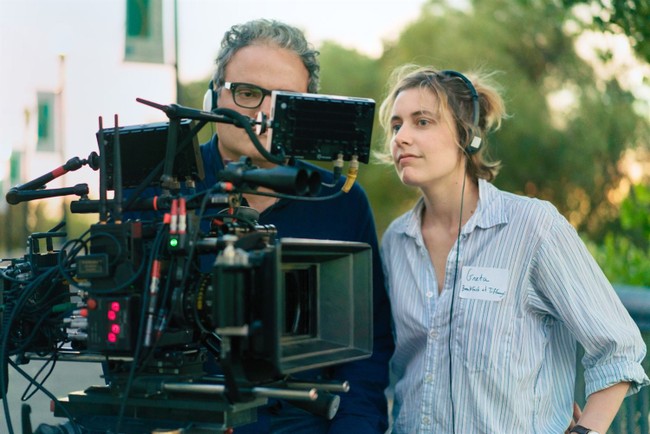
After the studios and unions hammered out most agreements during the strike, the topic of artificial intelligence was the main delay in getting a new contract finalized. After seeking protection in some manner for actors, writers, and others, such as voice-over artists, it took almost no time for studios to begin exploring the growing technology.
This is a complicated, multi-edged sword for studios, as they see a need to scale down costs, and the tech is an easy solution. Conversely, it also means almost anyone is nearly able to produce Hollywood-level content right now, and studios will be marginalized in the process. We are already seeing the signs.
Disney and others were grappling with AI providers co-opting intellectual properties. To fend off copyright challenges, the studio decided it would team with one AI producer and license its content as a means of controlling its use. Then there was the announcement of a true violation of that actor's union contract that approaches comedic levels.
Meet Tilly Norwood, an emerging “talent” in the industry. Tilly is the first AI actress from Eline’s newly launched AI talent studio, Xicoia, a spin-off from Particle6. Within hours of this announcement, Tilly dominated headlines as the “world’s first AI actress,” creating an instant debate, while drawing curiosity from talent agencies and condemnation from many working actors.
We can actually see on the horizon where both the performers, many trade positions, and even production companies become marginalized by computer-generated work. This will only exacerbate the problems currently experienced, as Hollywood can do little more right now than use this tidal shift as a plotpoint in films and TV series.
Disney's Latest 'Tron' Sequel Proves They Can't Kick Their Worst Woke Habit
One attempt being made to secure or bring back production jobs has been a proposal by President Trump to impose 100% tariffs on production taking place overseas. Hollywood has not come to a conclusion on how it feels about this, and much of that has to do with the complexities of Hollywood economics, which frequently operates in a fashion apart from traditional economic structures.
One tangle in this concept is who would pay for a foreign-produced movie? The production company, the studio backing the project, or possibly the third-party studio distributing the film, or do they share in the cost? What about films where the production takes place partially in the States? Is there a percentage formula applied?
What is apparent is that Hollywood as an industry is facing a future that is filled with unknown questions. The problem is they are facing a series of problems right now that are in demand of answers. This is a plot that currently has no third-act resolution, and it is well known that more often than not, a shoot that takes place without a finished script ends up as a disaster.
Editor’s Note: California is the poster child for everything that is wrong with the Democrat Party and the “progressive” movement.
Help us continue exposing Democrats' plans to lead America down a dangerous path. Join RedState VIP and use promo code FIGHT to get 60% off your membership.
Join the Conversation
VIP members get the ability to comment on articles.