








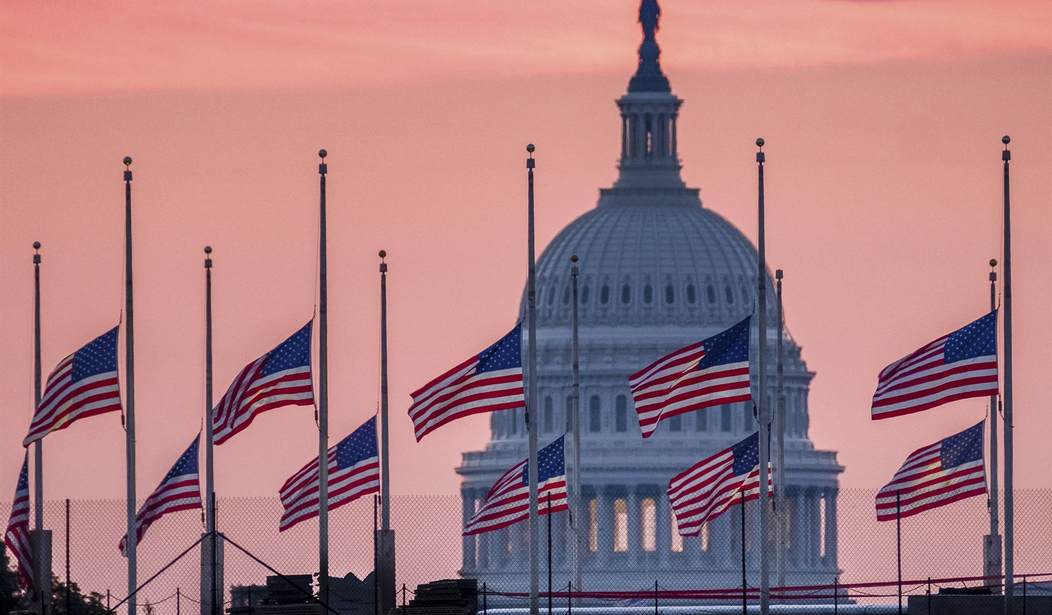
The House of Representatives on Thursday narrowly defeated a war powers resolution aimed at curtailing President Donald Trump's conduct of military operations against Iran. The measure fell by a single vote, 213 to 214, marking the second such failure in recent weeks as the U.S.-Israeli campaign enters its seventh week. This outcome reflects a straightforward recognition that the executive branch retains primary responsibility for directing ongoing hostilities once engaged.
Under the framework established decades ago, presidents notify Congress of military actions and operate with a 60-day window before further authorization becomes necessary. In this case, the administration has pursued strikes and a naval blockade of the Strait of Hormuz, actions taken amid active conflict involving American and Israeli forces.
Democrat-led War Powers Resolution to block President Trump from continuing Operation Epic Fury fails in the House by a vote of 213–214. pic.twitter.com/H9HGQO04lD
— The American Conservative (@amconmag) April 16, 2026
Democrats framed the resolution as a necessary check on unchecked power. Yet the narrow margin, achieved even after three previously opposed Democrats shifted their votes in favor, underscores limited appetite for intervention at this stage. Republicans, for their part, pushed back during floor debate, with some questioning the priorities of those seeking to impose new limits mid-conflict. The exchange grew pointed, though both sides affirmed the underlying commitment to national interests. At root, the episode highlights enduring questions about institutional roles in matters of war and peace.
A new War Powers Resolution has failed in the US House by one vote: 213 Yeas - 214 Nays
— The Maine Wire (@TheMaineWire) April 16, 2026
Jared Golden joined Republicans in voting NO: pic.twitter.com/D95XwNLCAz
Conservatives have long argued that effective foreign policy demands decisive leadership, particularly when adversaries like Iran pose direct threats through proxies, nuclear ambitions, and regional destabilization. Hand-tying the commander in chief through repeated legislative maneuvers risks signaling hesitation precisely when clarity of purpose matters most. The blockade that turned away 13 vessels this week and the blacklisting of entities aiding Iranian sanction evasion illustrate the practical tools being deployed to apply pressure.
Fiscal responsibility enters the picture as well. Prolonged uncertainty or forced withdrawals could extend costs rather than contain them. Military engagements carry enormous burdens on personnel and budgets alike. Once committed, the wiser course often lies in allowing operations to reach defined objectives instead of layering procedural obstacles that invite prolonged stalemate. Individual agency for the president in executing policy, balanced against congressional oversight, has served as a practical division of labor.
Congress retains the power of the purse and the ability to declare war when it chooses to exercise those authorities fully.
The Constitution gives Congress the sacred power to declare war, which is why we cheered endless undeclared bombings in Libya, Syria, and Yemen for years!!!
— Dr Xerxes Q (@DrXerxesQ) April 16, 2026
But now that Trump’s involved, Republicans blocking the 4th failed War Powers Resolution suddenly means the American people…
The Constitution gives Congress the sacred power to declare war, which is why we cheered endless undeclared bombings in Libya, Syria, and Yemen for years!!!
But now that Trump’s involved, Republicans blocking the 4th failed War Powers Resolution suddenly means the American people have “no voice”
How convenient!!!
My emotional labor is with every brave ally pretending this selective outrage is principled 100%.
Some Republicans have indicated openness to revisiting the issue as the 60-day period draws nearer to its close at the end of April. That measured approach allows time for developments on the ground and in negotiations to inform any adjustment.
It avoids the appearance of reflexive opposition that characterized much of the Democratic effort. The vote also reveals evolving dynamics within both parties. A handful of members crossed lines, suggesting the debate is not entirely frozen along partisan lines. Still, the consistent rejection in both chambers demonstrates broad recognition that micromanaging an active campaign from the Capitol floor rarely improves outcomes.
History has shown that divided signals can embolden adversaries and complicate efforts to secure favorable resolutions. In this instance, the House decision preserves operational flexibility at a critical juncture. It places trust in the administration to weigh risks, measure progress, and pursue American interests without constant legislative second-guessing.
Such restraint does not equate to blank checks. It reflects a pragmatic understanding that institutional integrity requires respecting the distinct competencies each branch brings to national security. As the conflict evolves, lawmakers on all sides will continue weighing how best to fulfill their oversight duties without undermining the effectiveness of the response already underway.
Editor's Note: For decades, former presidents have been all talk and no action. Now, Donald Trump is eliminating the threat from Iran once and for all.
Help us report the truth about the Trump administration’s decisive actions to keep Americans safe and bring peace to the world. Join RedState VIP and use promo code FIGHT to get 60% off your VIP membership.

Join the Conversation
VIP members get the ability to comment on articles.