








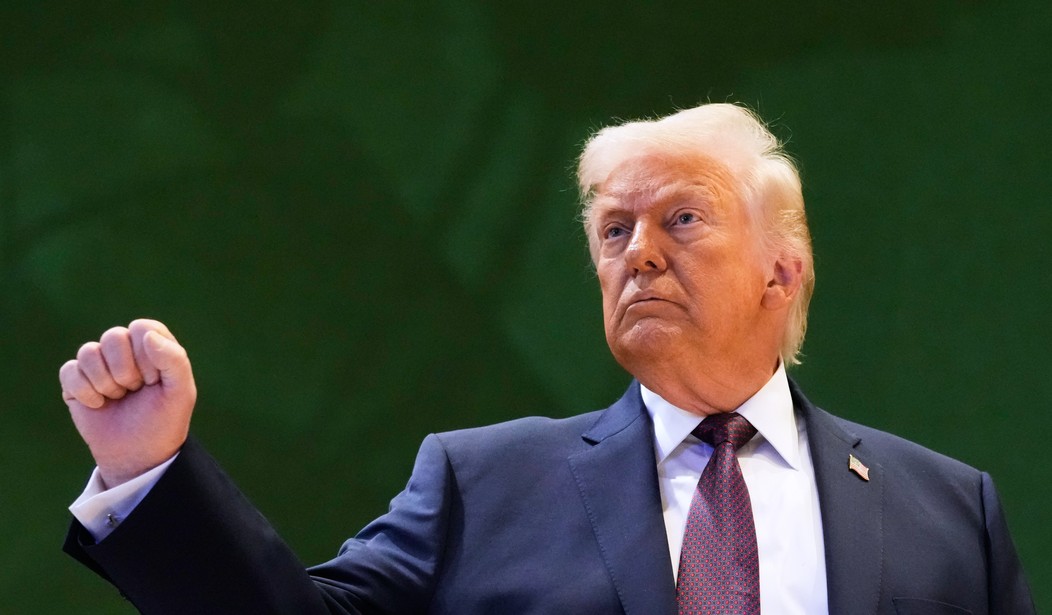
President Donald Trump’s new Board of Peace has drawn the usual outcry from multilateral purists, but strip away the reflexive skepticism and something important remains. The United States is again trying to set the terms of peace rather than outsourcing hard problems to slow-moving international forums.
The board grew out of Trump’s twenty-point plan to end the Gaza war and rebuild the territory under a new transitional administration. The concept was endorsed in a United Nations Security Council resolution last year, which is not a trivial footnote for critics who claim this is some freelance vanity project. The Board of Peace is now formally chartered as an international organization tasked with stabilizing conflict zones, starting in Gaza, but with authority to address other crises as they emerge.
Trump's new Board of Peace is necessary because the UN has failed again and again. @nypost https://t.co/WE7AOlUTES
— Douglas Murray (@DouglasKMurray) January 23, 2026
Membership is selective and, for permanent seats, extremely costly. Nations can participate in standard three-year terms or pay one billion dollars to secure lasting membership. That price tag has been mocked as transactional, but it has a clear logic. Countries that want a permanent say in shaping postwar Gaza and future peace efforts should have real skin in the game. Western governments complain for years that regional actors do not shoulder enough responsibility, then recoil when Washington creates a mechanism that forces exactly that.
🚨 THE BOARD OF PEACE JUST HIT 40 MEMBERS 🚨
— Richard Miriti (@miriti55453) January 27, 2026
Jan 26, 2026
The newly formed Board of Peace now includes 40 countries on its General Board — doubling in size just days after launch.
🧵 What’s happening:
• 20 countries signed the charter on Jan 22
• 20 more joined on Jan 26
•… pic.twitter.com/eJ4Afdx1YT
RELATED: Historic Triumph: Trump Unites World Leaders in Signing New Gaza Board of Peace Charter
The 2026 World Economic Forum Proved That Trump Flipped the Script on 'The Great Reset'
Critics raise two main concerns. First, they argue that the board weakens or sidelines the United Nations. Second, they object that Trump himself chairs the body, holds veto power, and can appoint his successor, creating what they see as an overly personalized structure. Both points deserve a serious answer. On the first, the Board of Peace exists because traditional institutions repeatedly failed to resolve Gaza and similar conflicts. The board does not erase the United Nations, but it does create a venue where willing states can act faster and tie resources directly to outcomes.
Scott Jennings just went toe-to-toe with a pro-Palestine activist on CNN and it was savage.
— Overton (@overton_news) January 20, 2026
Cameron Kasky tried to claim President Trump’s Board of Peace for Gaza was a “facade” because no Palestinian was included.
But @ScottJenningsKY fired back with a BRUTAL reminder.
KASKY:… pic.twitter.com/7tTWocS54Y
On the second point, Trump’s central role is a feature, not a bug, of this model. The United States is still the only country with the diplomatic clout, military reach, and financial leverage to move multiple regional actors at once. Putting an American president at the center makes the board accountable to voters in a way distant secretariats never are. The executive board, which includes Secretary of State Marco Rubio, special envoy Steve Witkoff, former British Prime Minister Tony Blair, and Jared Kushner, adds additional experience and international legitimacy.
None of this guarantees success. The relationship between the Board of Peace, the Gaza Executive Board, and existing United Nations structures is still murky, and several European allies are hesitant or on the sidelines. But the basic idea is clear. After years of process without peace, Trump is forcing a choice. Countries that want influence over the next phase of Gaza and other conflict zones can join, invest, and help build something new. Those that prefer statements to solutions can stay in the gallery and complain.
A conservative foreign policy should favor institutions that are judged by results, not rhetoric. The Board of Peace is an experiment in that direction. If it delivers even partial progress in Gaza, it will be because Washington stopped waiting for permission to lead, and others decided that real peace is worth more than another round of speeches.
Editor’s Note: Do you enjoy RedState’s conservative reporting that takes on the radical left and woke media? Support our work so that we can continue to bring you the truth.
Join RedState VIP and use the promo code FIGHT to get 60% off your VIP membership!

Join the Conversation
VIP members get the ability to comment on articles.