






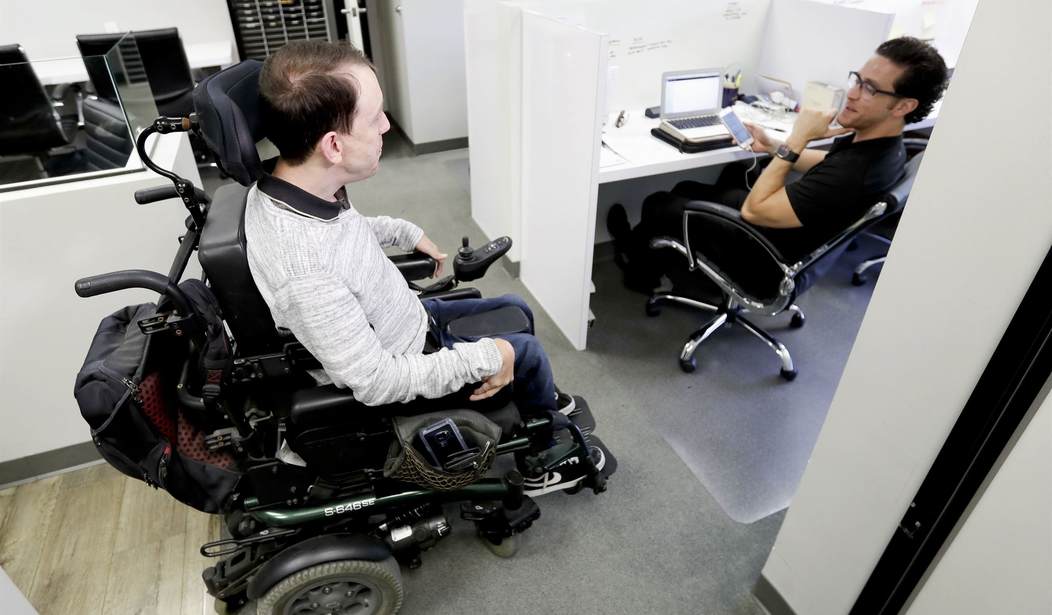
The debate over inclusion at work often gets wrapped in jargon and corporate slogans. The reality is simpler and more serious. Millions of Americans live with invisible disabilities, and too many workplaces are still built around outdated assumptions about what a “good worker” looks like. That is not just unfair. It is also a waste of talent and a missed opportunity to live up to the law and to basic decency.
Roughly 61 million adults in the United States have at least one disability, and an estimated tens of millions manage conditions that are not immediately visible, from chronic pain and autoimmune disease to autism and ADHD. Many of them stay quiet at work. They do not disclose their conditions because they are not convinced their employer will treat them fairly or keep that information in proper confidence. That should concern anyone who claims to value merit and personal responsibility.
Only about 30% of autistic adults have a job, with around 15% in full-time employment
— Autistic Lauren 🏳️⚧️ 🏳️🌈 (@Autistic_Lauren) December 29, 2025
Why is it so low?
1. Many companies are unwilling to hire autistic folk
2. Workplace bullying
3. Unsuitable environments
4. Lack of accommodation/support
5. Some cannot work at all
The Americans with Disabilities Act has been on the books since 1990, yet too many employers still treat accommodations as a burdensome legal requirement instead of a basic part of managing people. The law does not ask companies to lower standards. It asks them to stop confusing old habits with genuine performance. An employee who needs flexible hours or a quieter space is not asking for an easier job. They are asking for a fair shot to meet the same expectations as everyone else.
Even places that emphasize inclusivity will have a huge bias against Autistic people in their hiring process. Most will expect "proper" eye contact, firm handshakes, no stimming, a short time for us to process questions, and judge based on NT social norms.
— Maddy A (@Madster722) December 29, 2025
SEE ALSO: THE ESSEX FILES: Breaking Barriers - the Hidden Epidemic of Disability and Employment in America
One of the most telling points raised in recent research on invisible disabilities is how much hiring still relies on amateur psychology. Candidates are judged on eye contact, small talk, and how well they perform in a room full of strangers, even though those traits have little to do with the job in many fields. That bias punishes autistic candidates and others who may not fit a narrow template but can excel once allowed to focus on the work itself. It also favors smooth talkers over steady producers, which is hardly a valid measure of merit.
New audit study shows that disability-based discrimination in the labor market is massive
— John B. Holbein (@JohnHolbein1) June 14, 2023
"We find that non-disabled applicants receive 33% more callbacks than similarly qualified wheelchair users despite applying for jobs where the impairment should not interfere w performance" pic.twitter.com/HDMk6KJCF8
A more responsible approach starts with getting clear about what a job actually requires. If the work can be done remotely, on a flexible schedule, or through written communication rather than constant meetings, there is no virtue in clinging to a nine-to-five office routine just to prove a point. When managers focus on outcomes instead of appearances, accommodations for invisible disabilities become easier to grant and easier to defend. They also tend to help other workers, which is why studies have found that many changes made for disabled employees boost morale and productivity across the board.
This does not mean every demand should be rubber-stamped. Businesses have to weigh costs and operational needs. The encouraging news is that many accommodations are modest in price and simple to implement, including flexible start times, camera optional meetings, and the option to communicate in formats that reduce stress. For most employers, the barrier is not the budget line. It is the mindset.
Conservatives often speak about the dignity of work. That phrase loses meaning if it only applies to people whose health and neurology fit a comfortable stereotype. A culture that quietly punishes invisible disabilities is not a culture of merit. It is a culture of appearances. The better path is to insist on high standards, applied fairly, while recognizing that the Constitution and common sense leave room to ask how different people can meet those standards.
Work should not be a place where people feel compelled to hide their medical reality just to keep a job. It should be a place where adults are treated as adults, where results matter more than rituals, and where the law is respected not only in letter but in spirit. Recognizing and respecting invisible disabilities is part of that broader project, and it is long overdue.
Editor’s Note: Do you enjoy RedState’s conservative reporting that takes on the radical left and woke media? Support our work so that we can continue to bring you the truth.
Join RedState VIP and use the promo code FIGHT to get 60% off your VIP membership!


Join the Conversation
VIP members get the ability to comment on articles.