








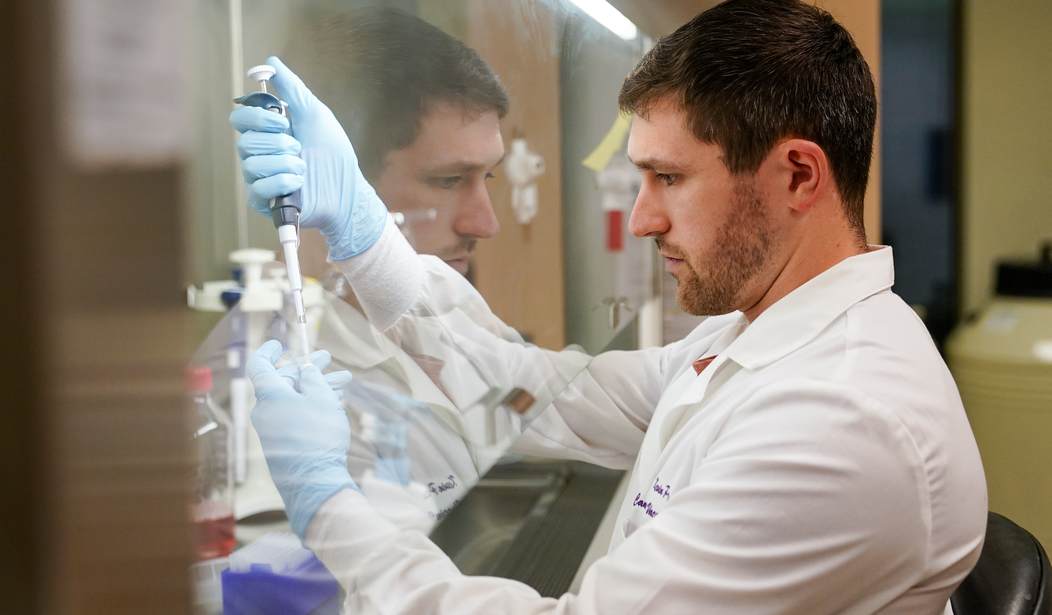
Cancer patients spend a lot of time waiting for the next bad phone call. On Wednesday, Moderna and Merck gave some of them a reason to breathe when they announced that a personalized mRNA vaccine had kept melanoma from returning or spreading in the largest trial of its kind ever run.
The study included 1,137 patients with high-risk melanoma who had already undergone surgery to remove their tumors. Those who received the vaccine with Keytruda went longer without the cancer coming back than patients treated with Keytruda alone, and the cancer was also less likely to return somewhere else in the body.
One of the reasons cancer is such a nightmare is that two patients can have the same kind and still carry very different mutations. Intismeran tries to work around that by using the tumor itself as the starting point. Moderna sequences a sample, compares the tumor to healthy cells, identifies up to 34 mutations that might elicit an immune response, and builds a vaccine for that patient.
Read More: Cancer Has Been Winning for Too Long - These GLP-1 Studies Offer Real Hope
New Cancer Drug Opens Floodgates of Hope Beyond Pancreatic Cancer
Every batch belongs to one person, which is part of what makes Wednesday’s announcement unusual. Scientists have spent years trying to get personalized cancer vaccines to work, but none had made it through a Phase 3 trial, and neither had any mRNA cancer treatment.
All the patients entered the trial after surgery, with melanoma ranging from stage IIB to stage IV. Roughly two-thirds received Intismeran every three weeks along with Keytruda every six weeks, while the remaining patients stayed on Keytruda alone. The treatments ran for about a year.
When doctors checked who had seen the melanoma come back and who had seen it turn up elsewhere in the body, the combination group came out ahead. Merck and Moderna said the difference was large enough to clear both goals set for the trial, and no new safety problem appeared beyond what researchers had seen in the earlier work.
Moderna CEO Stéphane Bancel has been working toward this day for years, and he kept his reaction simple. “It’s a big moment for medicine, a big moment for patients.”
Merck and Moderna have only released the top-line finding, leaving out the numbers needed to judge how much the vaccine helped. The companies plan to present those details at a medical meeting, while the trial continues to track whether patients who received the combination actually live longer.
There is some history to work with, although it comes from a much smaller study. In that trial, 157 melanoma patients were followed for five years, and the combination lowered the risk of recurrence or death by 49 percent compared with Keytruda alone. The risk of the cancer spreading to another part of the body or causing death fell by 59 percent.
Karen Knudsen, CEO of the Parker Institute for Cancer Immunotherapy, sees Wednesday’s result as the start of something that could stretch well beyond melanoma. “The positive hit here leads us into truly this next phase in immunotherapy. This is an auspicious start — this is where things begin.”
Moderna President Stephen Hoge said that patients could have access as early as next year if regulators approve the treatment. Merck and Moderna already have similar vaccines in trials for cancers of the lung, bladder, kidney, pancreas, and stomach, which will show whether the idea can travel beyond melanoma.
Hoge's timeline may be feasible, though producing the vaccine will be a job in itself. Moderna needs the tumor sample before it can begin sequencing and selecting the mutations. Then a one-patient batch has to be manufactured, tested, and returned to the clinic while that person waits. The companies have not settled on a price, and doing all of this for thousands of patients will be much harder than doing it inside a trial.
The survival data still has to come in before this can be considered anything close to a cure. Even with that hanging over the announcement, more than 1,100 patients took part, and the vaccine helped hold off the cancer better than Keytruda alone, giving families waiting on the next scan something they do not get very often: news that may actually be as hopeful as it sounds.
Editor's Note: Do you enjoy RedState's conservative reporting exposing the radical left and woke media? Support our work so we can keep bringing you the truth.
Join RedState VIP and use promo code FIGHT to receive 60% off your membership.


Join the Conversation
VIP members get the ability to comment on articles.