






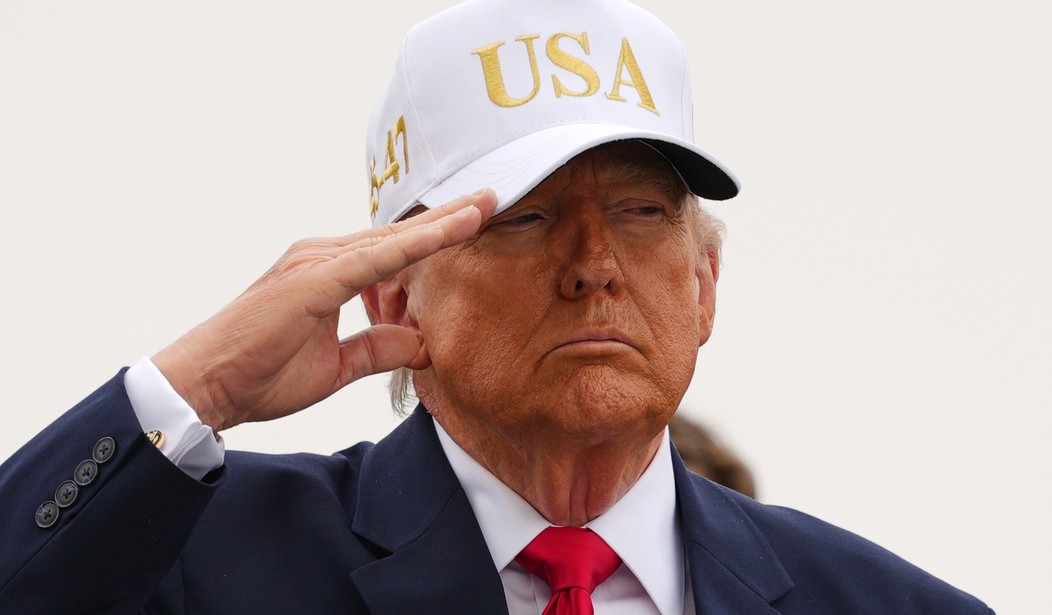
President Donald Trump moved quickly Friday to frame the March jobs report on his own terms, emphasizing the month-over-month rise in private-sector hiring while downplaying the topline number that dominated early coverage.
After the Bureau of Labor Statistics (BLS) reported that the U.S. added 178,000 jobs in March, Trump pointed instead to a different number: 186,000 private-sector jobs gained during the same period. That distinction, he argued, better reflects the direction of the economy and the source of hiring strength.
— Rapid Response 47 (@RapidResponse47) April 3, 2026
“A very happy and blessed Good Friday to all, especially to the 186,000 Americans who gained Private Sector jobs in the month of March alone!” Trump wrote in a Truth Social post Friday afternoon.
He followed with a broader claim about what is driving those gains, tying the increase in hiring directly to his economic policies, and framing the labor market as a product of deliberate policy choices rather than broader economic momentum.
“My Economic Policies have created an enormously powerful engine of Economic Growth, and nothing can slow it down. Factory Construction Jobs are soaring as a result of the rapid Onshoring and surging Investment that TARIFFS have generated, all while the Trade Deficit has shrunk by 52% in a year!”
The BLS separates private employment from government payrolls in its monthly reports, and that distinction has become central to Trump’s messaging. While the topline number captures total job growth, the private-sector figure excludes government hiring, which declined again in March, according to Friday morning's report.
By elevating private-sector gains, Trump is highlighting a version of the labor market that aligns with his broader economic argument about growth driven by business investment rather than government expansion. That contrast also gives him a clear way to distinguish his approach from prior periods where government hiring played a larger role in overall job gains.
As we reported earlier on Friday, March’s gains were concentrated outside the federal workforce, which has continued to contract in recent months. That ongoing decline provides a concrete data point for the administration's argument.
Read More: U.S. Adds 178K Jobs in March While Federal Workforce Continues to Contract
Outside coverage of the report also underscored how the headline number compared to expectations. The New York Times, no friend to the president, described the report as a solid showing for the labor market, noting that hiring came in stronger than forecast.
Employers added 178,000 jobs last month, substantially more than economists had expected, while the unemployment rate was little changed at 4.3 percent.
At the same time, other analysts pointed to factors that may have boosted the March total, including the return of workers following a major health care strike and seasonal shifts that tend to support hiring early in the year, the report linked above from the NYT shared.
“March’s report showed stronger gains than anticipated, offering an early signal that employers may be moving ahead with hiring plans more decisively than earlier in the quarter,” said Ger Doyle, regional president for North America at ManpowerGroup.
Trump’s response does not engage with those caveats. Instead, it focuses on a narrower question: where the jobs are being created and what that says about the underlying economy. By centering his message on private-sector hiring, he is drawing a distinction he has returned to repeatedly, separating his economic agenda from a model that relies more heavily on government hiring.
That framing also allows him to connect the jobs data to other policy priorities, including tariffs, domestic manufacturing, and efforts to reduce the trade deficit. For now, the key takeaway is not just the jobs number itself, but how it is being used, with Trump treating the report as evidence of a broader economic shift and using the private-sector figure to reinforce his case that growth is coming from business activity rather than government expansion.
Editor’s Note: President Trump’s effort to shrink Washington’s bloated bureaucracy is already producing measurable results. The federal workforce is now at its lowest level since 1966.
If you believe limited government matters, join RedState VIP and use promo code FIGHT to get 60% off your membership.


Join the Conversation
VIP members get the ability to comment on articles.