








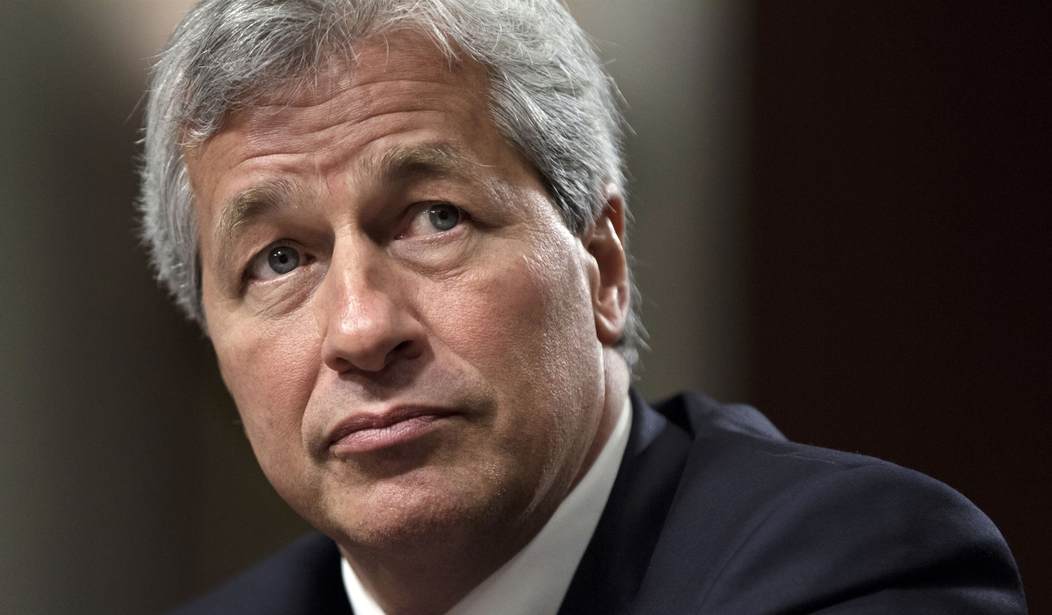
Jamie Dimon is not being accused of signing off on a compliance memo or approving a routine account review. He is being accused of directing the political blacklisting of a former president and overseeing what Donald Trump’s legal team describes as a deliberate effort to cut him, his family, and his businesses out of the American financial system.
Trump’s lawsuit names Dimon personally and frames the account closures after Jan. 6 not as neutral risk management, but as retaliation tied to political pressure.
“By their own admission, JPMorgan Chase, at the direction of CEO Jamie Dimon, unlawfully debanked and blacklisted President Trump, his family, and several of his businesses, causing overwhelming financial and reputational harm,” a spokesperson for Trump’s legal team said in a statement.
That language places responsibility at the top. It alleges intent. It alleges coordination. And it demands accountability.
JPMorgan’s response is just as direct.
At the center of Trump’s complaint is the allegation that the bank created and circulated a “blacklist” to other financial institutions. JPMorgan does not simply dispute the description. It denies the claim's viability as to Dimon altogether.
“But even if such a blacklist existed, there still would be no conceivable claim against Mr. Dimon under FDUTPA. Plaintiffs’ joinder of a non-diverse defendant who cannot possibly be held liable is fraudulent. Since there is complete diversity between the Plaintiffs and JPMorgan, the only other Defendant, this Court has subject matter jurisdiction under 28 U.S.C. § 1332 to consider this matter and, ultimately, to (i) transfer the matter to another District, or (ii) dismiss the remainder of Plaintiffs’ claims, which lack any basis in law or fact.”
From there, the bank pivots to what may be the most consequential part of its defense. Trump’s claim against Dimon is brought under Florida’s Deceptive and Unfair Trade Practices Act. JPMorgan argues that the statute itself forecloses individual liability under the circumstances alleged.
“The application of JPMorgan’s exemption to its CEO is confirmed by the black-letter rule that a FDUTPA claim alleging corporate wrongdoing cannot proceed against an individual unless and until liability is established against the corporation. … Because FDUTPA liability was not (and could not be) pleaded against JPMorgan, this principle likewise forecloses individual liability against its CEO.”
That argument is not a side note. It is foundational. JPMorgan is asserting that the statutory framework itself blocks the claim against its chief executive.
The filing goes even further.
“In sum, Plaintiffs cannot possibly establish FDUTPA liability against JPMorgan’s CEO for two independent reasons based on the plain language of the Act. Applying reason and common sense, Plaintiffs’ assertion of this facially barred claim has no reasonable possibility of success. Mr. Dimon was fraudulently joined and his citizenship must be ignored for purposes of ascertaining the Court’s diversity jurisdiction.”
That is the “fraudulent joinder” argument in full. The bank is telling the court that Dimon was named not because a viable claim exists, but to block federal jurisdiction.
The filing makes clear this procedural move is only the beginning:
“For now, this Notice of Removal addresses only the threshold issue: that a federal court is the proper forum for this action.”
In other words, even before the merits are fully litigated, JPMorgan is seeking to move the battlefield (which is to be expected).
So the clash now looks like this.
Trump alleges deliberate political blacklisting directed from the top of the nation’s largest bank. Dimon’s institution denies the claim's legal viability, asserts statutory protection, challenges the sufficiency of the pleading, and contests jurisdiction, seeking to have the case moved from state to federal court.
Outside the courtroom, conservative advocates are widening the frame.
Will Hild, executive director of Consumers’ Research, put it bluntly in an email to RedState:
“Jamie Dimon wants this lawsuit thrown out because it exposes the truth. From President Trump to churches, gun manufacturers, and everyday citizens, JPMorgan has a clear record of debanking conservatives simply for their beliefs. That’s not banking, it’s political discrimination. When the biggest banks in the country can quietly blacklist people for their views, no American is safe.”
That is the larger battlefield now forming around this case. Not simply whether accounts were closed, but whether large financial institutions can use regulatory complexity as insulation while critics accuse them of ideological enforcement.
For Trump, it is personal. For Dimon, it is regulatory and jurisdictional. For conservative activists, it is systemic.
And now it may be headed into federal court.
Editor’s Note: Do you enjoy RedState’s conservative reporting that takes on the radical left and woke media? Support our work so that we can continue to bring you the truth.
Join RedState VIP and use the promo code FIGHT to get 60% off your VIP membership!
Join the Conversation
VIP members get the ability to comment on articles.