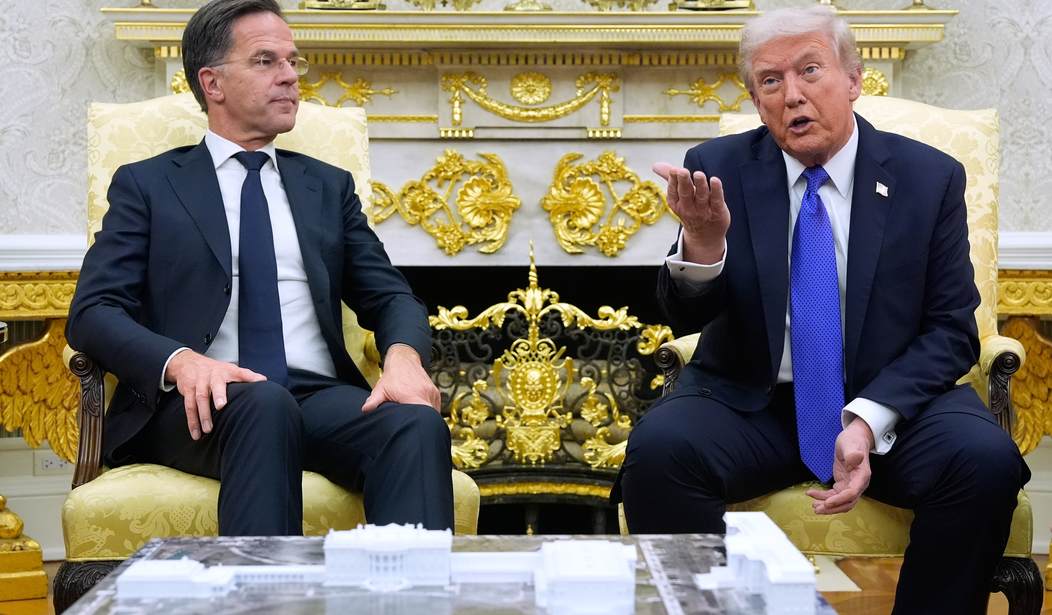

President Trump’s recent decision to withdraw 5,000 U.S. troops stationed in NATO ally Germany is an extremely minor draw-down as military movements go. It changes nothing.
Except the way people think. The move has shaken many as a sign of a possible weakening commitment by the superpower to protecting that continent.
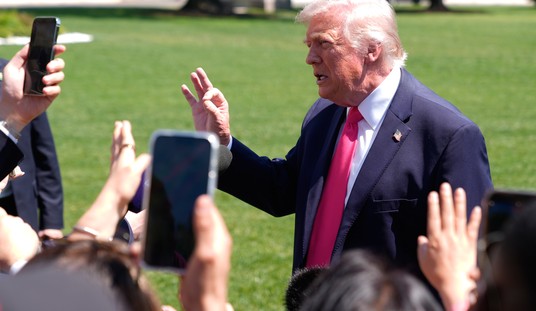
That is precisely the intention of the American leader, who has threatened even more troop reductions. “We’re going to cut way down,” he said. “And we’re cutting a lot further than 5,000.”
Now, loud threats are standard strategy for the transactional U.S. leader to get what he wants. Recall his threat about bombing Iran if it didn’t open the Strait of Hormuz: "We are going to bring them back to the Stone Ages, where they belong."
Or his 2017 threat to North Korea:
North Korea best not make any more threats to the United States. They will be met with fire and fury like the world has never seen.
Or his January threat to encourage Venezuela’s new leader to cooperate: “If she doesn’t do what’s right, she is going to pay a very big price, probably bigger than Maduro,”
The American commander in chief has so far not carried out any of these threats.
Trump did not offer any reasons for the unexpected troop move from Germany. It was left to media to interpret it as a forceful sign of pique with German Chancellor Friedrich Merz, who had said Iran had “humiliated” Washington by forcing a stop to the bombing and totally stalling talks to end the war and its abiding commitment to acquire nuclear weapons.
In his usual clear and eloquent manner, Secretary of State Marco Rubio suggested it was time to reevaluate U.S. commitment to NATO after Spain, France, and Italy closed their airspace to the U.S. military during the conflict with Iran’s militant regime.
One possible explanation: Muslims now comprise the second largest religious group in all three countries and they are growing rapidly: Spain, where there are now 2.5 million Muslims or five percent of the total population, in France six million, or 10 percent, and 2.7 million, or five percent of Italy’s population.
About seven percent of Germany’s population is Muslim today. In the United Kingdom, which didn’t ban U.S. flights but placed significant restrictions on offensive operations, the Muslim population is about four million, or six percent of the total.
That may just be coincidence, right? Like the election of a Muslim mayor in New York City, now home to one million Muslims.
Since he first took office in 2017, Trump has demanded NATO members boost defense spending and threatened to pull the U.S. out of the historically-successful, 32-member security alliance, though he cannot do that without congressional approval.
Nonetheless, that threat has succeeded in spurring significant new defense spending that had dropped after the Soviet Union collapsed.
As acknowledged by NATO Secretary General Mark Rutte, Trump’s demands have prompted virtually all member nations to step up military investments and take on more of the burden, often buying armaments from American makers.
Trump's most recent threat to exit the alliance that stalled Soviet expansion throughout the Cold War came this spring when NATO allies did not join in the U.S.-Israel assaults on Iran to prevent its acquisition of nuclear weapons.
To be fair, NATO was founded in 1949 as a mutual defense alliance. Article 5 requires all members to respond only if one is attacked. The only time it has been invoked in 77 years was 2001 when NATO members did rally to join the U.S. in Afghanistan after the 9/11 attacks.
But the U.S. and Israel were the attackers against Iran last summer and this spring.
Ukraine is not in the NATO alliance, but members have responded to Russia’s 2022 invasion with materiel, financial aid, and intelligence help. They fear if Vladimir Putin is successful there, his next target for conquest would be a NATO member such as the Baltic States or Poland.
Putin’s assault did prompt two long-time neutral countries to join NATO: Sweden (2024) and Finland (2023), which shares an 835-mile border with Russia. In 1939, Stalin’s Soviet Union seized about 10 percent of Finland, so fear of Moscow’s annexation ambitions there is real.
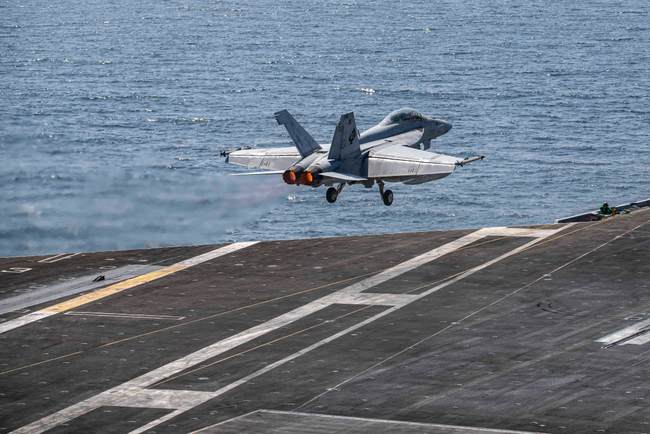
The withdrawal of 5,000 troops from Germany will occur over the next six months. But it will still leave 31,000 U.S service personnel in-country, the largest contingent in Europe. They are tasked with supporting allies there and as a logistics hub for operations in Africa and the Middle East.
The total in Europe fluctuates up to 85,000 rotational and permanent personnel, including 12,000 in Italy and 10,000 in Britain.
People tend to forget that, in effect, Iran has been at war with the U.S. for 47 years, ever since the revolution ousted the shah and installed a regime of radical Shia Muslim clerics, who became the world’s largest exporters of terror.
By their own actions and through regional proxies in Lebanon, Gaza, Syria, Iraq, and Yemen, they have been responsible for the violent deaths of countless victims, including thousands of Americans. In January, they killed 40,000 of their own people protesting.
In 1980, the administration of Jimmy Carter mounted Operation Eagle Claw to rescue 52 American hostages held in Tehran. The mission was aborted after turning into a deadly disaster in the desert, with the loss of eight personnel and two aircraft.
The failure was blamed on poor communications, inter-service coordination failures, and mechanical issues. But it led directly to the creation of a Special Operations Command of elite counter-terrorism troops, including Delta Force and Navy SEAL teams like the one that terminated Osama bin Laden in 2011.
Until President Trump, U.S. presidents sought to placate or negotiate with Tehran clerics. In 2016, Barack Obama even handed over $1.7 billion in cash as advance incentive to agree to his nuclear pact, later abandoned by Trump.
Not surprisingly, the regime proceeded anyway with its determined efforts to build nuclear weapons and the means to deliver them by ICBM until joint attacks by Israel and the U.S. last June and this spring.
Talk about threats, after all these years given the means and opportunity, no reasonable person doubts that regime's religious fervor and willingness to launch a nuclear apocalypse against the "Great Satan" and allies, such as Israel, regardless of aftermath consequences. It is written.
Now, with no air defense system, no navy, a few surviving combat planes that remain grounded, feuding second-string leaderships filling in for the departed ones, and stricken communications, Iran’s fractured elites seek to prolong their survival by stalling off-and-on negotiations and threatening shipping through the Strait of Hormuz.
Whether they could actually impose an illegal blockade of that international waterway, just the threat is sufficient to spook ship insurers and spike oil prices, raising political pressures, even without a viable military to enforce it.
Delay and delay is an Iranian strategy that has worked against the West for decades. Putin, another authoritarian free from real elections, does the same over Ukraine peace talks, hoping political pressures in democracies will erode their resolve and resistance to demands.
Iran will not give up its weapons program. That is clear. But like many authoritarian leaderships, Iran is counting on the will waning in the leaderships of democracies under pressure from looming elections and impatient voters who dislike war, something Putin and the mullahs need not worry over.
The mullahs and IRGC know about the U.S. November midterm elections, and they see the polls showing voter unhappiness with the war, which Trump promised would be short. In apparent response, Trump has tempered his aggressive stance and rhetoric, not repeating threats to destroy Iran's infrastructure and extending deadlines and the ceasefire, despite numerous provocations and seemingly stalled negotiations.
Perhaps intentionally, Trump has not always been clear about the war's status. Having displayed a patient willingness to negotiate and received no substantive Iranian response, an alternative for the U.S. leader would be to follow through with his bombing threats and finish the job of thorough devastation. The goal being to finally force real regime change, spark a popular uprising, and end Iran's nuclear threat long-term, despite the expected ensuing electoral and global image costs.
A Marist Poll this month finds 60 percent disapprove of Trump’s handling of the war, up from 54 percent in March, while 33 percent approve.
Sixty-one percent, including 25 percent of Republicans, say the war has done more harm than good. Thirty-eight percent believe the opposite.
According to the RealClearPolitics Job Approval average, 40.5 percent approve of Trump's performance while 56.3 disapprove.
Thirty-four percent believe the country is headed in the Right Direction, 61.1 percent say Wrong.
It is not difficult for politicians to sell fear of something present. Think of Three Mile Island, 9/11, swine flu, or some of those silly COVID restrictions. You might remember “15 days to flatten the curve.”
It’s quite something else for any political leadership to sell a nation on prospective fear about something possibly in the future. Say, something as completely unthinkable as Iran’s ruthless leadership actually vaporizing all the infidels in Tel Aviv, New York, or Dubai.
It's simply impossible for normal people to conceive of such things actually happening, until it isn’t. Like, say, Muslim terrorists hijacking wide-body passenger aircraft and flying them into the World Trade Center on purpose.