
Forget term limits for Congress.
Even before the summer of an election year, age, health, death, ambition, and Swamp fatigue have combined this year to produce a near-record turnover in Congress.
The departures include a key senator whose political skills and strategies enabled Donald Trump to create today’s powerful conservative Supreme Court majority.
So far, a running tally shows that more than 13 percent of the 535 senators and representatives will no longer be convening in the new session of Congress that begins on Capitol Hill next January.
Good riddance, most Americans say, as their job disapproval of that crowd reaches a record 86 percent, while job approval has plummeted to 10 percent, just one point above a new record.
Demands for congressional term or age limits crop up like dandelions in the nation’s now-awakening lawns.
They’re not going to happen, however, given the steep requirements for constitutional amendments. Fact is, voters could easily impose their own term limits collectively at the polls. But they hypocritically end up reelecting the clowns they constantly call hypocrites.
This year, with months to go, the congressional departure rate is the second-highest in a century.
Fourteen senators and 56 House members have opted out, while many others have died or been forced to resign, like Democrat Rep. Eric Swalwell of California, Florida’s Sheila Cherfilus-McCormick, and the GOP’s Tony Gonzalez of Texas, over scandal allegations.
As of today, two more House Republicans (36) are leaving than did in 2018, President Trump’s first midterm election.
Sixteen House members seek to join the less-crowded Senate. While fourteen have decided to seek employment as governors, where they can actually do something besides stand in a crowd at Capitol photo ops.
The latter includes three senators, Tennessee’s GOP Sen. Marsha Blackburn, and Democrats Michael Bennet of Colorado and Minnesota’s Amy Klobuchar. They face no election in November but would resign if they win their state’s top leadership role.
Now that it suits their own plans, three ancient Democrats are retiring, suddenly declaring it’s time for a new generation of liberals to rule their party that lost again in 2024.
Illinois Sen. Dick Durbin, a Democrat who turns 82 this year, has been in Congress since Ronald Reagan’s reelection. His party’s state legislature redrew Abraham Lincoln’s old Springfield House district to cut out rural areas that had sent the GOP’s Paul Findley to the House for 11 terms.
New York’s progressive Jerrold Nadler, who Trump calls Fat Jerry, served 16 years in Albany as a state assemblyman. In 1991, he was released to begin a 35-year term in the big House. He’s 5-foot-4 and has been told that he’s 78 years old.
Then, there’s Nancy Pelosi, who decided to retire from the House just before she was carried out. The former Speaker is 86 years old now, a multi-millionaire on a congressional salary, who led two failed impeachment attempts during Trump’s first term.
She is best-known for her keen political judgment that unilaterally tapped Kamala Harris as Democrats’ 2024 presidential nominee. That was after Joe Biden's empty gaze demonstrated on national TV that he was not “one of the most consequential presidents” in history, as Pelosi had claimed.
Pelosi is also famous for standing and tearing up a few pages of President Trump’s State of the Union Address on the House podium as her TDS virtue signal for 2020.
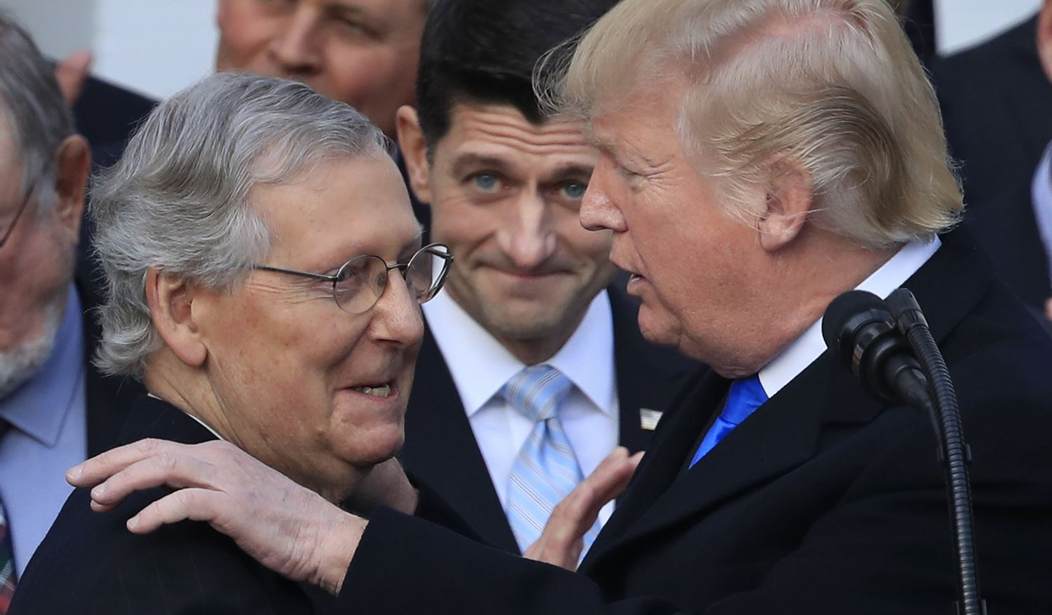
Republican Mitch McConnell, the Alabama native and longest-serving party leader in Senate history, is also retiring at 84 after health episodes that caused him to freeze in public and fall elsewhere. More on him below.
Chuck Schumer is minority leader in the Senate. He turns 76 this year, and with Rep Hakeem Jeffries, is half of Democrats’ diverse congressional leadership that are both from Brooklyn.
Schumer is famous for his stooped posture and granny glasses on the tippy-tip of his nose. More importantly, for leading his liberal party’s frequent, prolonged shutdowns of the federal government over not spending enough on progressive programs. Schumer is also a cousin of comedienne Amy Schumer, who is intentionally funny.
Schumer is not retiring this year. That comes next year when Alexandria Ocasio-Cortez, who won her House seat by ousting a top-ranking Democrat in a primary, is expected to attempt the same on Schumer.
A member of the Democratic Socialist Party, like New York City’s new mayor, AOC is now old enough to be a senator, though her intelligence is another matter.

The end of a congressional term always sees member departures, though recent ones seem larger. The reasons are varied. Age is a big one this time. Power in Congress comes from seniority, which encourages office longevity.
Partisan redistricting maps have created more safe districts, so often there is little incentive to leave. Members’ median age had been creeping up, now hovers around 58 in the House and 65 in the Senate, one of the oldest on record. Five members have died just since January last year.
Once gained, political power, its perqs, and the wealth that seems drawn to it can be hard to give up. See Pelosi’s political career that began in 1976, entered the House in 1987, and when she retires in January, will have lasted 40 years there.
There is also fatigue with today’s hyper-partisan political atmosphere, which rules out cooperation and compromise. That also curtails progress and a sense of accomplishment for those who thought being in Congress was more than staged photo ops and endless “hearings” that have become more scripted “talkings” for cameras.
An unspoken reason is the fear of being in a powerless congressional minority.
Recent presidents, and especially the current one, have assumed greater powers and turn to Congress now only when necessary.
Now, back to McConnell. For his tenth birthday, he got a radio. But instead of sports, he tuned into politics. In his 1952 school picture, McConnell is wearing an “I Like Ike” button. In 1960, he supported Vice President Richard Nixon.
The GOP’s Barry Goldwater was destroyed by Lyndon Johnson in the 1964 election. So, McConnell plunged into a deep study of the Texan’s successful eight years leading Senate Democrats.
He learned about listening to members, holding his own tongue, blocking the opposition, and the importance of team unity, traits he would later put to his own effective use.
Past years have seen Trump call the Kentucky senator a variety of names, including “old, broken-down crow” and worse, after McConnell voted against Robert F. Kennedy Jr. for the Cabinet, among other things.
Six years ago, when Trump challenged the election results, a biographer quoted the normally reticent McConnell as calling Trump a “narcissist” and “stupid as well as being ill-tempered.”
Unfortunately, this clash, highlighted by media, has overshadowed an early and highly effective alliance of interests between the two men that produced some historic actions by the two Republicans that will endure far beyond their own Swamp careers.
As often happens in midterm elections, voters in 2014 turned hard against the incumbent president, Barack Obama. They gave Republicans control of both the House and Senate, as they did again in 2024, and threaten to undo this fall.
In a private meeting back then, McConnell, then GOP Majority Leader, called Obama a genuine menace and told me his goal in the Democrat’s final two years was to thwart as many of his nominations and policies as possible.
McConnell did just that. In those 24 months, only 20 federal judges were confirmed; more than 50 were pending when he exited after eight years of his attempted "radical transformation" toward a socialist country.
McConnell also refused to hold hearings on Merrick Garland to replace the late Supreme Court Justice Antonin Scalia in 2016, saying the next president should make such a lifetime appointment.
Oh, look! The next president was Donald Trump. And McConnell suspended the filibuster to shepherd through Senate confirmation of Neil Gorsuch, the first of three conservative justices drawn from Trump’s public list, followed by Brett Kavanaugh and Amy Coney Barrett.
The new conservative 6-3 court majority that includes John Roberts, Clarence Thomas, and Samuel Alito is the one that has handed conservatives and a second-term Trump so many judicial wins. These include upholding a president's absolute immunity for official acts within his constitutional authority and the recent Louisiana ruling against racial gerrymandering.
A 5-4 conservative majority in 2022 also overturned the longstanding Roe v. Wade constitutional right to abortion, which candidate Trump had vowed to seek.
That’s pretty solid political teamwork for an old crow and a narcissist to turn out together.