
In 1996, I was a young man with prospects. I had left the Army and the Army National Guard in 1991 and 1993, respectively. I had just come off a months-long contract job, reworking the document control system for a big medical manufacturer in the Denver area, and was thinking about going into consulting work as a career. Now, as it happens, I didn't walk that road until 2003, when I was probably better suited for it. I was saved from the earlier miscalculation by my old career: The Army.
It was mid-summer, and things were slow. I was bumming around our house; we had a 14-year-old, a 4-year-old, and an infant, and I was a bit worried about finding another gig soon. Money was tight, as it frequently is for couples in that stage of life. Then, one day, the phone on the kitchen wall (remember those?) rang. I answered, and heard a voice: "Is this Captain Clark?"
Uh oh. Well, as it happened, my wife and I had held the same rank. "Which Captain Clark were you looking for?" The voice answered, "Ward Clark."
"That's me." The voice went on. I was being recalled to active duty for Operation Deliberate Force; I would be getting orders in the mail in the next couple of days; in two weeks, I was to be at Fort Benning, Georgia, preparing to deploy to Europe. While I was later told that all of us recalled for that mission were volunteers, they sure made it sound like I wasn't being given a choice. So, in due time, I found myself in Heidelberg, Germany, living in a small apartment "on the economy," and working on the staff of the Command Surgeon, U.S. Army, Europe (USAEUR), which was, I admit, pretty cushy duty. So, for the nine months I was deployed, I was part of that big U.S. Army presence in Germany.
Now, I told you that so I could tell you this.
When I got to Germany, I wasn't sure what to expect. Before that, my only excursion outside the United States, aside from brief forays into Canada and Mexico, had been my deployment to the Middle East in Operation Desert Storm. But I was determined to dive into the culture; one-fourth of my ancestry is from Germany, after all, and that piqued my interest. I studied the language as much as I could, and when I launched into the work that the Command Surgeon had for me, I found my schedule ideal for exploring: Four days on, four days off.
On those four days off, I wandered. I explored. I dove into Germany: The culture, the towns, the cities, the food and drink, and most of all, the people. I made some good friends. I spent a fascinating evening drinking pilsners and talking with an old man who was a World War II veteran of the Wehrmacht; as he told me, he was 17, and his helmet was too large, almost blocking his vision. He told me he kept being told he shouldn't talk about his service as a conscript soldier in Hitler's German military machine, so I listened to his stories, mostly about being cold, wet, frightened, and homesick.
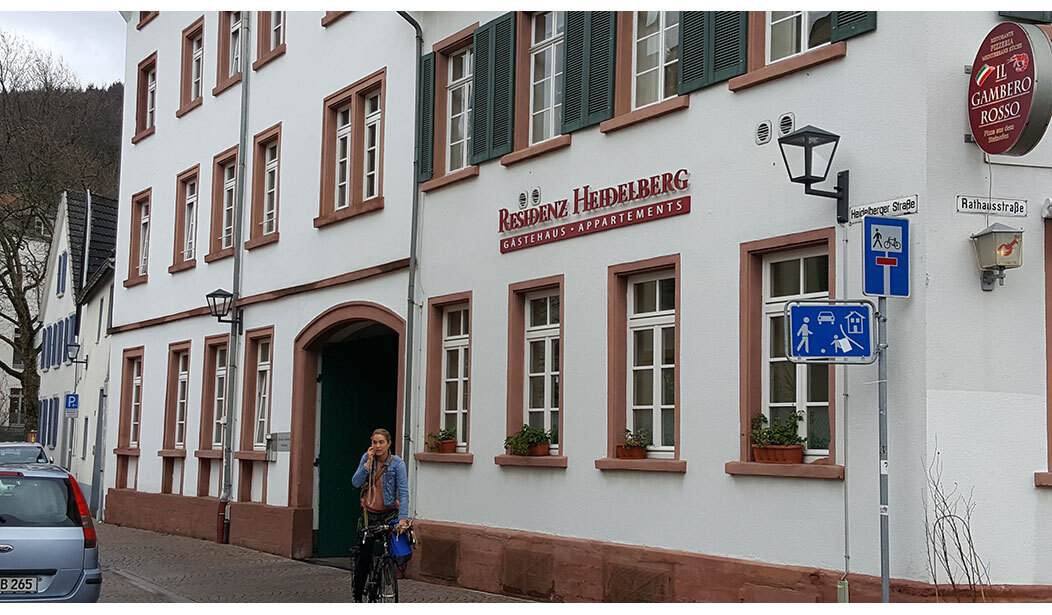
But then, Germany was still Germany. The residence hotel I lived in had a German bar and restaurant on the ground floor. There were two more wonderful traditional German gasthauses in either direction on Rathausstrasse, so there were options. I had a great time, and grew to really like the Germany of 1996 and 1997.
Read More: Trump Orders Pentagon to Reduce US Forces Based in Germany
Germany Urges New Boost From Europe on Its Own Defense After Trump Pulls US Troops
In time, my time in Germany ended. I was glad to go back to Colorado, where we lived at the time, and shortly after my return, I found a job with a small company that was in the throes of expanding and modernizing, so I was very busy there. But I came away from Germany with an appreciation for schnitzel and really good beer; in fact, to this day, I don't look at the big American beers the same way.
Fast forward to 2020. I was working on the East Coast; it was a long project, and my wife and I had leased an apartment in Raritan, New Jersey. Early in the year, just pre-COVID, we had a three-day weekend, so we took advantage of being on the coast to jet to Frankfurt, drive to Heidelberg, and spend a couple of days in my old German neighborhood. In fact, we stayed in the same place I had lived, two doors down from my old apartment. The place had been remodeled as a regular hotel, so it was perfect.
What wasn't perfect was my beloved old district of Rohrbach. One of my favorite German restaurants was gone, replaced by - yes, really - an Ethiopian restaurant. My other favorite German gasthaus was still open, but the bar on the ground floor of my apartment building had been replaced by a pizza joint. Well, things change, and we are frequently called upon to accept that - but one thing I remarked on was the number of hijabs that were in evidence. I asked the hotel's landlady about that. She said, "Oh, jah, not here, but there are places where you will hear the call to prayer every day."
In Germany. Which, as I've been saying and writing for some time, in another generation or two won't be Germany, unless some radical course-change happens within the next few years. And in this case, as goes Germany, so goes Europe.
It's one thing to read about something like this. It's quite another to see it. The Islamification of Europe is underway, and it is looking more and more like it's going to be successful, save for a few of the nations of Eastern Europe, who just aren't having it. But look at the trends in Western Europe. Spain has thrown open the doors. Germany is falling. The United Kingdom, as well as France. And don't think that this social invasion will be content to stop in Europe; see Dearborn, Michigan, for an example of how, yes, it can happen here.
In years to come, President Trump's pulling our troops out of Europe may look to have been a very good move indeed. In another generation, perhaps two, Europe as we know it will be gone, and what arises in its place will not be friendly to Western Civilization.