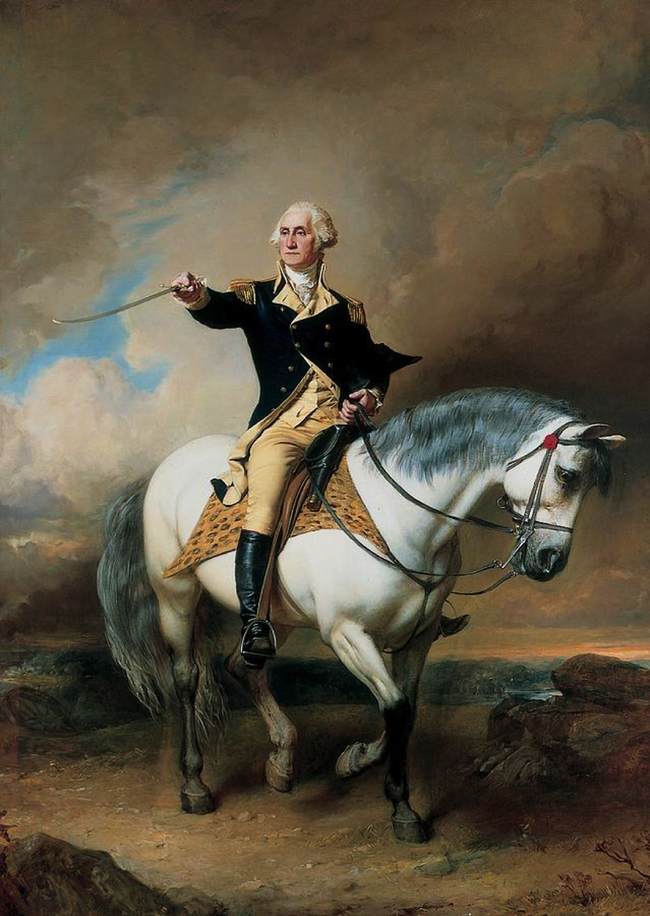

Two hundred and thirty-five years ago this week, George Washington launched the first organized presidential effort to communicate with the American people.
It was a more than two-month, in-person tour of southern states he had never seen to deliver his message on a new concept called federal unity and to hear from some of the infant nation’s nearly four million inhabitants.
As the most visible leader of the Revolution that renounced a king, Washington is the only president chosen by acclamation. Yet despite not being elected, he felt the need to explain his vision and, more importantly, to be seen to be listening. He also felt that more than two presidential terms risked royalty.
The trip was a simple public-relations effort before there were such things, innocent, even naive by the contrived, theatrical standards of modern-day politics.
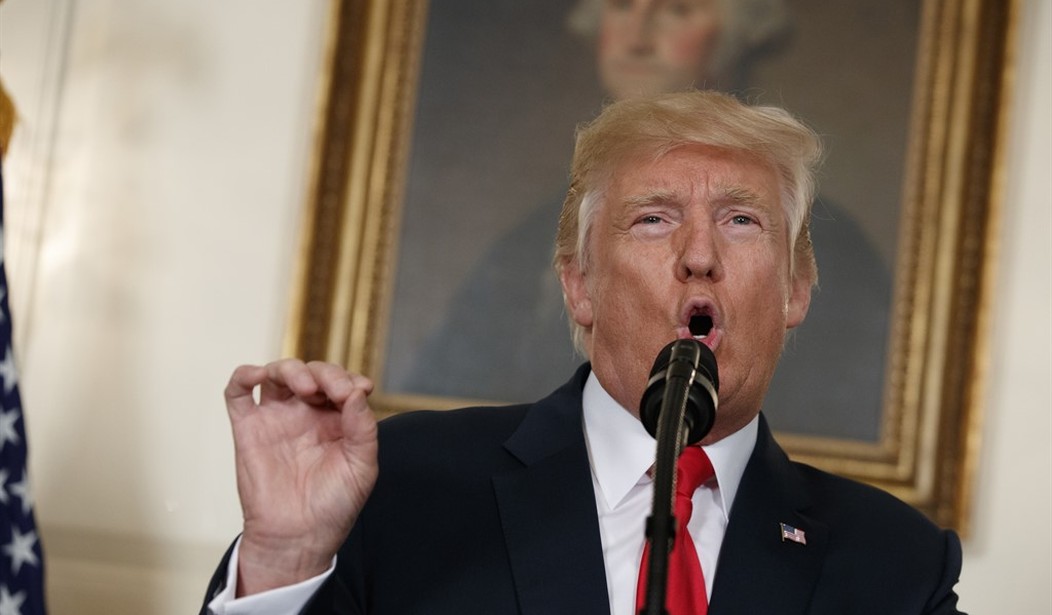
Fifteen days ago this morning, Donald Trump posted a notice on social media to communicate instantly to the American people that the country had launched “major combat operations” against a nation 7,000 miles away to prevent its acquisition of nuclear weapons and the ability to deliver them anywhere in the world.
His method was an eight-minute video instantly available to the nation’s entire population of more than 340 million and, in fact, simultaneously to everyone else on the planet.
The two events by the first and 47th president constitute compelling examples of the ongoing need for U.S. presidents to communicate with their public and the dramatic — you could say revolutionary — changes in means to do that.
Each of the presidents in these past 85,812 days had their own style. Some were loquacious. Some, like Joe Biden, were incomprehensible. Others were quiet. When silent Calvin Coolidge died, writer Dorothy Parker quipped, “How can they tell?”
Until the 1900's, only people within earshot heard a president’s voice. That meant that when Abraham Lincoln went to Gettysburg in November of 1863 and gave likely the greatest presidential address ever, only a few score people gathered around him at the new cemetery could hear those iconic 272 words:
"Fourscore and seven years ago...."
Each technological advance – loudspeakers, then radio and television, now video on social media – has widened the reach of a president’s words. The new formats have also forced changes in content, style, delivery, and even the physical appearance of speakers.
But nothing has changed the necessity for every president to talk directly to Americans.
Presidential speeches on the earliest recordings are filled with long, grandiloquent sentences, riddled with subordinate clauses, that may have read well and sounded presidential at the time.
But they were short on the easily understood phrases of what modern speechwriters covetously call “applause lines.” And the run-on sentences would not fit the short attention spans of today’s antsy audiences, nor the six-second sound bites of TV news.
In 1922, Warren Harding was the first presidential voice heard on the radio. But the next year, Coolidge was the first to give a radio address. Yet, when he decided against seeking reelection five years later, Coolidge simply had a note delivered to reporters.
It fell to Franklin D. Roosevelt to perfect the use of the newfangled radio as a presidential political tool.
He had been paralyzed below the waist in 1921, likely from polio. He needed help standing and crutches to move, so Roosevelt never walked onstage or stood for long times, except, you might remember from the photo and news clip, addressing Congress the day after Pearl Harbor: "Yesterday, December 7, 1941 — a date which will live in infamy….”
As with Joe Biden, media at the time helped hide Roosevelt’s infirmity. So, speaking unseen on the radio from the White House was a perfect tool for that man.
I have always liked radio. Much of my childhood came before television, which shows you everything, even signaling when to laugh. Radio drew me in, its stories and sounds unleashed my imagination.
In 1933, deep in the Great Depression with more than 25 percent unemployment and economic fears rampant, the new president gave the first of what would come to be called “fireside chats.”
His would become historically the longest presidency. But 93 years ago last Friday, Roosevelt was just eight days in office. He had just ordered all the nation’s banks closed to stop a massive run of withdrawals.
The U.S. population then was 125 million, 90 percent of them with radios at home. Sunday evening, 10 p.m. in Washington.
The president began:
My friends, I want to talk for a few minutes with the people of the United States about banking.
Today, it would be a prime-time Oval Office address. But that was too formal. It was brilliant political communication using the newest tool. No big words, flags, or trumpet flourishes. No media filters.
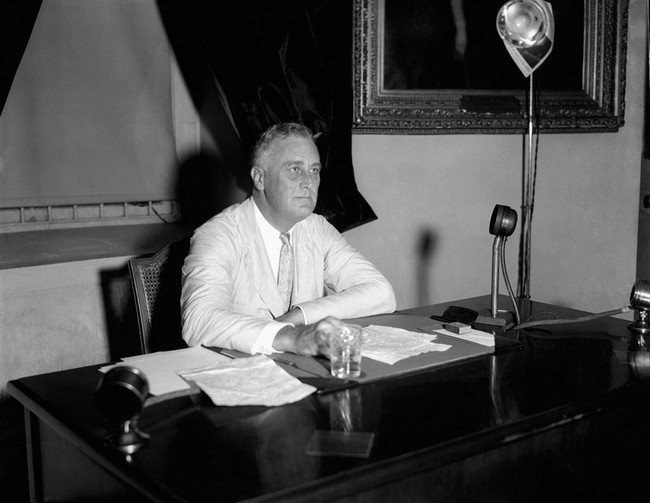
Just nine minutes of the president speaking calmly, confidently, placing himself inside the everyday living rooms and kitchens of virtually every American.
Roosevelt would go on in ordinary language to share his thoughts, to explain himself, his New Deal policies, and later the nation’s involvement in World War II in 40 such fireside chats over 12 years.
Today, Washington administrations put out bad news in Friday news dumps, hoping it will get overlooked or lost by Monday. Before TV or the Internet, Roosevelt had a better idea. He often made major announcements on news-empty Sundays, thereby guaranteeing himself total domination of every Monday newspaper.
Did it all work? Well, he’s the only president ever elected four times.
I’ve often thought modern-day presidents could take a valuable lesson from that ancient communications innovation. No stiff speech from behind a desk. No podium in the hallway on a red carpet.
Just the commander-in-chief in an armchair. No tie. Maybe a sweater. Looking straight into the camera. No pompous introduction or drama. Live or in, say, a six-minute video explaining without interruption, distractions, policy lingo, or acronyms, what he’s doing to right the economy. Or why, in specific detail, he felt the need to send American troops into harm’s way, reluctantly.
Or why, low-key, with no threats, it is important for each of us that Congress pass a certain bill. Perhaps even admitting a misstep at times.
Not so much to convince everyone or anyone. But to be seen honoring the need to try. Just the attempt, I learned in politics, prevents much future trouble.
Now, not every president could pull this off. Their styles and comfort levels vary. But two things virtually every American respects – straight talk from straight-shooters and underdogs.
After FDR came television and teleprompters. The first political conventions were televised in 1952, both in Chicago’s International Amphitheater, because the equipment was too bulky and expensive to move.
The first presidential news conference was not until Dwight Eisenhower in 1956.
Then, four years later, came the first presidential debate, which dramatically revealed the impact on politics of TV's passion for appearance over substance.
If you listened to the debate, as I did, Vice President Richard Nixon clearly won the night on substance and policy. If you watched it, Sen. John Kennedy was the winner.
Neither man made major mistakes. But Nixon, 47, declined makeup as too showbiz-like. He had a five o’clock shadow and appeared to be sweating heavily. Kennedy, 43, didn’t. Viewer consensus was that the senator won the debate. And then the election, thanks to some late Illinois votes that Nixon declined to challenge.
No debates for three presidential cycles, and then gaffes and quips became major players. In 1976, President Gerald Ford mis-declared there was no Soviet influence in Eastern Europe and never would be on his watch. Oops, the Iron Curtain had come down there 31 years before.
During the record inflation of Jimmy Carter’s presidency, one week before the 1980 election, Ronald Reagan looked at the camera and simply asked his fellow Americans, “Are you better off than you were four years ago?”
Fifty-one percent of voters decided they were not. Carter got 41 percent.
Four years later, as the oldest president ever at 73, but possibly the best communicator ever, Reagan instantly defused the age issue. He announced he would not hold his opponent’s youth and inexperience against him.
Walter Mondale, 56, laughed at the time. But he told me years later, he realized at that moment he would lose. He did – 49 states to one.
In 2024, Joe Biden allowed his arrogance to force him to challenge Donald Trump to an early debate. For inexplicable reasons, Biden’s advisers allowed it to go through, even though they knew of his mental fogs and profound fatigue.
On June 29th, 55 million Americans saw that their commander in chief was nowhere near “sharp as a tack.” He froze, those beady black eyes staring empty, unable to coherently answer questions.
As usual, Trump was vigorous in that campaign and skillfully employed podcasts and online influencers against Kamala Harris, who failed to offer a reason to elect her other than “joy” and gender.
Looking over my notes for this column, I found two more items I must include:
In October 1912, preparing to give a campaign speech in Milwaukee, Teddy Roosevelt was shot in the chest by a deranged saloonkeeper with a .38.
The former president should have died, as his predecessor, William McKinley, did from an assassin’s gun. But the bullet was slowed by Roosevelt’s double-folded 50-page speech and metal eyeglass case. Roosevelt insisted on giving his 90-minute address anyway. He began:
I have just been shot. But it takes more than that to kill a bull moose.
Finally, showing that attention to appearances in public life is not limited to the age of television, George Washington’s 1791 tour was designed to complete his visits to all 13 original colonies. He rode in a carriage for most of the 1,900-mile southern journey.
But before entering a community, the first president, his long hair in a powdered white bun, would exit the carriage and call for his horse.
Then, the towering 6-foot-two-inch commander in chief would be seen riding into town high atop his giant white charger named Prescott as the Revolutionary War victors they were.