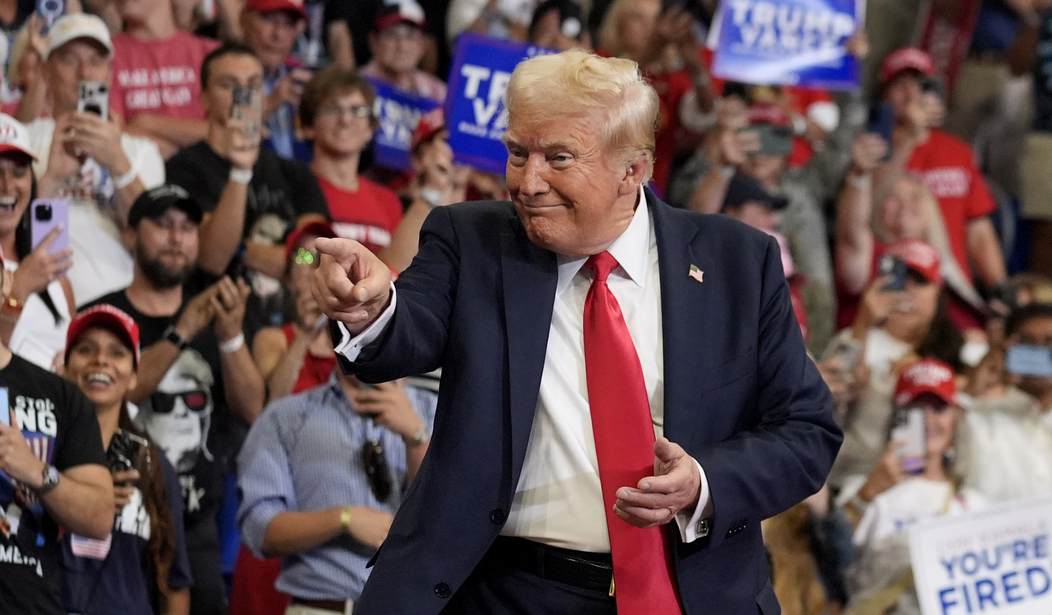

So many things have been impressive and surprising about this decade-long career of the political comet known as Donald Trump.
Starting, of course, with his defeat of 16 other veteran Republican primary opponents in 2015-16 followed by his 2016 historic upset election to the White House as a controversial, twice-divorced political neophyte. And then, actually, pretty much everything after that.
Trump has waded through highly-publicized and politicized lawfare cases, hoaxes, scandals, assassination attempts, political impeachments, and a steady barrage of hostile and distorted media coverage. Any one of which would have torpedoed the career of a normal politician.
And then after losing a presidential reelection bid in 2020, Trump emerged victorious and wiser in a second nonconsecutive term, both politically and personally, something that had only occurred once before in U.S. history.
One of Trump’s most impressive political feats, to my eyes, has been the creation, cultivation, maintenance and, last year, actual expansion of a staunch political base whose support has proven remarkably enduring in a vast, disparate land of competing, often conflicting interests.
The invisible force of that mass of stubborn loyalists, through thick and thin, has been the foundation of everything he's accomplished.
All nationally successful American politicians have created coalitions of supporters that come together through a wide variety of shared interests, goals, hopes, and belief in candidate promises and achieve one, maybe two presidential election victories.
Then, after six years, in the middle of a second term, those coalitions begin to crumble under the weight of unfulfilled promises, disappointments, petty disputes, and the inevitable final two years of lame-duck status when the self-interests of allies become laser-focused on the next president.
Based on history and human nature, we might expect that to happen ultimately someday in a Trump presidency.
But it hasn’t happened yet.
And we’re entering the 11th year of the same man standing strong, center-stage with the familiar loud, sometimes outrageous, always forceful personality dominating government, politics, and the news, as he prefers.
How did Donald J. Trump pull this off? How did the billionaire Fifth Avenue penthouse dweller with an ego the size of Trump Tower’s 58 floors convince millions of ordinary Americans that he was their guy, their white knight who would ride into political battle for them?
First, like Ronald Reagan, another successful Republican president in modern times, Trump comes out of show business. Bottom line, that’s what his top-rated NBC TV show, The Apprentice, and his towering real estate edifices are all about. And it’s what modern politics are all about.
And it’s what his mega- MAGA rallies are all about. The Air Force One flyovers. And the new gold White House decorations. And the new ballroom. And that impressive Army birthday parade last June 14th.
Now, just wait and see what is being planned for the United States’ 250th birthday celebration under a show host named President Trump.
Second, I would argue that one of Trump’s great strengths is his authenticity, especially in contrast to the wide array of political Palookas who populate and play-act on our public stage.
Remember the 25-hour marathon Senate speech that New Jersey’s Democrat Cory Booker gave last March? It’s O.K. Not many people do. Or should.
Some media fawned over his preparations and endurance. It was a bald publicity stunt during Trump’s early hurricane of activity, borne out of Democrats’ thirst for attention and their need to camouflage an empty agenda beyond opposing anything and everything Trump.
Trump Derangement Syndrome disrupts the brains of its victims. As Minnesota Democrat Sen. Tina Smith confessed to the New York Times the other day:
For the last 10 years, the national Democratic Party has been stuck in a bad relationship. We’ve so defined ourselves by being opposed to Trump that it’s like we’ve forgotten how to do the other part of our job, which is to put forward an aggressive, strong, positive vision of where the country ought to go.
You may not like some or anything about Trump or what he says or does. But no one can say honestly that he’s fake, even when he’s mean. That’s him.
There’s an appeal to that in public life, especially in contrast to political ponces who need to read prepared statements to know what they are currently outraged about.
I still chuckle remembering Hillary Clinton and Joe Biden wading through teleprompter speeches so robotically that they also read out loud their stage directions — “Pause here for applause.”
Trump does have prepared texts for major addresses like the State of the Union or his recent economic speech in Pennsylvania.
However, he often deviates when something else comes to mind. That’s more evidence of authenticity, though it can detract from his carefully crafted messages and offer media an alternate storyline.
It’s always impressed me in Trump’s very first campaign that, against 16 veteran GOP competitors, the rich rookie from New York City was the only one to detect, voice, and run on the Heartland’s anger and frustration with the country’s political establishments.
Combined with Clinton’s overconfidence, arrogance, and reliance on popular vote concentrations in too few states, that base gave Trump a 304-227 Electoral College victory with fewer popular votes but in just the right places.
And then Trump did an unusual thing in U.S. federal politics; he actually delivered on his campaign promises, one by one, including nominating conservative justices and judges. He's doing it again in the second term.
This has cemented the enduring loyalty of his base, which continued even through his four-year presidential hiatus and numerous charges and legal attacks from Democrat prosecutors and the Biden administration.
As usual, Trump’s overall job approval is underwater, 43.6 to 53.6, according to the RealClearPolitics average.
This matters less to Trump, who can’t run again, than to Republicans. They hope to maintain their slim congressional control in next November’s midterm elections, traditionally a negative interim verdict on an incumbent president’s party. Eighteen of the past 20 midterms have seen the White House party lose House seats, on average, 20+.
NBC News released a poll this month purporting to show Trump's MAGA base remains solidly behind him with some cracks.
The poll actually found Trump support among those who consider themselves MAGA Republicans remains quite strong at 70 percent, a drop of eight points from April.
The poll of 20,252 from Nov. 20 to Dec. 8 included both registered and non-registered voters. It was, however, conducted online, generally considered less reliable than telephone polling. The MOE was +/- 1.9 percent.
Predictably, major voter concerns focused on the economy and high prices, though some, like gas and eggs, have already fallen precipitously. Trump has also negotiated a series of price decreases on numerous medicines with major drug companies and says he will soon do the same with health insurers.
Trump will be making his case in an upcoming series of economic speeches in the new year, as will Vice President JD Vance. Hopefully, Trump’s audiences will reach beyond the MAGA loyalists in his favored rallies. They’re already convinced.
Trump will also, no doubt, be pointing out that the Federal Reserve has again lowered interest rates, and the latest monthly inflation number was only 2.7 percent. That's a major accomplishment, but it doesn't lower the Biden price hikes, which now become Trump's fault in the public's eye.
That was lower than expected and far beneath the 9 percent rate experienced from the Biden administration’s multiple-trillion-dollar spending spree. That was the highest rate of inflation since Democrat Jimmy Carter lost his reelection bid to Ronald Reagan in 1980.