
I think it was in an interview on MTV, back when MTV was still about music, where someone was interviewing the then-frontman of Van Halen, David Lee Roth. Dave had been talking about his blue-collar upbringing, how his family didn't have a lot of money, and how different things were now for all the band members who were, at that time (1982 or so) were swimming in cash. The interviewer chided him, saying, "You know, Dave, they say you can't buy happiness."
David Lee Roth nodded. "Maybe not," he said, "But I can buy a yacht big enough to sail right up next to it."
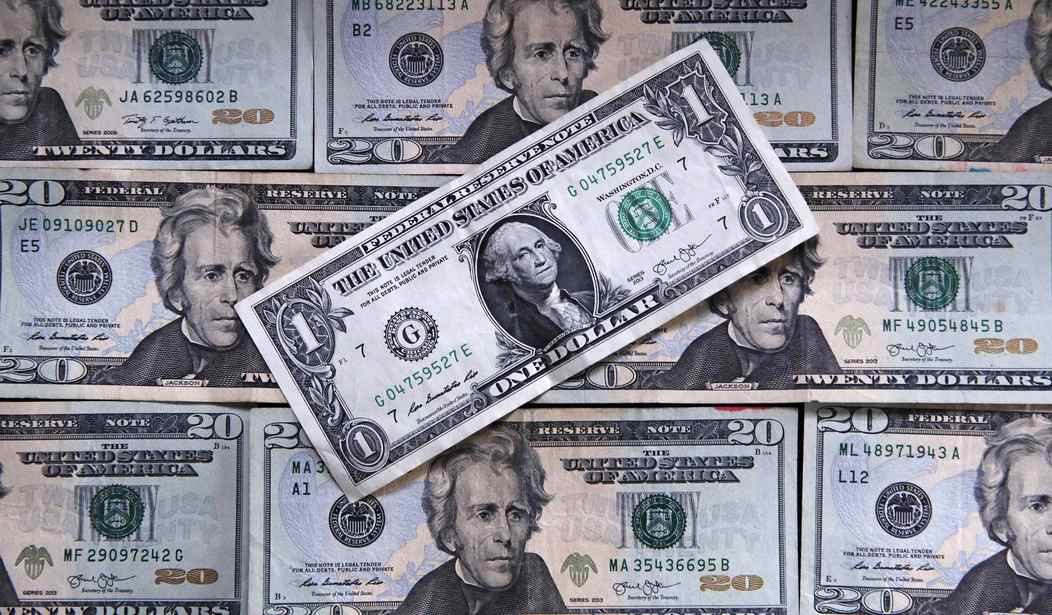
Money opens a lot of doors. That's inevitable. Some of those doors lead to politicians, who have campaigns they need funded. And plenty of folks will whinge on and on about the need to get money out of politics, which is just not possible. Rich people, yes, are always going to have more influence than poor people, and the more a politician rants on and on about the rich buying elections, the more likely it is that they have fatcat donors of their own.
And here's the thing: Money can be a big thing in a political campaign, but it's not the only thing. In 2016, Her Imperial Majesty Hillary I, Dowager-Empress of Chappaqua, raised and spent half again what Donald Trump raised and spent, and he sent her packing. Now, in 2020, Joe Biden outspent Trump and won (I know, I know) but in 2024, the selected, not elected, Kamala Harris outspent Trump again, by a wide margin, and Trump defenestrated her.
But the Left, especially, likes to claim a moral high ground in opposing big political donors. That argument doesn't hold water. Here's the moral argument
While there is a correlation between spending and winning elections, this often reflects that money flows toward stronger candidates who are already more likely to win. That is, money tends to follow winners rather than cause them. Plus, to the extent money does influence elections, it produces greater returns for challengers than incumbents, because the latter are already well-established and well-known. So reducing money spent in elections might actually worsen political inequalities, further entrenching the advantages that incumbents enjoy over challengers.
Lastly, consider that people have the right to spend their money on politics even if their spending gives them unequal influence. More specifically, property rights entitle people to use their property (within legislated limits) to promote political outcomes. You’re within your rights to buy a candidate’s sign and post it in your yard. You can buy a stack of pamphlets arguing against rent control and distribute them to your neighbors to sway their votes. Those with more wealth may be more capable of influencing voters, but that’s not a reason to restrict their right to use their property as they see fit.
Money is property. The means by which we gain money — wealth — are various, but that wealth is still property. We have the moral right to use our property to our own perceived benefit. If that means contributing to a political candidate, or having a bunch of pamphlets printed and passed out, or buying television and internet advertising on behalf of a candidate, then that's what it means. So, wealthier people can have more influence on politics? Well, sure they do. They drive nicer cars and live in bigger houses, too, and any attempt by government to rearrange that state of affairs can only contradict the one proper role of government: To protect the liberty and the property of the people.
And, in any case, influential people, who are often wealthy people, will always have a longer reach, no matter how one tries to reel that in.
Leaving money out of it entirely, some highly influential people may exercise their rights in order to promote their favored political outcomes. Oprah Winfrey, for instance, exercised her right to speak freely when she endorsed Barack Obama for president in 2008. Researchers estimate that her endorsement produced about one million votes for Obama. While a celebrity’s presidential endorsement is far more influential than, say, my presidential endorsement, government officials shouldn’t prevent them from freely speaking in favor of their candidate. Similarly, government officials shouldn’t prevent people from freely disposing of their own property to support their candidate, even if the exercise of some people’s property rights is more politically impactful than that of others.
There's the constitutional issue as well. Here's the basis for that argument.
Congress shall make no law respecting an establishment of religion, or prohibiting the free exercise thereof; or abridging the freedom of speech, or of the press; or the right of the people peaceably to assemble, and to petition the Government for a redress of grievances.
Freedom of speech, most especially political speech, is a First Amendment issue. It's speech. It's an expression of a political opinion, and you know what? So is donating to a political candidate of your choice. The First Amendment doesn't grant this right. It only acknowledges it. The right is ours.
The Left has and remains the worst sort of hypocrites on this issue. They squall like suckling pigs about what they claim is the undue influence Elon Musk has on American politics, while never mentioning George Soros. They talk about the need to "get money out of politics," while obfuscating the fact that it's just not possible.
So, yes. Rich people have more influence than poor people. The only way to reduce that is to level the playing field — to make everyone have the exact same influence, resources and possessions. Except, of course, for the few Top Men.
There's a word for a system like that: Tyranny.