
When the Grateful Dead's Jerry Garcia died, I remember mentioning it to the Old Man, to whom I had to explain who Jerry was and what his impact on the music world had been. He commented that he was still in the habit of thinking of rock & roll as music for kids; he was bemused to see some of them aging and dying.
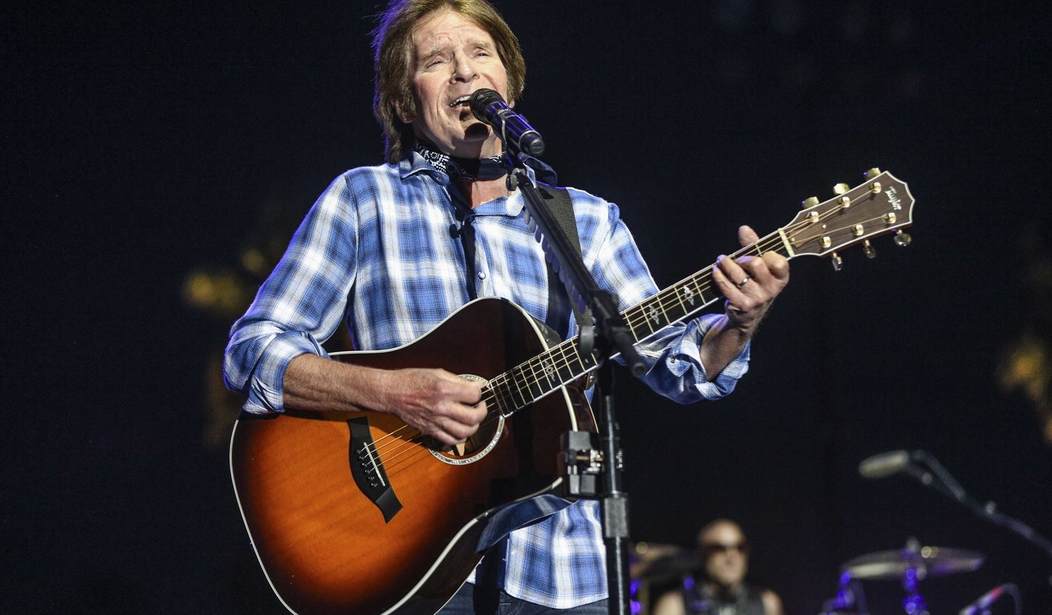
This week, though, we have a guy who got his start in music when I was a little kid, and he's still around now. Last week, we covered the great but short-lived Creedence Clearwater Revival (CCR). This week, it seems appropriate to cover the solo career of John Fogerty, the primary vocalist and songwriter of CCR.
John Cameron Fogerty was born in May of 1945, in Berkeley, California. He grew up in El Cerrito, the third of five boys in his family. He graduated from El Cerrito High School, already an accomplished musician, having formed a cover band while in junior high school he called The Velvets. The group actually got a contract with Fantasy Records in 1964. Fantasy changed to band’s name to The Golliwogs, but they didn’t see any commercial success – although this band was the nascent form of what would become CCR, as we saw last week.
Fogerty later joined the Army Reserve to avoid conscription, which isn’t the greatest recommendation. His behavior while in uniform wasn’t the greatest, so in 1968 he was discharged, and went on to form CCR.
It was in 1972, after CCR broke apart, that he began what would prove to be a pretty good solo career, but it didn’t take off right away. John suffered some missteps and actually took a break from music for a while.
But in 1984, he came roaring back. He's still doing it, too. Here, then, are some of my favorite tunes, from 1984 to date.
The Old Man Down The Road (1984): This one is the result of John’s difficulties both musically and financially. The Old Man mentioned is generally taken to mean the devil, or the record company, depending on who you talk to. Fogerty said of the piece:
It tells the story about a man standing in your way with a suitcase covered in rattlesnake hide, eyes as black as coal.
That’s one heck of a vivid image.
Centerfield (1985): This one’s a much happier tune, and to my memory, this song and its video were what really brought John Fogerty back. It’s a bright tune, and while I was never a sportsball guy, it nevertheless conjures mental images of minor-league baseball, of the kind that wandered the country from small town to small town, not all that long ago. I’ve always liked this song best out of all the works John Fogerty did as a solo artist. I still do.Rock And Roll Girls (1985): From the same eponymous album Centerfold, this song was reportedly inspired by John watching his 10-year-old daughter with her friends, whom John jokingly called the Rock and Roll Girls.Change In The Weather (1986): This song takes a darker turn, with lyrics that speak of a heavy storm coming on; it may be a metaphor for all the dark turns life can take, or it could be a warning to prepare for hard times ahead.Southern Streamline (1997): Now, we move ahead a few years. From John’s 1997 album Blue Moon Swamp, this album and this song announced John’s return to swamp rock with a blues overtone. It spent two weeks on the country charts, and it fit well there, with a rollicking sound reminiscent of the CCR-era Bad Moon Rising. It’s a train song, following a long, great American tradition of train songs, like City of New Orleans, Cannonball, and Casey Jones.Hot Rod Heart (1997): Also from Blue Moon Swamp, this song takes the tone and bumps it up some, still with a bluesy, country twang, and a lighter message:Uh huh, you better duck and run,
Get under cover 'cause the change has come.
Storm warning, and it looks like rain,
Be nothin' left after the hurricance.
This here's a jungle, ain't no lie,
Look at the people, terror in their eyes.
Bad business comin', can't be denied,
They're running with the dogs, afraid to die.
Mystic Highway (2013): Now, moving closer to the now. By 2013, John’s voice was a little raspier, but he still represents. This song has a lot of messages, not the least of which is of a man looking towards his last decade or two:Ooh, let's go ridin'
Cruisin' down the open road
We can put the top down
Listen to the radio
Big ol' Buick
And a big ol' sky
Wheels on fire
And I'll tell you why
I got a hot rod heart
Lately I begin to wonder,
How's it all gonna end.
After all the flash and thunder,
Then it’s gone with the wind.
That’s a question all of us end up asking, sooner or later.
John’s still around. He’s 81, but he’s still rocking. What’s more, he’s still touring. I suspect he doesn’t have the energy he had half a century ago, but then, who among us does, assuming we were even around that long ago (I was, but you may not have been). That’s a career and a talent that commands respect.Any John Fogerty experiences or memories to share? The comments, as always, are all yours.