
In March, the U.S. Consulate General in Hong Kong and Macau issued a warning regarding a change to Hong Kong’s National Security Law. The revision makes it illegal for anyone, including residents and individuals transiting the airport, to refuse to provide Hong Kong authorities with access to personal accounts and devices. It also allows the police to seize devices. Failure to comply can result in jail time and a hefty fine.
Soon after, China’s top diplomat in Hong Kong summoned the U.S. Consul General to express “strong dissatisfaction and firm opposition” to the security alert. Beijing also urged Washington “to immediately cease interfering in Hong Kong affairs and China's internal affairs in any form.”
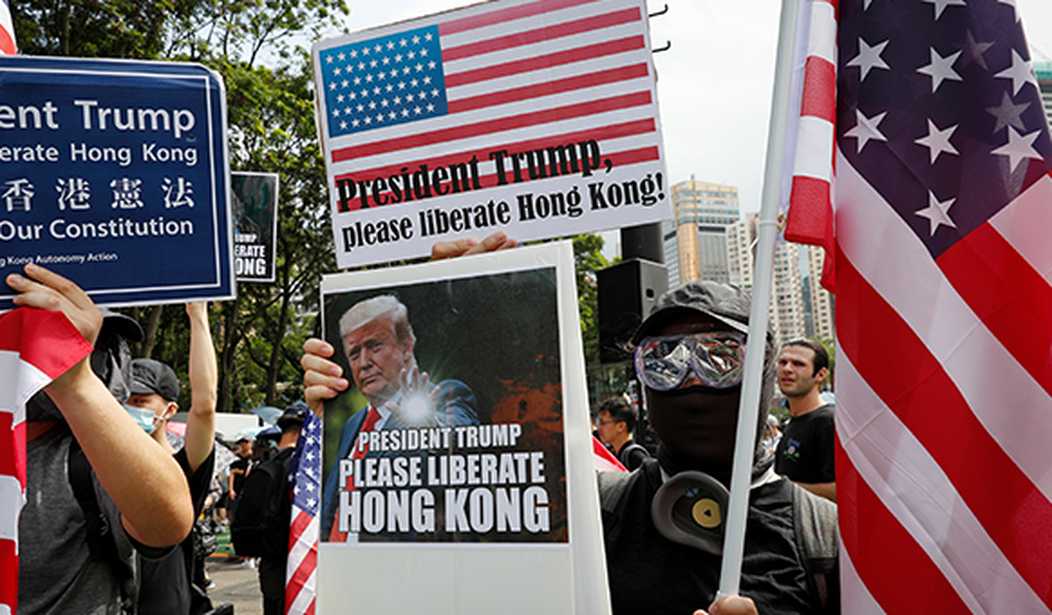
This is yet another blow to Hong Kong’s autonomy, which was supposed to last for at least 50 years under the Sino-British Joint Declaration, and to its people’s freedoms. Hong Kong was once a vibrant economic hub, one of the Four Asian Tigers, that opened its arms to Chinese dissidents fleeing persecution and guaranteed civil liberties. Today, arbitrary arrests and coercion are the norm in the city. Hong Kong serves as a cautionary tale.
For a period following the handover, people were hopeful that China might honor Hong Kong’s temporary special administrative region status. But that hope was short-lived. Cracks began appearing in 2003 when the National Security Bill, aimed at imposing criminal penalties for “subversion,” was introduced. Protests ensued, and the bill was withdrawn.
In 2014, protests occurred across the city, this time in response to the National People’s Congress Standing Committee’s proposal allowing Hong Kong residents to vote in upcoming elections under one condition: that all candidates be approved by a pro-Beijing committee. In other words, fake democracy, even though Hong Kong's constitution, the Basic Law, promises eventual universal suffrage. Hong Kong’s Legislative Council rejected the proposal in 2015.
After protests forced the Hong Kong government to withdraw its Extradition Bill a year prior, Beijing passed and implemented the Hong Kong National Security Law on June 30, 2020. Immediately, authorities began arbitrarily arresting anyone deemed a national security threat. The law criminalizes any form of criticism of the Chinese Communist Party (CCP) or Beijing-aligned Hong Kong officials.
As of April 28, 2026, almost 300 people have been arrested for alleged “national security” offenses, and 114 have been found guilty. Overseas Hong Kongers have become targets of warrants, bounties, and transnational repression.
In February of this year, Apple Daily newspaper founder Jimmy Lai, a free speech advocate and vocal critic of the CCP, was sentenced to 20 years in prison for violating the National Security Law. This is a death sentence for a 78-year-old who’s in poor health. His conviction and sentencing mark the complete destruction of press freedom in Hong Kong.
And whatever remained of Hong Kong’s pro-democracy movement was erased in 2021 when Beijing imposed electoral changes to ensure that only “patriots” — CCP lackeys — govern the city. At the end of 2025, the last opposition party disbanded due to intense pressure.
The CCP is determined to continue consolidating its control over the city. The situation is bound to worsen.
The case of Hong Kong should serve as a reminder to the world that communist China can never be trusted. Just as it reneged on the Sino-British Joint Declaration, referring to it as a “historical document” and “not at all binding,” Beijing will violate any other agreement.
The “one country, two systems” model is a dangerous illusion, merely a concept. The CCP seeks to absorb everything it takes control of under an authoritarian framework. By doing so, it also destroys innovation and happiness. Since 2020, about 500,000 Hong Kong residents, along with numerous companies, have moved abroad. A massive brain drain is underway.
Time and time again, Xi Jinping has insisted that Taiwan be incorporated into the People’s Republic of China under the “one country, two systems” formula. Regardless of Beijing’s information warfare and pressure campaign as well as the Taiwanese opposition’s pro-China actions and statements, the Taiwanese public isn’t falling for it. The vast majority of Taiwanese reject the “one country, two systems” model and believe that solely the Taiwanese people should determine the future of the island. They’re paying close attention as Hong Kong’s political refugees flee to Taiwan.
While Washington’s influence over Hong Kong’s political trajectory is limited, President Trump could at least urge Xi at this month’s summit to release Jimmy Lai on humanitarian grounds.