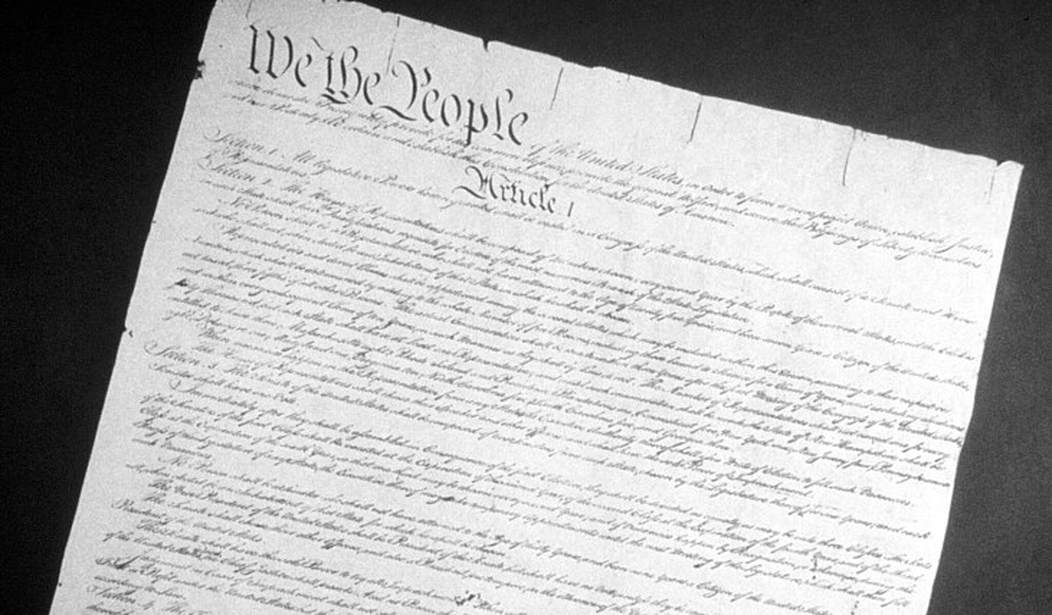

Our republic's 250th birthday is fast approaching. That's a big deal; ours is one of the oldest representative governments in the world, and our Constitution is one of the longest-enduring governing documents in the world. We tend to think of the United States as a relative newcomer to the world of nations, but the fact is that our government, our system of government, has proved to be pretty durable.
But how long can that remain the case when we aren't teaching our youth how the country works — why this system of government, this Constitution, has lasted as long as it has, through all that it has?
When I was in school, we took (if memory serves, that was a long, long time ago) Civics classes, in 7th and 8th grade, one semester each year. I don't remember how the classes broke down, but I want to say that the 7th-grade classes focused on our local and state politics (Iowa), how municipal and county governments functioned, and how the Iowa state constitution worked, and what went on in Des Moines when the legislature met.
In 8th grade, we learned about the United States: We read the Constitution and the amendments; yes, all of them. One of the few really good teachers I had in junior high school taught this class, and he encouraged us to read, not just the Constitution, but the Federalist papers, the writings of Thomas Paine, and more of the thoughts of the Founding Fathers; these were and are enlightening. But these things aren't being taught now.
That's the problem that the Pacific Research Institute is describing in a piece published Monday.
Civics, according to education writer and longtime Los Angeles teacher Larry Sand, is “the study of what it means to be a citizen, focusing on the rights, duties, and responsibilities of community members,” and also “understanding how government functions, including citizens’ roles in voting, obeying laws, and participating in the democratic process.”
Yet, too many young Americans know little about how their government functions, who its leaders are or were, and what their roles as citizens imply.
Frankly, one young American not knowing these things is too many. But how many kids today, and by kids I mean anyone under 30 (hey, they're kids to me), have actually read the Constitution and the various amendments? How many have read the Federalist Papers? Some have, I feel certain, but if they did, it wasn't in school. And now, we see the results of the lack:
On the most recent National Assessment of Educational Progress civics exam, 78 percent of eighth graders failed to score at or above the proficient level, and a survey that accompanied the test found that “more than a quarter of students reported spending little to no time learning about how laws are made or studying current political and social issues.”
In a 2026 Education Next article on these civics test results, Patrick Kelly, a high school government teacher and member of the NAEP governing board, and Harvard education professor Martin West observed: “There are real consequences to these low scores and survey findings. Democracy is not self-sustaining. It’s incumbent on us to ensure each new generation can support and strengthen America’s system of governance by understanding how it functions and how to participate in it.”
I'll take a moment to nitpick: The United States is not and never has been a democracy. We are a constitutional republic, and yes, I remember that from those long-ago civics classes, when we discussed what the Constitution means when it guarantees the states a "republican form of government."
Back to education. It's a travesty that too many of our schools, and not necessarily just in Democrat-run jurisdictions, have time to teach all manner of horse squeeze, from climate panic-mongering to LGBTQ+ and transgender propaganda, but they don't have time (or inclination) to teach how the United States works, and why it works the way it does. The why is as important as the how, maybe more so; the why explains how the United States has lasted for 250 years, after defeating the nation that was, at the time, the world's mightiest military power.
Read More: Quality Education Isn't Just a Matter of Money
Woke Classes Still Thriving in Florida's Post-Gender Studies Era
Some places, some states are pushing back. Florida, under Governor Ron DeSantis, is one of those.
With the United States turning 250 years old this year, Florida Governor Ron DeSantis held a press conference highlighting the "America250 FL" campaign and efforts to incentivize civics education in the state during his tenure.
Wednesday afternoon, DeSantis spoke from the Bok Tower Gardens in Lake Wales.
"We think it's important for young people to be educated on the principles and values that this country was founded upon," DeSantis said, adding that he deems it important for students to graduate with a solid understanding of civics education so they know about the foundations of what it means to be American.
That's what we call a "good start," but it's a show that must be taken on the road.
We must do this, but too many schools just don't care. Too many young people are reaching adulthood without understanding how our great nation works - how it is supposed to work. Parents of these young skulls full of mush should be making up for these shortcomings. They shouldn't have to, but they should. The trouble is, a lot of the parents don't know or care how our country works, either.
That's a major challenge for America's 250th year. Let's hope we're up to it. How can these people evaluate candidates and policies properly when they don't even know how things are supposed to work?
Here's how we can start this reform off: Look up when your area's school board elections are. Look at the candidates. Many areas push school board elections off the regular calendar, thus ensuring that the school board candidates are hand-picked by the teachers' unions. Don't let them get away with it. Vote. If there are no good candidates, run. Be vocal. Be loud. And support teaching Civics once more.