






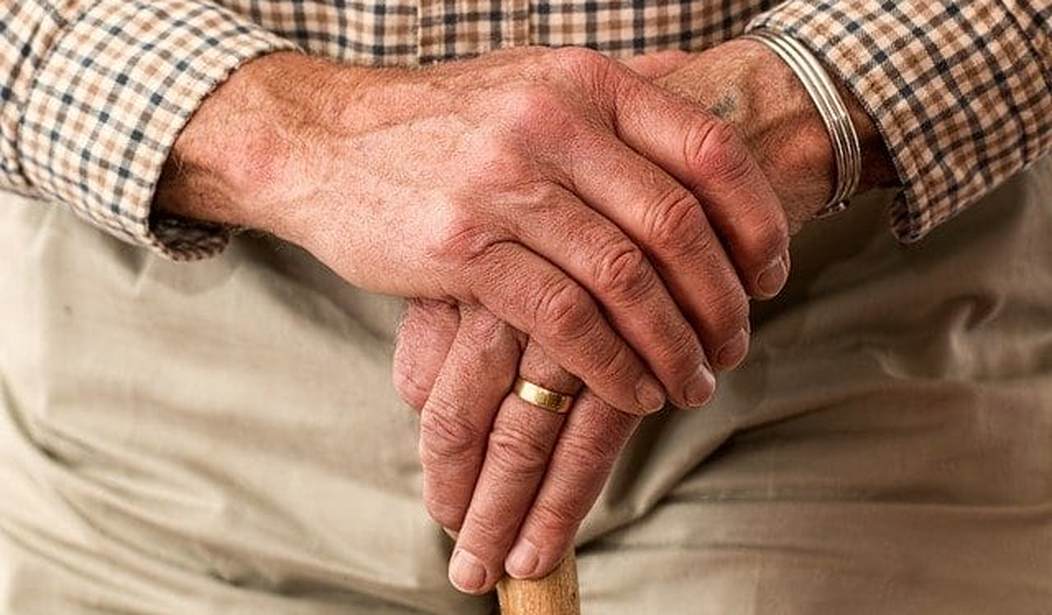
There's an old gag that explains why men have, historically, typically died sooner than women: "Because they want to." Personally, I can't abide by that, at least not if it is a dig at the institution of marriage; my wife and I are very happy and take great joy in every moment we are together.
It's true, though, that women have generally lived longer than men. It's been that way for a long time, for many reasons. Now, though, it's changing. We guys are catching up.
"Mortality rates for older men have been decreasing faster than for women and, as a result, men's share of the older population has increased," said Marc Perry, senior demographer in the U.S. Census Bureau’s Population Division. "But the mortality gap between men and women is still there. In fact, the current mortality rate for men age 65 and older is roughly where the equivalent rate for women was 50 years ago."
According to the National Center for Health Statistics (NCHS), the age-adjusted death rate for males age 65 and older was 8,285.0 per 100,000 people in 1970. By 2022, it had dropped to 5,205.7, a decline of 3,079 deaths per 100,000.
Female mortality also dropped, but not as rapidly. The death rate for females age 65 and older was 5,621.3 per 100,000 people in 1970 and 3,918.7 in 2022, a decline of 1,703 deaths per 100,000.
There isn't a lot of information on precisely why this is the case, but aside from improvements in health care, there's one likely possibility: The number of men employed in dangerous occupations has decreased, as a percentage of the population. Agriculture alone has seen a dramatic drop in the percentage of the population employed, and ask any farmer; he'll tell you farming is a dangerous business. Working around heavy equipment, bulk quantities of heavy grains, not to mention big, thick-skinned and sometimes bad-tempered critters, all of that presents plenty of opportunity to get one's self banged up.
But what about the societal aspects of all this?
As the population ages and the traditional longevity gap between men and women narrows, there could be some potential social impacts, including:
- Health care. An aging population could put a strain on skilled nursing facilities and health care workers.
- Dependency ratio. The U.S. dependency ratio may also increase, which could place additional pressures on the working-age population to support health care, social services, education and other institutions.
- Later marriages. As people live longer, they have more time to divorce or (re)marry at older ages. The decreasing disparity in the number of older men and women could create a more balanced pool of eligible partners at later ages.
- Extended families. If men continue to see improvements in old-age mortality rates, people could have more time to spend with their aging parents and grandparents — especially fathers and grandfathers.
My favorite is the extended family.
Read More: New Advice From Longevity Doc: Don't Give Up Alcohol (Whew!)
Captain Kirk at 95: 'Never Waste a Good Cigar, and Never Act Your Age'
Why? Here's why, and I'm going to tell you: We have six grandchildren, ranging in age from 23 to 5. Within the next five to ten years, we could be great-grandparents. I want to see my progeny grow and develop, for as long as possible. My own grandmother saw and held in her arms four great-great-grandchildren before she passed at 88; my wife's grandmother saw and held three great-great-grandchildren before her time came. That seems a great legacy to not only leave behind, but to know you have left behind.
That's not the worst reason to be happy about living a little longer, is it?
Editor's Note: The mainstream media continues to deflect, gaslight, spin, and lie about President Trump, his administration, and conservatives.
Help us continue to expose their left-wing bias by reading news you can trust. Join RedState VIP and use promo code FIGHT to get 60% off your membership.
Join the Conversation
VIP members get the ability to comment on articles.